Need help?
Do you have a question about the Abiomed Impella LD and is the answer not in the manual?
Avoid manual compression of the inlet, outlet, or sensor areas of the cannula assembly.
The Impella LD Catheter is a disposable device intended for single use only.
Retrograde flow occurs across the aortic valve if the Impella LD Catheter is set at P-level P-0.
Do not use saline in the purge system.
Do not use alcohol-based fluids for lubrication.
Do not use an Impella LD System if any part of the system is damaged.
To prevent explosion risk, do not operate the Impella LD System near flammable anesthetics.
Follow instructions if controller alarms "Purge Pressure Low" or "Purge System Open."
Do not subject patients with an MR Impella LD Catheter to magnetic resonance imaging (MRI).
Initiate cardiopulmonary support (CPR) immediately per hospital protocol if indicated.
During defibrillation, do not touch the Impella LD Catheter, cables, or controller.
Handle the Impella LD Catheter with care to prevent damage during handling and preparation.
Patients with aortic stenosis or other abnormal aortic valve performance may be compromised by Impella LD use.
Exercise special care when inserting in patients with aortic aneurysms or dissections.
An incision larger than 6 mm may allow the front plug to advance into the aorta.
Use only original accessories and replacement parts supplied by Abiomed.
Do not use damaged or contaminated connector cables.
Purge cassette replacement must be completed within 90 seconds to prevent catheter damage.
Do not kink or clamp any part of the Impella LD Catheter.
Have backup equipment available in the unlikely event of a device failure.
Operation of the system without heparin in the purge solution has not been tested.
Do not insert the repositioning sheath into the peel-away sheath during insertion.
Never remove the guidewire when increased resistance is met.
Position Impella carefully in patients with transcatheter aortic valves to avoid prosthesis interaction.
Supports patients with reduced left ventricular function, cardiogenic shock, or post-cardiotomy.
May be used during coronary bypass surgery for high-risk patients.
Contraindicated for mechanical aortic valves or severe aortic stenosis/regurgitation.
Contraindicated for hematological disorders causing blood cell fragility or hemolysis.
Contraindicated for hypertrophic obstructive cardiomyopathy (HOCM).
Contraindicated for aneurysms or severe anomalies of the ascending aorta/aortic arch.
Contraindicated for mural thrombus in the left ventricle.
Contraindicated for ventricular septal defect (VSD) after myocardial infarction.
Contraindicated for anatomical conditions precluding pump insertion.
Contraindicated for other illnesses or therapy requirements precluding pump use.
Severe peripheral arterial occlusion disease (PAOD) is a relative contraindication.
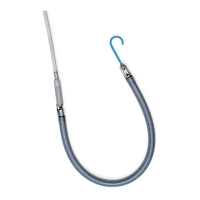
The disposable Impella LD Catheter is the primary component of the system.
The disposable purge cassette is part of the single-use system components.
The incision template is a single-use component for placement assistance.
The connector cable is a disposable component of the Impella LD System.
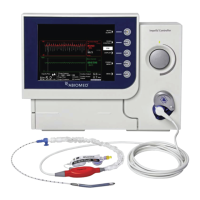
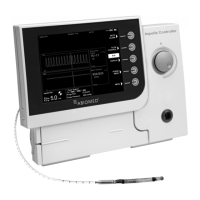
The central control unit for the Impella LD System, providing user interface and alarms.
Works with the controller to deliver purge fluid to the catheter.
Connects the Impella LD Catheter to the Automated Impella Controller.
Delivers up to 5.0 liters of blood per minute from the left ventricle into the aorta.
Hemolysis is a potential complication of Impella LD use.
Bleeding is a possible complication associated with the procedure.
Immune reaction is a potential risk with the Impella LD System.
Embolism and thrombosis are possible complications.
Vascular injury, including angionecrotomy, is a potential risk.
Positioning problems can occur during device implantation or use.
Infection and septicemia are potential complications.
Dislocation of the pump is a possible complication.
Cardiovalvular injuries can result from cannula movement or valve attachment.
Endocardiac injuries may result from pump attachment by suction.
Pump failure or loss of components due to a defect is a possible complication.
Patient dependency on the pump after support is a potential outcome.
The catheter delivers blood from the left ventricle to the ascending aorta.
Correct positioning and function are monitored on the Automated Impella Controller display.
Provides user interface, alarms, and a portable battery.
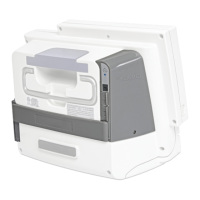
A cart for easy transport of the Automated Impella Controller.
Located at the proximal end of the cannula, it generates the placement signal.
A flexible membrane exposed to blood pressure differences generates an electrical signal.
A flat placement signal indicates incorrect placement across the aortic valve.
A pulsatile placement signal is generated when the catheter is correctly positioned.
The pulsatile waveform reflects pressure differences during the cardiac cycle.
Do not use saline in the purge system; use the specified glucose solution.
Delivers rinsing fluid to the Impella LD Catheter to prevent blood entry into the motor.
Connect purge tubing directly to the catheter, discarding the Y-connector if included.
Connects the Impella LD Catheter to the Automated Impella Controller.
Assists in correct placement by indicating the incision location in the ascending aorta.
Purge fluid is typically 5% glucose with 50 IU/mL heparin.
A cart for easy transport of the Automated Impella Controller.
Start a new case by pressing the "START NEW CASE" button or plugging in a new catheter.
Open the purge cassette package onto the sterile field.
Open the purge cassette door by pressing the release on the controller.
Insert the new purge cassette into the controller according to the diagram.
The controller automatically begins priming the purge cassette upon insertion.
Remove the Impella catheter using sterile technique and inspect for damage.
Remove the white connector cable using sterile technique and inspect for damage.
Align the notch and plug the connector cable into the controller.
Align tab and slot to connect the catheter plug to the connector cable socket.
Pull back on the connection to ensure the plug has snapped into place.
Snap the purge clip to the connector cable to prevent tubing kinking.
Connect purge tubing luers to Impella Catheter sidearms, removing Y-connector if present.
The controller automatically primes the purge lumen when the luer is connected.
Confirm purge fluid is exiting the Impella Catheter before entering data.
Press ACCEPT to select default purge fluid values.
Press EDIT to change purge fluid volume, dextrose, or heparin concentrations.
Surgically inserted via access to the ascending aorta through sternotomy or thoracotomy.
Place a clamp on the aorta 7 cm above the valve plane using the incision template.
Make an incision no larger than 6 mm at the insertion site on the ascending aorta.
Attach the Dacron vascular graft to the aorta using standard end-to-side anastomosis.
Administer heparin and achieve Activated Clotting Time (ACT) of at least 250 seconds.
Moisten the Impella LD Catheter and push silicone plugs against the motor housing.
Adjust CPB flow to minimum and restrict return flow for heart filling.
Loosely secure the front silicone plug flush to the graft with a ligature.
The initial placement signal is flat before the inlet area passes the aortic valve.
Apply slight pressure to the aortic valve to aid catheter passage.
Advance catheter until a pulsatile waveform appears on the placement signal screen.
Confirm pulsatile waveform and inlet area 3.5 cm below aortic valve.
Press START IMPELLA to open the P-level menu.
Turn knob to increase P-level from P-0 to P-2.
Press the selector knob to select the new P-level.
The catheter operation icon rotates when the Impella LD Catheter begins operation.
Retrograde flow occurs if the Impella LD Catheter is set at P-level P-0.
Confirm that purge fluid is exiting the Impella Catheter.
Place the Impella LD Catheter into the open graft end up to the rear plug.
Secure a tourniquet around the rear silicone plug when the catheter is in position.
Release the clamp and advance the Impella LD Catheter into the aorta.
Increase P-level to P-9 to confirm correct and stable placement.
At maximum flow, the Impella LD Catheter may be drawn into the ventricle.
Decrease P-level to desired support level after stable placement.
Select the lowest P-level that achieves the necessary flow rate for patient support.
Ten P-levels (P-0 to P-9) are available for the Impella LD Catheter.
Chart showing flow rate ranges for each P-level.
Steps for changing the purge cassette and purge fluid bag.
Select START to begin the purge cassette and fluid change process.
Disconnect the luer from the Impella catheter when prompted.
Open the purge cassette door by pressing the button on the left side.
Remove and discard the old purge cassette and fluid bag.
Spike the new purge fluid bag with the new purge cassette tubing.
Insert new cassette, slide purge disc, and extend tubing through door gap.
Confirm luer disconnection and press NEXT to prime the purge cassette.
Update purge fluid volume, dextrose, and heparin concentrations as needed.
Connect the luer from the new purge cassette to the Impella catheter.
Procedure for changing purge fluid from bottles, including opening the vent.
Steps to change only the purge fluid bag without changing the cassette.
Access the "Change Purge Fluid Bag" option from the PURGE MENU.
Remove the old purge bag and spike the new purge fluid bag.
Update purge fluid information on the controller after replacing the bag.
Controller primes and flushes tubing automatically after luer disconnection.
Auto prime/flush occurs if dextrose or heparin concentrations were changed.
Connect the yellow luer from the purge cassette to the Impella catheter.
Luers prompt for prime/flush if concentrations changed or air detected.
Physician discretion, careful removal, and avoiding repositioning sheath are key.
Protocols for rapid and slow weaning, including P-level adjustments and stability checks.
Steps for preparing the site, completing weaning, and removing sutures/ligatures.
Procedure for pulling the catheter through the aortic valve and into the aorta.
Options for closing the vascular graft after catheter removal.
Procedure to manually zero the differential pressure sensor.
How to zero the differential pressure sensor while the Impella LD Catheter is running.
If the pressure sensor fails, flow rate calculation is no longer possible.
If the pressure sensor fails, placement monitoring is switched off.
If sensor drift occurs, the controller can no longer detect suction.
Operation without heparin in the purge solution has not been tested.
The Impella LD Catheter may produce interference with other equipment.
EAM systems may experience interference from the Impella LD Catheter's field.
Interference may cause instability in mapping catheter location display.
Address interference with the magnetic location detection component of EAM systems.
Reposition the Impella catheter to ensure motor is at least 3 cm from mapping catheter sensors.
Example of a Magnetic Navigation System (MNS), e.g., Stereotaxis Niobe.
Steps for initiating Impella LD Catheter support when using an MNS.
Troubleshooting MNS operations including starting, flow, and stopping issues.
The controller monitors parameters and sounds alarms for out-of-limit conditions.
Alarms are divided into Advisory (white), Serious (yellow), and Critical (red) levels.
How to mute audible alarms and the duration for silencing.
Symbol indicating to follow instructions for use.
Indicates defibrillator-proof type CF equipment.
Symbol indicating the device must be kept dry.
Symbol for storage temperature range.
Declares conformity with EU directives for medical devices.
Symbol for date of manufacture.
Symbol indicating to protect from sunlight.
Symbol for lot designation.
Symbol for Abiomed part number.
Symbol for manufacturer's serial number.
Symbol indicating the product is not sterile.
Symbol for use-by date.
Symbol indicating the product should not be reused.
Symbol indicating sterilization method (ethylene oxide).
Symbol indicating the product is a medical device.
Symbol indicating glucose content.
The length of the white connector cable is 2.5 meters.
The service life of the connector cable is single use only.
The speed range of the Impella LD Catheter is 0 to 33,000 rpm.
The power consumption of the Impella LD Catheter is less than 13 W.
The voltage for the Impella LD Catheter is a maximum of 20 V DC.
The maximum flow rate for the Impella LD Catheter is 5.0 L/min.
Details on recommended purge fluid, concentration, pressure, and flow rate.
Maximum duration of use is up to 10 days.
Reliability is 91.4% with 80% confidence at 10 days.
Protection class I, degree of protection: CF.
Classification is Class III.
The product is latex free.
Catheter length is between 125 cm (min) and 133 cm (max).
The housing dimension is 10 cm.
The tip dimension is 7 cm.
The catheter sheath size is 9 Fr.
The outer diameter of the catheter is 21 Fr.
Disposable items must be disposed of according to hospital regulations for blood contaminated materials.
The Automated Impella Controller is marked according to Directive 2012/19/EU (WEEE).
 General
| Brand | Abiomed |
|---|---|
| Model | Impella LD |
| Category | Medical Equipment |
| Language | English |

 To Next Page