This document is an operation manual for an ACEUP ENERGY Gasoline Engine. It provides comprehensive information on the engine's function, technical specifications, usage, and maintenance.
Function Description
The ACEUP ENERGY Gasoline Engine is a general-purpose, single-cylinder, 4-stroke, forced air-cooled engine with an OHV (Overhead Valve) design. It utilizes a TCI (Transistor Controlled Ignition) method and splash lubrication. The manual emphasizes that proper use and regular maintenance are crucial for ensuring the engine's normal and reliable condition, as well as extending its lifespan. It warns against operating the engine with overload, at excessive RPM, or under sustained low load and low RPM. The engine is designed to be coupled with various equipment, and its power output should strictly adhere to the engine nameplate's rated power.
Important Technical Specifications
The manual provides a table of technical specifications for several models: AE170, AE170B, AE170C, AE188, AE190, and AE192.
General Engine Type: Single-cylinder, Four-Stroke, Air-cooled, OHV Gasoline Engine.
Bore x Stroke (mm):
- AE170: 70x54
- AE170B: 70x55
- AE170C: 70x58
- AE188: 88x64
- AE190: 90x66
- AE192: 92x69
Displacement Capacity (cc):
- AE170: 208
- AE170B: 212
- AE170C: 223
- AE188: 389
- AE190: 420
- AE192: 459
Max. Output (HP)/RPM:
- AE170: 7/3600
- AE170B: 7.2/3600
- AE170C: 7.5/3600
- AE188: 13/3600
- AE190: 14/3600
- AE192: 15/3600
Fuel Consumption (g/hp.h):
- AE170, AE170B, AE170C: <374
- AE188, AE190, AE192: <370
Ignition System: Transistorized Magneto Ignition.
Spark Plug: F6TC.
Fuel Oil Tank Capacity (L):
- AE170, AE170B, AE170C: 3.6
- AE188, AE190, AE192: 6.5
Lubrication Oil: SAE 10W/30.
Lubrication Oil Volume (L):
- AE170, AE170B, AE170C: 0.6
- AE188: 0.5
- AE190, AE192: 1.1
Starting System: Recoil or Electric starter (applicable types).
Stop System: Ignition primary circuit ground.
Noise Level at 7m (dB):
- AE170, AE170B, AE170C: 80
- AE188, AE190, AE192: 90
Dimension (mm):
- AE170, AE170B, AE170C: 417x368x385
- AE188, AE190, AE192: 542x500x507
Tune-up Specifications:
- Spark plug gap: 0.6~0.7mm (0.024~0.028in)
- Valve clearance (cold): IN:0.1-0.15mm, EX:0.15-0.2mm
- Other specification: No other adjustments needed.
Important Torque Values (N.m):
- Cylinder head bolts: 24 (for 152/154/156, 168, 170/170B/170C), 34 (for 177, 188/190/192)
- Crankcase cover bolts: 24 (all models)
- The connecting rod bolts: 12 (for 152/154/156, 168, 170/170B/170C), 14 (for 177, 188/190/192)
- Fly wheel bolts: 50 (for 152/154/156), 80 (for 168, 170/170B/170C), 113 (for 177, 188/190/192)
Usage Features
The manual details the steps for starting and stopping the engine, including procedures for both cold and warm starts.
Preparation Before Operation:
- Lube Oil Check: Before starting, the oil dipstick must be unscrewed to check the lube oil level. It should be within the specific limit, not exceeding the max. oil level. If low, fill with 15W/40SAE lube oil.
- Fuel Oil Check: The fuel tank cap should be opened to check the fuel level. If low, fill with #90 or higher gasoline up to the red stop plate inside the strainer. It's crucial not to mix gasoline with lube oil and to ensure the fuel is clean.
- Air Cleaner Check: The dry-type air cleaner has paper and foam filter elements. These should be removed and cleaned with gasoline or kerosene if dusty or dirty, then dried before reinstallation.
Starting the Engine:
- Move the fuel valve lever to the "ON" position.
- For a cold engine, move the choke lever to the "CLOSED" position. For a warm engine, leave it in the "OPEN" position.
- Move the throttle lever about 1/3 of the way from the "MIN" position towards the "MAX" position.
- Turn the engine switch to the "ON" position.
- Operating the Starter:
- Recoil Starter: Pull the starter grip lightly until resistance is felt, then pull briskly. Return the grip gently to prevent damage.
- Electric Starter (applicable types): Turn the key to the "START" position and hold until the engine starts. If it doesn't start within 5 seconds, release the key and wait at least 10 seconds before trying again.
Stopping the Engine:
- Emergency Stop: Turn the engine switch to the "OFF" position.
- Normal Stop:
- Move the throttle lever to the "MIN" position.
- Turn the engine switch to the "OFF" position.
- Turn the fuel valve lever to the "OFF" position.
Safety Precautions:
- Exhaust Precautions: Operate the engine in well-ventilated areas to avoid carbon monoxide poisoning. If used indoors, exhaust gas must be led outside, with the outlet at least 1m from doors or windows.
- Fire Prevention: Keep the engine away from flammable materials (trash, rags, lubricants, explosives) and open flames. Maintain at least 1 meter clearance from buildings or structures.
- Refueling Precautions: Stop the engine before refueling. Do not overfill the fuel tank. Clean up any spilled fuel and wait for it to dry before starting.
- Surrounding: Operate the engine on a level surface free of small rocks or loose gravel. Tilting the engine can cause fuel spillage. Do not move the engine during operation. Drain fuel from the tank for long-distance transport to prevent leakage.
- Hot Surfaces: The exhaust muffler becomes very hot during and after operation; avoid touching it to prevent burns and keep children away.
- General Operation: Users should be familiar with the engine's structure and operation, perform regular maintenance, and address issues promptly. Do not operate if the engine is abnormal.
Maintenance Features
The manual outlines a detailed maintenance schedule and troubleshooting guide to ensure the engine's longevity and performance.
Routine Maintenance:
- Air Cleaner: Check the filter element regularly for dirt and dust and clean it. Clean the air cleaner every 25 hours of running.
- Bolts and Nuts: Periodically check all bolts and nuts for looseness and tighten them.
- Lube Oil Level: Check according to the preparation section (2.1).
- Spark Plug: Check every 50 hours. Remove carbon deposits and adjust the gap to 0.6~0.7 mm.
- Radiating Fins: Check and remove dirt from the radiating fins.
- Lube Oil Replacement: Unscrew the drain plug, tilt the engine to drain the old lube oil. Fill with kerosene to clean, drain it, then tighten the drain plug and fill with fresh lube oil to the specific level.
- Fuel Tank and Filter Strainer: Clean after every 100 hours. Open the fuel tank cap, remove and clean the strainer with a brush. Clean the internal surface of the fuel tank to remove dirt and water. Reinstall and fill with fresh fuel oil to the red scale line.
- Oil Tube: Check the aging condition of the oil tube every 2 years. Replace if aged, hardened, or cracked. Tighten new oil tube joints to prevent leakage.
Storage (Long Period):
- Drain all fuel from the fuel tank and clean any dirt/water from its internal surface. Open the fuel cock, unscrew the carburetor drain plug, and completely drain fuel from the carburetor. Then tighten the drain plug.
- Unscrew the crankcase drain plug and completely drain lube oil from the crankcase. Then tighten the drain plug.
- Clean the outer surface of the engine with clean cotton and remove dirt/dust. Store the engine in a dry place.
Dismantlement and Assembly:
- Precautions:
- Dismantle properly, avoiding sealing and moving parts like piston rings.
- Do not dismantle parts (spark plug, carburetor, magneto motor) when hot.
- Make marks on special parts (piston ring, cylinder gasket, connecting wire) for reassembly.
- Keep parts from the same component together.
- Clean and store removed parts in groups.
- When dismantling bolts, loosen them diagonally first.
- Use extractors for tight parts.
- For starting bolts with opposite thread, turn clockwise to loosen, then use a screw extractor.
- Dismantling Procedure: Drain fuel and lube oil, dismantle spark plug, engine flow guard, carburetor, muffler, cylinder head, starter, fly wheel, magneto motor, crankcase cover, camshaft, valve tappet, piston, tie rod, crankshaft, intake and exhaust valves.
- Assembling Precautions:
- Clean all parts before installation.
- Ensure all parts are qualified; repair or replace disqualified ones.
- Oil important assembling surfaces (e.g., between cylinder bushing and piston).
- Use a torque spanner for bolts requiring specific torque (e.g., tie rod bolts, cylinder cover bolts).
- Assembling Procedure: Clean all parts, install crankshaft, valves, piston and tie rod (with lube oil and specific torque), valve tappets and camshaft (adjust timing mark), cylinder gasket and cylinder head (with specific torque), fly wheel, starter, carburetor, air cleaner, muffler, engine flow guard, fuel tank (connect hose), fill crankcase with lube oil, fill fuel tank with gasoline, install spark plug. Check connecting joints and speed-adjusting parts. Start and observe the engine.
Troubleshooting:
The manual includes comprehensive troubleshooting tables for common issues:
- Low Power Output: Covers ignition system (incorrect timing, air in fuel line, clogged fuel cock, main jet adjustment), fuel supply system (clogged metering jet/main jet, clogged fuel cock), and poor compression (worn piston/cylinder/piston ring, air leakage, incorrect valve clearance, poor valve tightness).
- Engine Cannot Run Smoothly (Pinking): Addresses worn piston/cylinder/piston ring, worn piston pin/piston pin hole, worn tie rod small head, worn roller bearing for crankshaft, engine too hot.
- Abnormal Combustion: Covers too much carbon fouling, improper gasoline quality, water in floater room.
- Engine Cannot Start Due to Spark Lacking: Addresses improper spark plug electrode clearance, incorrect ignition time, failed induced coil.
- Engine Stops Suddenly When Running: Covers fuel supply issues (empty fuel, clogged carburetor, leaking float, stuck needle valve sticks), ignition system issues (struck/short-circuited spark plug, dropped side electrode, dropped high-voltage wire, short-circuited ignition coil, parking wire on engine body), and other issues (cylinder pulled damage, dropped valve).
- Engine is Excessively Hot: Covers improper ignition time, insufficient fuel supply, clogged exhaust pipe, flow guard leakage, dirt among air cooling fins, loose/malfunctioning cooling fan, tie rod deformation, worn cylinder/crankcase, improper engine speed adjustment, excessive rotational speed, burnt out crankshaft main bearing.
- Note on Temperature: Engine should operate between 80-110°C at the flow guard outlet and around 60°C at the crankcase under the magneto motor. Higher temperatures indicate overheating.
- Abnormal Noise When Engine is Running: Covers noise of beating (worn crankshaft main bearing, broken piston ring, too much carbon fouling, too small electrode clearance, flooded engine, improper fuel class, excessively hot engine) and other issues (improper valve clearance, loose fly wheel connection).
The manual is a critical resource for safe and effective operation and maintenance of the ACEUP ENERGY Gasoline Engine.

 Need help?
 General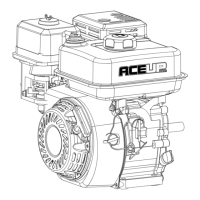

 To Next Page