Chapter 38: Static Port Trunks
590
Overview
Static port trunks are groups of two to eight ports that act as single virtual
links between the switch and other network devices. Static port trunks are
commonly used to improve network performance by increasing the
available bandwidth between the switch and other network devices and to
enhance the reliability of the connections between network devices.
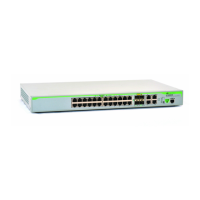
Figure 106 is an example of a static port trunk of four links between two
AT-9000 Switches.
Figure 106. Static Port Trunk Example
When you create a new static port trunk, you can designate the manner in
which the traffic is distributed across the physical links by the switch. This
is explained in “Load Distribution Methods,” next.
Unlike LACP trunks, which are described in Chapter 40, “Link Aggregation
Control Protocol (LACP)” on page 607, static port trunks do not permit
standby ports. If a link is lost on a port in a static port trunk, the trunk’s total
bandwidth is reduced. Although the traffic carried by a lost link is shifted to
one of the remaining ports in the trunk, the bandwidth remains reduced
until a lost link is reestablished or another port is manually added to the
trunk.
Load Distribution
Methods
This section discusses the load distribution methods for static port trunks
and LACP trunks, described in Chapter 40, “Link Aggregation Control
Protocol (LACP)” on page 607.
When you create a static port trunk or an LACP trunk, you have to specify
the manner in which the switch should distribute the packets of the traffic
load across the ports of a trunk. This is referred to as the load distribution
method. The load distribution methods are listed here:
Source MAC Address (Layer 2)
Destination MAC Address (Layer 2)
AT-9000/28 Gigabit
Ethernet Switch
AT-9000/28 Gigabit
Ethernet Switch


 To Next Page
 Loading...