This document serves as an instruction and safety manual for an Ameristep Hub Blind, a portable ground blind designed for hunting and outdoor observation. The manual provides comprehensive guidance on setting up, taking down, and maintaining the blind, along with crucial safety warnings.
Function Description:
The Ameristep Hub Blind is a portable, pop-up ground blind primarily used by hunters to conceal themselves from game. Its hub-style design allows for quick and relatively easy deployment and packing, providing a temporary, camouflaged shelter in various outdoor environments. The blind's structure is designed to offer concealment while allowing the user to observe and engage with their surroundings through designated windows. The material and design aim to blend into natural settings, enhancing the user's ability to remain undetected.
Usage Features:
Set-Up:
The set-up process for the Ameristep Hub Blind is designed to be straightforward, emphasizing a hub-pulling mechanism for rapid deployment.
- Unpacking and Initial Unfolding: The process begins by removing the blind from its case and unbuckling the cinch strap. The blind is then unfolded, with each corner laid flat on the ground. A key instruction here is to ensure the material is not twisted or overlapping the ends of the poles, which could impede proper setup.
- Hub Deployment: The core of the setup involves firmly pulling the hubs until they pop open. The manual suggests starting with the roof hub first for optimal deployment. This action extends the blind's frame, giving it its three-dimensional shape.
- Sequential Hub Extension: After the initial hub, the user continues around the blind, pulling each center hub until all but the door side hub is extended. This sequential pulling ensures the blind's structure is evenly tensioned and fully expanded.
- Addressing Access Issues (Optional): If a wall hub is difficult to access when starting to lift the blind, the manual advises rotating the already opened wall slightly while lifting. This maneuver creates enough space to pull the remaining hubs into place.
- Door Hub and Tensioning: An important step is to ensure all door zippers are fully closed before pulling out the door hub. This action maintains proper tension across the blind's walls, contributing to its stability and structural integrity.
- Securing and Camouflage: Once the blind is set up, it should be secured to the ground using stakes. The user can then adjust the windows as needed. For enhanced camouflage, the manual suggests adding native brush to any stubble pockets available on the specific model. This feature allows for further integration of the blind into its natural surroundings, breaking up its outline and making it less noticeable to game.
Take Down:
The take-down process is also designed for efficiency, reversing the setup steps to collapse the blind into a compact form for storage.
- Window and Door Closure: Before exiting the blind, all windows should be closed and secured from the interior. The door zipper is then unzipped to allow the user to exit.
- Collapsing Wall Hubs: The user then pushes the center hub of one of the walls with an open palm until the tension begins to give, initiating the collapse of that section. This step is repeated for all remaining walls.
- Blind Collapse: As the wall hubs are pushed in, the blind will gradually collapse onto the ground, returning to a flatter state.
- Collapsing Roof Hub: Next, the center hub pole of the roof is pushed in until its tension gives, further flattening the blind.
- Gathering Corners: All corners of the blind are then gathered together. If difficulty is encountered, the manual suggests gently rotating the top-most corners from left to right while continuing to bring them together. This action helps "free-up" the material and allows the blind to fully collapse into a compact bundle.
- Storage: Finally, a cinch strap is buckled around the collapsed blind, and it is returned to its case for storage. This ensures the blind remains compact and protected during transport and storage.
Maintenance Features:
Storage & Tips:
Proper storage and adherence to safety guidelines are crucial for extending the life and ensuring the safe use of the Ameristep Hub Blind.
- Storage Environment: The blind should be stored in a cool, dry place, free from native brush, dirt, and any debris. It is important never to store the blind wet or damp, as this can lead to mold, mildew, and material degradation.
- Protection from Elements: The manual advises against leaving the blind outdoors for extended periods. Prolonged exposure to sunlight can cause the fabric to fade, and continuous exposure to UV light can break down the fabric fibers, leading to discoloration, loss of strength, and eventual disintegration. To mitigate this, users are encouraged to set up the blind in shady spots whenever possible.
Safety Warnings:
The manual emphasizes several critical safety warnings to prevent injury, illness, or damage to the blind.
- Fire Safety:
- No Heaters: Never use a heater inside the Ameristep blind, as unvented fumes can cause sickness or death.
- No Open Flames: The blind is not fireproof. Users must never expose the blind to any open flame. This includes candles, matches, campfires, or any other source of fire.
- No Cooking/Smoking: Cooking, smoking, or storing flammable liquids inside the tent is strictly prohibited.
- Lanterns/Heaters: Extreme caution is advised when using fuel-powered lanterns or heaters inside the tent. Battery-operated lanterns are preferred. Refueling lamps, heaters, or stoves inside the tent is forbidden. All lanterns should be extinguished or turned off before sleeping.
- Muzzle Flash: Shooting through mesh with a firearm is warned against, as sparks or flame from the muzzle could ignite the material.
- Broadhead Use:
- Fixed Blade Broadheads Only: When shooting through TSC (Through-Sight-Component) windows, only fixed blade broadheads should be used. Expandable broadheads can cause premature opening of the blades when passing through the mesh.
- Alignment: For optimal arrow flight through TSC and shoot-through mesh windows, broadhead blades should be aligned with the fletching.
- Children's Safety: Children should never be allowed to play with the product without adult supervision.
- Suffocation Hazard: Material should never be allowed to cover a person's face, as this can cause suffocation and death.
The manual concludes by urging users to read and understand all instructions and warnings first, and to contact customer service for any questions regarding product use.

 Need help?
 General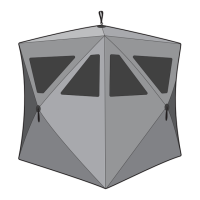

 To Next Page