AIR IS PULLED
FROM THE MAIN
RETURN DUCT
AIR IS DISCHARGED
TO THE SUPPLY DUCT
MODEL E100
0.6" W.C. MAX
MODEL E080
0.4" W.C. MAX
C
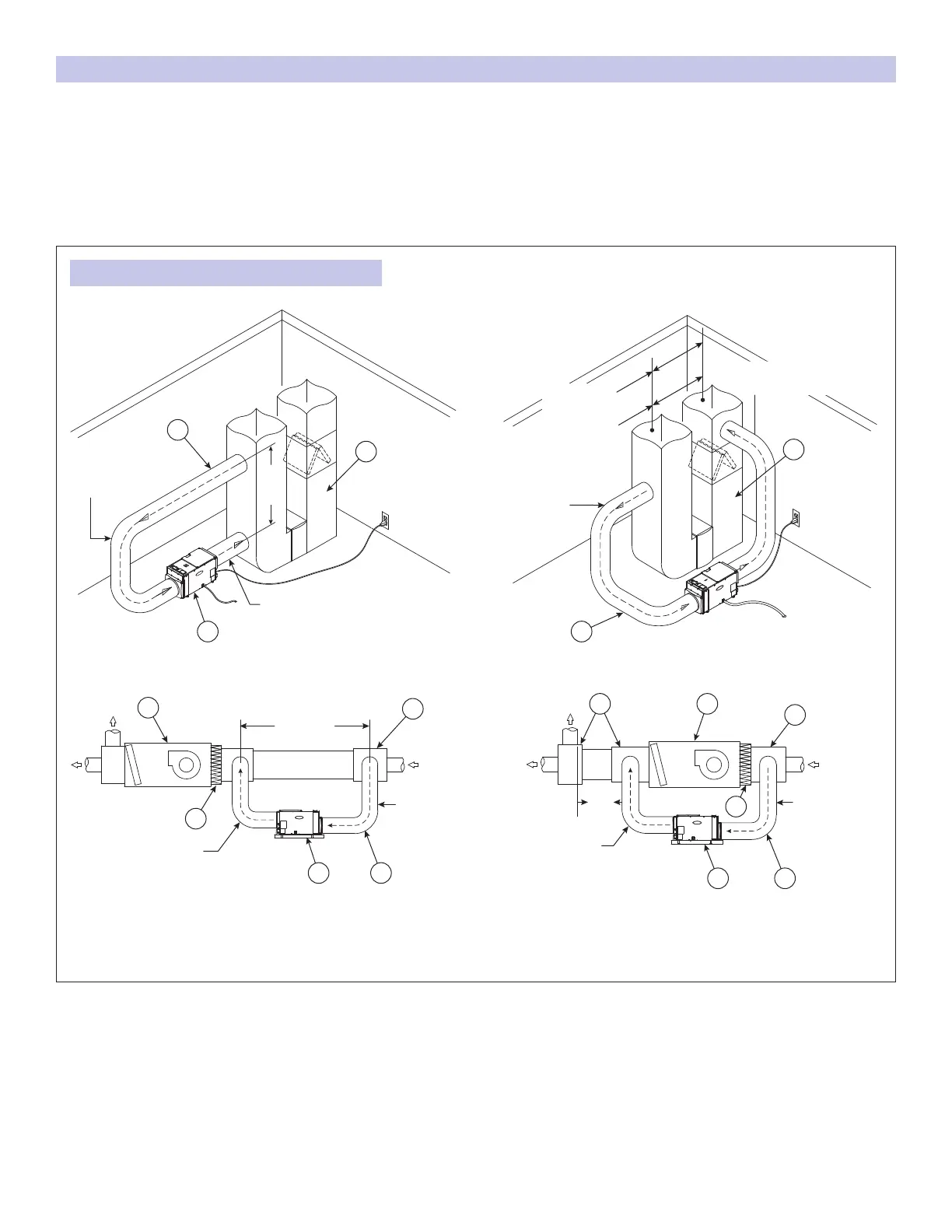
FIGURE 15: FOUR INSTALLATION CONFIGURATIONS
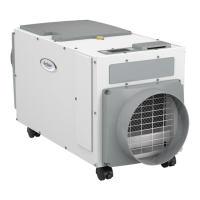
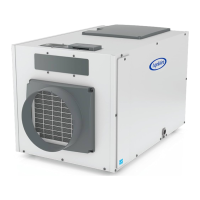
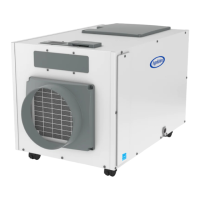
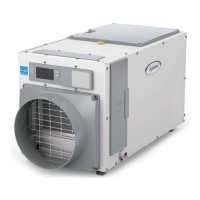
A. DEHUMIDIFIER
B. 10” DIAMETER INSULATED DUCT
C. HVAC/FURNACE
D. PLENUM BOX
E. AIR HANDLER
F. PLENUM BOX OR Y-FITTING
G. FILTER
H. CONDENSATE PAN
6
FEET
MIN
AIR IS PULLED
FROM THE MAIN
RETURN DUCT
AIR IS DISCHARGED TO
THE MAIN RETURN DUCT
B
C
RETURN-TO-RETURN
BASEMENT INSTALLATION
RETURN-TO-RETURN ATTIC INSTALLATION
RETURN-TO-SUPPLY
BASEMENT INSTALLATION
RETURN-TO-SUPPLY ATTIC INSTALLATION
6 FEET MIN
AIR IS PULLED
FROM THE
DUCT
AIR IS DISCHARGED TO
THE MAIN RETURN DUCT
G
E
F
90-1886 90-1887
90-1888
24"
MIN
AIR IS PULLED
FROM THE MAIN
RETURN DUCT
AIR IS DISCHARGED
TO THE SUPPLY DUCT
D E
F
G
90-1889
DUCTING THE DEHUMIDIFIER INLET AND OUTLET TO THE HVAC SYSTEM
• Use when both sides of the duct system are accessible
(see FIGURE 15).
• When ducting from return to supply, the HVAC blower does
not need to be running when the dehumidier is running.
• When ducting return to supply, allow adequate space
(24” min) before the rst branch duct to ensure the warm
dehumidied air is thoroughly mixed with the HVAC system air.
• When ducting from return to return, wire the dehumidier to
the HVAC system as shown in FIGURE 20 to ensure the HVAC
blower runs when the dehumidier is operating.
• Wire the dehumidier to the HVAC system (see FIGURE 20
for exact wiring) and set up the dehumidier to be disabled
when the AC is running.
10



 To Next Page
 Loading...