710
KDS
Astec Mobile Screens Safety 9 KDS 710
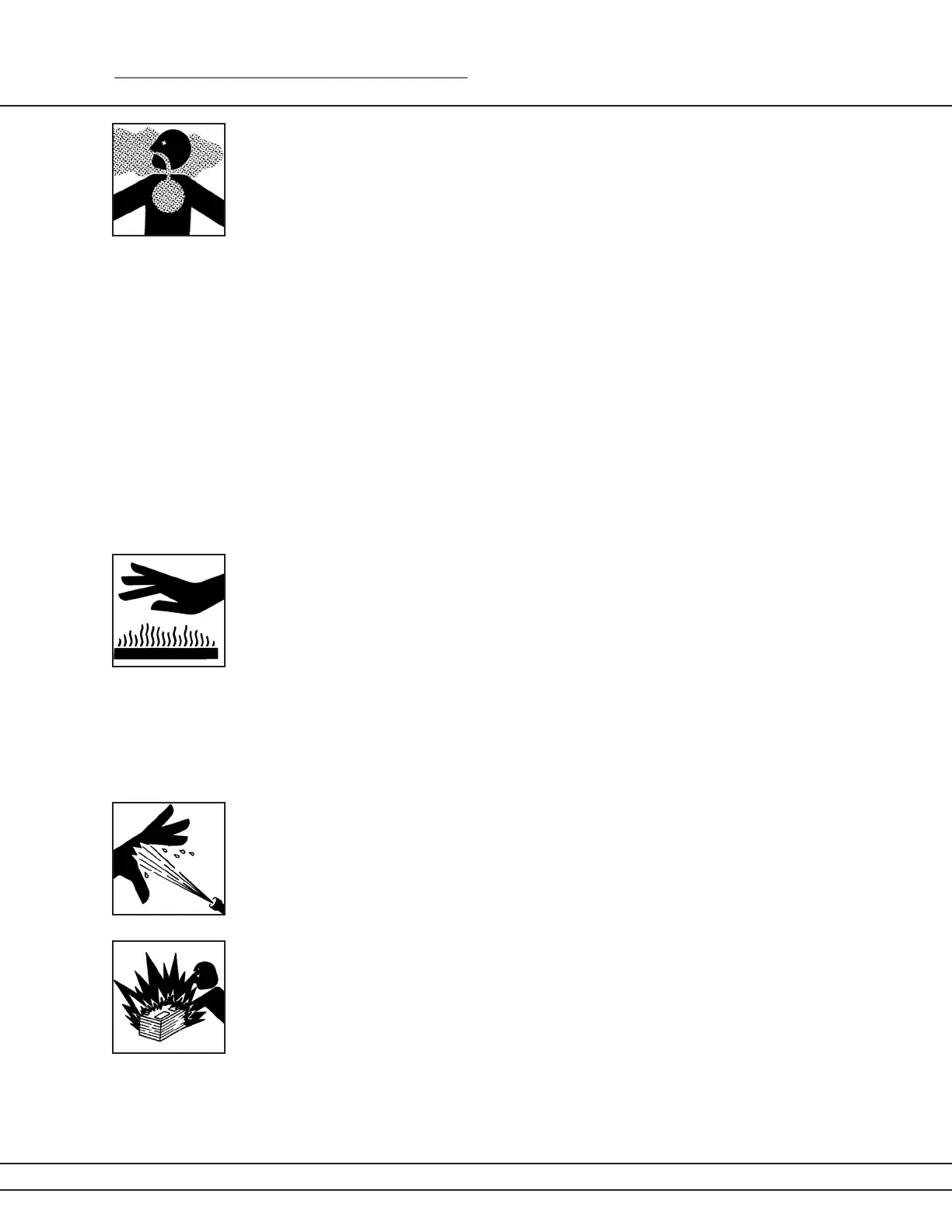
REMOVE PAINT BEFORE WELDING OR HEATING
Avoid potentially toxic fumes and dust.
Hazardous fumes can be generated when paint is heated by welding, soldering,
or using a torch.
Remove paint before heating:
Remove paint a minimum of 100 mm (4 in.) from area to be affected by heat-
ing. If paint cannot be removed, wear an approved respirator before heating
or welding.
If you sand or grind paint, avoid breathing the dust. Wear an approved respi-
rator.
If you use solvent or paint stripper, remove stripper with soap and water be-
fore welding. Remove solvent or paint stripper containers and other amma-
ble materials from area. Allow fumes to disperse at least 15 minutes before
welding or heating.
Do not use chlorinated solvent in areas where welding will take place. Do all work
in an area that is well ventilated to carry toxic fumes and dust away. Dispose of
paint and solvent properly.
AVOID HOT PARTS
Avoid skin contact with exhaust manifolds, turbochargers, mufers, and other hot
parts. Keep ammable materials clear of all hot parts.
External dry exhaust parts become very hot during operation. Turbochargers
may reach temperatures as high as 500°C (932° F) under full load, and naturally
aspired exhaust manifolds may reach 600° C (1112° F) under full load.
This may ignite paper, cloth or wooden materials. Parts on engines that have
been at full load and reduced to no load idle will maintain approximately 140° C
(302° F) temperatures.
DO NOT OPEN HIGH PRESSURE FUEL SYSTEM
High pressure uid remaining in fuel lines can cause serious injury or death. Do
not disconnect or attempt repair of fuel lines, sensors, or any other components
between the high-pressure fuel pump and nozzles on engines with High Pres-
sure Common Rail (HPCR) fuel system. Only technicians familiar with this type of
system can perform repairs.
PREVENT BATTERY EXPLOSIONS
Keep sparks, lighted matches, and open ame away from the top of battery. Bat-
tery vapors can explode. Never check battery charge by placing a metal object
across the posts. Use a volt meter or hydrometer. Do not charge a frozen battery;
it may explode. Warm battery to 16° C (60° F).
■
■
■


 To Next Page
 Loading...