
 Need help?
Do you have a question about the Beko WMB 71001 M+ and is the answer not in the manual?
Safety instructions to protect from personal injury or property damage. Failure to follow voids warranty.
Product designed for domestic use, not commercial. Must be used for intended purpose only.
Safety precautions for children regarding packaging, electrical products, and unattended doors.
Information on recyclable packaging materials and proper disposal.
Instructions for environmentally friendly disposal of the product at its end of life.
Guidelines for selecting a suitable and stable location for the washing machine.
Instructions to remove protective packaging reinforcement before installation.
Steps to remove transportation safety bolts to prevent damage during use.
How to connect the water inlet hoses, including pressure requirements and warnings.
Instructions for connecting the drain hose to ensure proper water discharge.
How to level the machine by adjusting the feet for silent and vibration-free operation.
Guidelines for connecting the appliance to a grounded electrical outlet safely.
Instructions for the initial operation of the washing machine, including a special program.
Steps for safely transporting the machine, including securing it.
Advice on how to dispose of the old appliance responsibly.
Tips for using the washing machine efficiently and saving energy.
Guidance on how to sort laundry based on fabric type, color, and soiling.
Instructions on how to prepare clothes for washing, e.g., emptying pockets, zipping.
Information on the maximum load capacity and its effect on washing performance.
How to load laundry items into the machine correctly.
Instructions on where and how to add detergent and fabric softener.
Advice on selecting the appropriate detergent for different fabric types.
Guidance on the correct amount of detergent to use based on load and soiling.
Instructions for using fabric softeners and bleaches correctly.
Detailed advice on detergent usage, temperature, and soiling levels for efficient washing.
Description of the washing machine's control panel buttons and indicators.
Steps to prepare the machine before starting a wash cycle.
Overview of the primary washing programmes available on the machine.
Information on special or additional washing programmes offered by the machine.
Details on specific programmes like Rinse, Spin + Drain.
How to adjust the spin speed for different wash cycles.
Explanation of the Rinse Hold function to prevent wrinkling.
A table detailing programmes, load capacities, duration, and consumption.
Instructions on how to start a selected wash programme.
Information about the door lock mechanism and its function.
How to cancel a running wash programme.
What happens at the end of a programme and how to turn off the machine.
Details on the 'Door Open' indicator and when the door can be safely opened.
Explanation of the automatic energy-saving standby mode.
Step-by-step guide to cleaning the detergent dispenser and siphon.
Instructions for cleaning the drum and door seal, including recommended programmes.
How to clean the exterior of the machine and its control panel.
Procedure for cleaning the filters in the water intake valves and hoses.
How to drain water and clean the pump filter for maintenance or transport.
Solutions for issues where the programme fails to start or select.
Explanation for residual water after production or operation.
Troubleshooting steps for excessive vibration or noise during operation.
Reasons and solutions for the machine stopping soon after starting.
Explains why the program timer may pause during water intake or heating.
Causes and solutions for excessive foam in the detergent drawer.
Reasons why laundry might be excessively wet after the cycle.
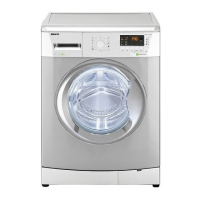
This document is a user manual for a Beko washing machine, model WMB 71001 M+. It provides comprehensive instructions for safe operation, installation, preparation, usage, and maintenance of the appliance.
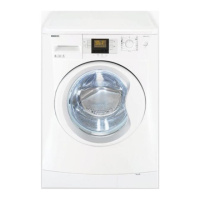
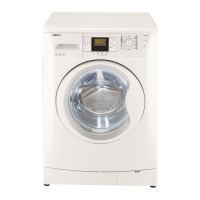
The Beko WMB 71001 M+ is an automatic washing machine designed for domestic use, specifically for washing and rinsing laundry. It is equipped with various programs tailored to different fabric types, soiling levels, and desired wash temperatures. The machine features a control panel with a Programme Selection knob, a Door Open indicator, a Programme Follow-up indicator, a Start/Pause button, and a Spin Speed Adjustment button, allowing users to select and monitor washing cycles. It is designed to resume operation after a power interruption, ensuring convenience. The machine also incorporates safety features such as a loading door lock that prevents opening when water levels are unsuitable and an unbalanced load detection system to prevent damage during spinning.
Programme Selection and Operation: Users can select programs based on fabric type (cottons, synthetics, woollens, delicates), soiling degree (heavily soiled, normally soiled, lightly soiled), and temperature (e.g., 90°C for heavily soiled whites, 60°C for normally soiled colors, 40°C-Cold for blended laundry). Main programs include:
Special programs include:
Loading Laundry: Laundry should be placed loosely into the machine, ensuring no items are caught in the door when closing. The loading door locks during operation and can only be opened a few minutes after the cycle ends or if the water level is suitable during a paused program.
Detergent and Softener Usage: The detergent drawer has compartments for prewash (1), main wash (2), and softener (3). Detergents and softeners should be added before starting the program. Liquid detergent requires a liquid detergent cup in the main wash compartment. The type and amount of detergent depend on fabric type, color, soiling, and water hardness, following manufacturer's instructions to avoid excessive foam or poor rinsing. Bleaching agents should be added at the beginning of a prewash cycle, never mixed with detergent, and used sparingly. Limescale removers, if needed, should be specifically for washing machines.
Spin Speed Selection: The recommended spin speed is displayed upon program selection. It can be decreased using the spin speed adjustment button. Options like "Rinse Hold" and "No Spin" are also available.
Rinse Hold Function: This feature keeps laundry in the final rinsing water to prevent wrinkles if not unloaded immediately. The machine pauses, and the "start/pause" LED blinks. To drain water without spinning, press "start/pause." To spin, select the desired spin speed and press "start/pause."
Cancelling a Programme: To cancel, turn the Programme Selection knob to another program. The "End/Cancel" light will flash. If a new program is started, it will begin without draining water from the previous cycle. To drain water when the "Door Open" light is off, the "Spin+Pump" program should be used.
End of Programme: The "End/Cancel" light illuminates, and the "Door Open" symbol flashes for 1-2 minutes until the door is ready to open. The machine is turned off by rotating the program selection knob to "On / Off."
Standby Mode: The machine automatically switches to an energy-saving standby mode if no program is started or no operation is performed for approximately 2 minutes after a program ends or is selected. Indicator lights dim or turn off, but can be restored by rotating the Programme Selection knob or pressing any button.
General Maintenance: Regular cleaning extends the product's service life and reduces problems. The product should be unplugged during installation, maintenance, cleaning, and repair.
Cleaning the Detergent Drawer: The detergent drawer should be cleaned every 4-5 washing cycles to prevent powder detergent accumulation. This involves removing the siphon piece, washing the drawer and siphon with lukewarm water, and reinserting them securely.
Cleaning the Loading Door and Drum: Residues of softener, detergent, and dirt can accumulate, causing odors and affecting washing performance. The "Drum Cleaning" program (or Cotton-90 if not available) should be used every two months. For this, 100g of powder anti-limescale (or one tablet) should be placed in the main wash detergent compartment. After the program, the inside of the bellow should be dried with a clean cloth. Any foreign substances left in the drum after washing should be removed. Blocked holes on the bellow can be opened with a toothpick. Rust stains on the drum from foreign metal substances should be cleaned with stainless steel cleaning agents, avoiding steel wool.
Cleaning the Body and Control Panel: The machine's body should be wiped with soapy water or mild gel detergents and dried with a soft cloth. The control panel should be cleaned with a soft, damp cloth. Abrasive materials like sponges or scrub brushes should not be used as they can damage painted and plastic surfaces.
Cleaning the Water Intake Filters: Filters at the end of each water intake valve and hose prevent foreign substances from entering the machine. These filters should be cleaned when dirty. This involves closing the taps, removing hose nuts, cleaning filters with a brush (or pliers if very dirty), and then reassembling them securely.
Draining Remaining Water and Cleaning the Pump Filter: The pump filter prevents solid items from clogging the pump impeller. If the machine fails to drain, the pump filter is likely clogged and needs cleaning every 3 months or when clogged. Water must be drained first. This is also necessary before transporting the machine or in case of freezing. To clean, unplug the machine, place a container in front of the filter, loosen the pump filter to drain water, then remove and clean the filter and the impeller region. The filter should only be cleaned after the water has cooled down to avoid burns.
 General
| Type | Front Load |
|---|---|
| Capacity | 7 kg |
| Spin Speed | 1000 RPM |
| Energy Efficiency Class | A+ |
| Number of Programs | 15 |
| Delay Start | Yes |
| Child Lock | Yes |


 To Next Page