This document provides assembly instructions and important information for the Hoppa cot bed, manufactured by Bellamy.
Function Description
The Hoppa cot bed is a versatile piece of nursery furniture designed to accommodate a child from infancy through toddlerhood. It functions primarily as a cot for newborns and infants, offering a secure sleeping environment with adjustable mattress height settings. As the child grows, the cot can be transformed into a junior bed, extending its usability and value. This transformation typically involves removing one or both side rails and adjusting the mattress base to a lower position, allowing the child to independently get in and out of bed. The design emphasizes safety, comfort, and adaptability to meet the evolving needs of a growing child.
Important Technical Specifications
Dimensions:
- Cot Bed: 1232 x 855 x 636 mm (length x height x width). This overall dimension provides a clear understanding of the space required for the cot bed.
- Mattress Base: The manual indicates that the maximum height of the upper surface of the mattress in the highest position of the cot base (MHP) and the middle position (MP) are specified. The lowest position of the cot base (MLP) is also defined. For the drawer, the covering material is 120/36cm.
- Mattress Thickness: The mattress thickness should not be less than 100 mm and not more than the internal length or width of the cot. This ensures proper fit and safety within the cot structure.
- Distance between mattress and top edge: The distance between the upper surface of the mattress and the upper edge of the cot side should be at least 500 mm in the highest position and at least 200 mm in the lowest position. This is a critical safety measure to prevent children from climbing out.
- Distance between slats: The distance between the slats of the cot sides should be between 45 mm and 65 mm. This prevents a child's head or limbs from getting trapped.
Materials and Components:
The assembly instructions detail various components, including:
- a10 (Ø10x13): Dowels, used for joining wooden parts.
- a11: Screws, likely for securing panels.
- a12: Cam locks, for strong and concealed connections.
- T2 (Ø3x26): Small screws, possibly for attaching smaller components or reinforcements.
- T (Ø6x45): Larger screws, likely for structural connections.
- h2 (Ø6x50): Screws, potentially for the mattress base or other structural elements.
- h3 (Ø6x35): Screws, used for specific connections, possibly related to the transformation.
- h4: Bolts, used with an Allen key (Sw-4) for secure fastening of the side rails.
- Sw-4: Allen key, a common tool for assembling furniture.
The cot bed is designed to comply with safety standards for children's beds, specifically EN 716-1: 2008. This certification indicates that the product has undergone rigorous testing to ensure it meets European safety requirements.
Usage Features
Adjustable Mattress Height:
The Hoppa cot bed offers multiple mattress height positions (MHP, MP, MLP). This feature is crucial for adapting the cot to the child's developmental stage:
- Highest Position (MHP): Ideal for newborns and young infants, allowing parents to easily reach and lift the baby without excessive bending.
- Middle Position (MP): Suitable as the baby grows and starts to sit up, providing a safer depth.
- Lowest Position (MLP): Essential when the child begins to stand, preventing them from climbing out of the cot.
Transformation to Junior Bed:
A key feature of the Hoppa cot bed is its ability to transform into a junior bed. This extends the product's lifespan beyond infancy. The transformation process, illustrated in steps 9 through 16 of the manual, involves:
- Removing the side rails (parts 1 and 8).
- Adjusting the mattress base to a lower position.
- Potentially replacing the side rails with lower panels (parts 6 and 7) to create an open-sided bed suitable for a toddler.
This feature allows the child to transition from a secure cot to a more independent sleeping arrangement, fostering autonomy while maintaining a familiar sleeping environment.
Safety Guidelines:
The manual emphasizes several important safety guidelines for usage:
- Mattress Fit: Always ensure the mattress fits snugly within the cot, with no gaps larger than 30 mm.
- Regular Checks: Regularly check all fittings and components to ensure they are secure and undamaged.
- No Missing Parts: Do not use the cot if any parts are missing, broken, or damaged.
- No Additional Items: Do not place additional items in the cot that could provide a foothold for the child to climb out.
- Proximity to Hazards: Do not place the cot near open fires, heat sources, or electrical outlets.
- Ventilation: Ensure adequate ventilation around the cot.
- Cleaning: Use only a damp cloth and mild detergent for cleaning. Avoid abrasive cleaners or harsh chemicals.
Maintenance Features
Regular Inspection:
The manual stresses the importance of regular inspection of all components to ensure the cot remains safe and functional. This includes:
- Checking Fittings: Regularly check that all screws, bolts, and other fasteners are tight and secure. Loose fittings can compromise the structural integrity of the cot.
- Inspecting for Damage: Look for any signs of damage, such as cracks, splinters, or broken parts. Damaged components should be replaced immediately.
- Wear and Tear: Pay attention to areas that experience frequent use, such as the mattress base adjustments and the side rails, for signs of wear and tear.
Cleaning Instructions:
- Mild Cleaning Agents: For cleaning the cot, use only a damp cloth and a mild detergent. This prevents damage to the finish and ensures the cot remains safe for the child.
- Avoid Harsh Chemicals: Do not use abrasive cleaners, bleach, or strong chemical detergents, as these can damage the materials and potentially pose a health risk to the child.
- Drying: After cleaning, ensure the cot is thoroughly dried to prevent moisture damage or mold growth.
Storage and Disassembly:
While not explicitly detailed as a maintenance feature, the transformation process implies that the cot can be partially disassembled and reassembled. This suggests that if the cot needs to be stored, it can be taken apart to save space. When storing, it is advisable to keep all components together and protected from moisture and extreme temperatures to preserve their condition.
Compliance with Standards:
The cot's compliance with EN 716-1: 2008 standards means it is designed for durability and safety. Adhering to the manufacturer's instructions for assembly, usage, and maintenance is crucial to maintain this compliance and ensure the long-term safety and functionality of the Hoppa cot bed. If any parts are missing or damaged, contact the retailer or manufacturer for replacements.

 Need help?
 General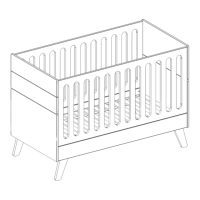

 To Next Page