EasyManua.ls Logo

BEP 600-TLM-SIF - User Manual

BEP 600-TLM-SIF
3 pages
Print Icon
To Next Page IconTo Next Page
Loading...
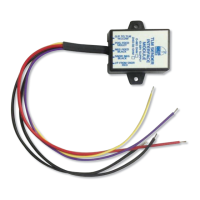
PRODUCT DESCRIPTION:
This signal converter module is used with
10-180 ohm, or 240-33 ohm tank senders to
produce a 0-5V output.
BEP
equipment that uses a 0-5 volt signal
input includes the DCSM DC/Systems
Monitor, CZone Digital Switching/Monitoring,
and the (obsolete) 600-TLM tank monitor.
SPECIFICATIONS:
Supply voltage: 10-32 volts
Switchable jumper (link) for 240-33, or
10-180 ohm inputs (Supplied with jumper set
to suit 240-33 ohm senders)
Output v
oltage: 0-5 volts
Important Note:
Tank monitoring must be calibrated to ensure
that monitor matches tank conditions!
The 240-33 ohm senders may indicate some
tank contents when in fact the tank is empty
600-TLM-SIF TANK SENDER
MODULE INTERFACE
OWNERS INSTRUCTION MANUAL
Question and Answer IconNeed help?

Do you have a question about the BEP 600-TLM-SIF and is the answer not in the manual?

Overview

The BEP 600-TLM-SIF Tank Sender Module Interface is a signal converter designed to translate resistance-based readings from tank senders into a standardized 0-5V output signal. This module is crucial for integrating various tank sender types with modern marine monitoring systems, ensuring accurate display of tank levels.

Function Description:

The primary function of the 600-TLM-SIF module is to act as an intermediary between a tank sender and a monitoring device. It takes the variable resistance output from a tank sender, which changes based on the fluid level in the tank, and converts it into a proportional 0-5V analog voltage signal. This standardized voltage output is compatible with a range of BEP monitoring equipment, including the DCSM DC/Systems Monitor, CZone Digital Switching/Monitoring systems, and the now-obsolete 600-TLM tank monitor. The module supports two common types of tank senders: 10-180 ohm and 240-33 ohm. This versatility allows it to be used in a wide array of marine applications, accommodating different sender manufacturers and tank types (e.g., fuel, water).

Important Technical Specifications:

  • Supply Voltage: The module operates within a broad supply voltage range of 10-32 volts DC. This wide input voltage tolerance makes it suitable for both 12V and 24V marine electrical systems, providing flexibility in installation and reducing compatibility concerns.
  • Input Types: The module is designed to work with two primary resistance ranges from tank senders:
    • 10-180 ohm inputs: Typically used for senders where 10 ohms represents an empty tank and 180 ohms represents a full tank.
    • 240-33 ohm inputs: Commonly used for senders where 240 ohms represents an empty tank and 33 ohms represents a full tank.
  • Output Voltage: The module provides a linear 0-5 volt output signal. This means that as the tank level changes from empty to full, the output voltage will proportionally increase from 0V to 5V.
  • Switchable Jumper: A key feature is the switchable jumper (link) that allows the user to configure the module for either 240-33 ohm or 10-180 ohm senders. The module is typically supplied with the jumper pre-set to suit 240-33 ohm senders, requiring user adjustment if a 10-180 ohm sender is being used.
  • Wiring: The module features a clear wiring diagram for easy installation. Key connections include:
    • Supply: Positive 12V feed (violet wire) and negative feed (black wire).
    • Sender Input: Red wire from the sender (I/P from sender) and black wire for sender negative (SNDR NEG).
    • Output to Monitor: Yellow wire (SENDER TO TLM YELLOW) for the 0-5V signal.
    • Ground: A common ground connection for the system.
  • Fuse: A 1A fuse is recommended for the +12 VDC supply line to protect the module and the electrical system.

Usage Features:

  • Versatile Compatibility: The 600-TLM-SIF module is compatible with a wide range of BEP monitoring systems, including the DCSM, CZone, and older 600-TLM units. This ensures seamless integration into existing BEP electrical architectures.
  • Easy Configuration: The module's ability to switch between 10-180 ohm and 240-33 ohm sender types via a simple jumper makes it highly adaptable. This eliminates the need for multiple specialized modules for different sender types, simplifying inventory and installation.
  • Clear Wiring Diagram: The provided wiring diagram is straightforward, detailing connections for power, sender input, and output to the monitoring device. This facilitates accurate and efficient installation, even for those with moderate electrical experience.
  • Compact Design: The module's small form factor allows for discreet installation in various locations within a vessel, minimizing clutter and maximizing space.

Maintenance Features:

  • Jumper Adjustment: The primary "maintenance" or configuration task involves adjusting the internal jumper to match the specific tank sender type. This process is detailed in the manual:
    1. Gently lever off the rear cover to expose the circuit board.
    2. Locate the small jumper socket.
    3. Remove the jumper socket from its default position (factory preset to 240-33 ohm).
    4. Fit the jumper socket onto the pins corresponding to the desired sender type (10-180 ohm or 240-33 ohm).
    5. Refit the rear cover using a neutral cure type glue/sealer to ensure a secure and watertight seal.
  • Calibration Requirement: An "Important Note" in the manual emphasizes that tank monitoring systems must be calibrated to ensure the monitor accurately reflects actual tank conditions. This is a critical step after installation or sender type adjustment, as it accounts for variations in tank shape, sender linearity, and installation specifics. Without proper calibration, the displayed tank levels may be inaccurate.
  • Empty Tank Indication: The manual also highlights a specific characteristic of 240-33 ohm senders: they "may indicate some tank contents when in fact the tank is empty." This is an important consideration for users of this sender type, requiring careful calibration and awareness during operation to avoid misinterpretations of tank levels, particularly when approaching empty.
  • Black Wire Linkage: The manual clarifies that the black wires within the module are internally linked. This means either black wire can be used for the sender negative or the module's negative supply, offering slight flexibility during wiring.

In summary, the BEP 600-TLM-SIF Tank Sender Module Interface is a robust and versatile signal converter essential for modern marine tank monitoring. Its broad compatibility, easy configuration, and clear documentation make it a valuable component for ensuring accurate and reliable tank level readings on board. The emphasis on calibration and awareness of sender-specific behaviors underscores the importance of proper setup for optimal performance.

BEP 600-TLM-SIF Specifications

General IconGeneral
BrandBEP
Model600-TLM-SIF
CategoryRecording Equipment
LanguageEnglish