18
Wait at least 5 minutes before taking another measurement!
Evaluating results
Cardiac arrhythmia:
This instrument can identify possible cardiac arrhythmia disor-
ders during measurement and if necessary indicates the meas-
urement with the flashing icon
.
This may be an indicator for arrhythmia. Arrhythmia is a condi-
tion where the heart rhythm is abnormal as a result of defects
in the bioelectrical system controlling the heart beat. The symp-
toms (omitted or premature heart beats, slow or excessively
fast heart rate) may be caused, among other things, by heart
disease, age, physical predisposition, excessive use of stimu-
lants, stress or lack of sleep. Arrhythmia can only be ascertained
through examination by your doctor.
Repeat the measurement if the flashing icon is displayed after
the measurement. Please note that you should rest for 5 minutes
between measurements and not talk or move during the meas-
urement. If the icon appears often, please contact your doc-
tor. Any self-diagnosis and treatment based on the test results
may be dangerous. It is vital to follow your doctor’s instructions.
WHO classification:
The World Health Organization (WHO) and National High Blood
Pressure Education Program Coordinating Committee have
developed a blood pressure standard, according to which areas
of low- and high-risk blood pressure are identified. This standard,
however, is a general guideline as individual’s blood pressure var-
ies among different people and different age groups ... etc.
It is important that you consult with your physician regularly.
Your physician will tell you your normal blood pressure range as
well as the point at which you will be considered at risk.
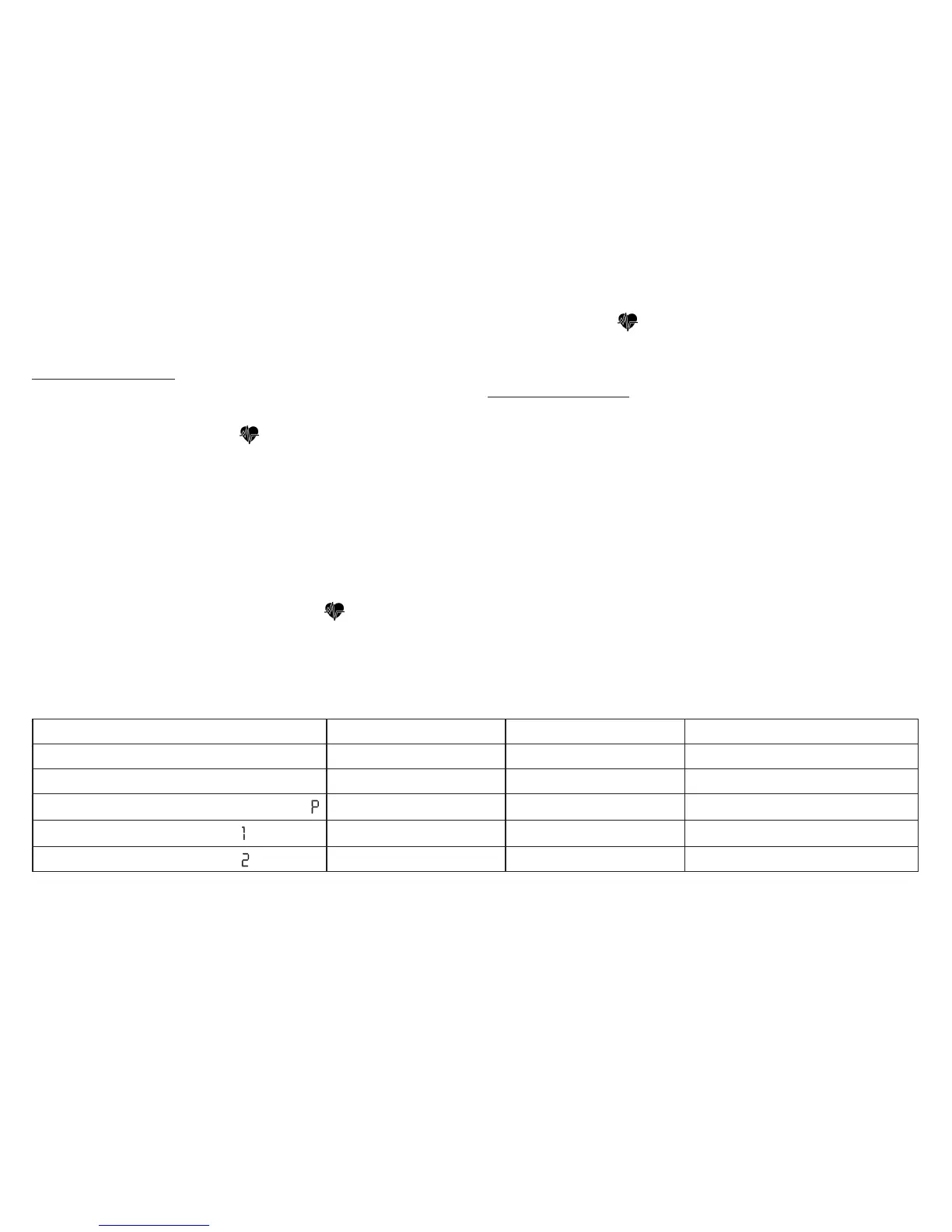
Table for classification of blood pressure values for adults:
Range Systolic (in mmHg) Diastolic (in mmHg) Action
Hypotonia (degraded blood pressure) < 105 < 60 Self check
Normal range 105 – 119 60 – 79 Self check
Pre-hypertensive blood pressure range*
120 – 139 80 – 89 Check with doctor
High blood pressure - degree
140 – 159 90 – 99 Consult your doctor
High blood pressure - degree
≥ 160 ≥ 100 Consult your doctor
(*) Blood pressure range that might transfer to high blood pressure Adapted from JNC 2003


 To Next Page