138 S450 Operation & Maintenance Manual
SEAT BAR RESTRAINT SYSTEM
Description
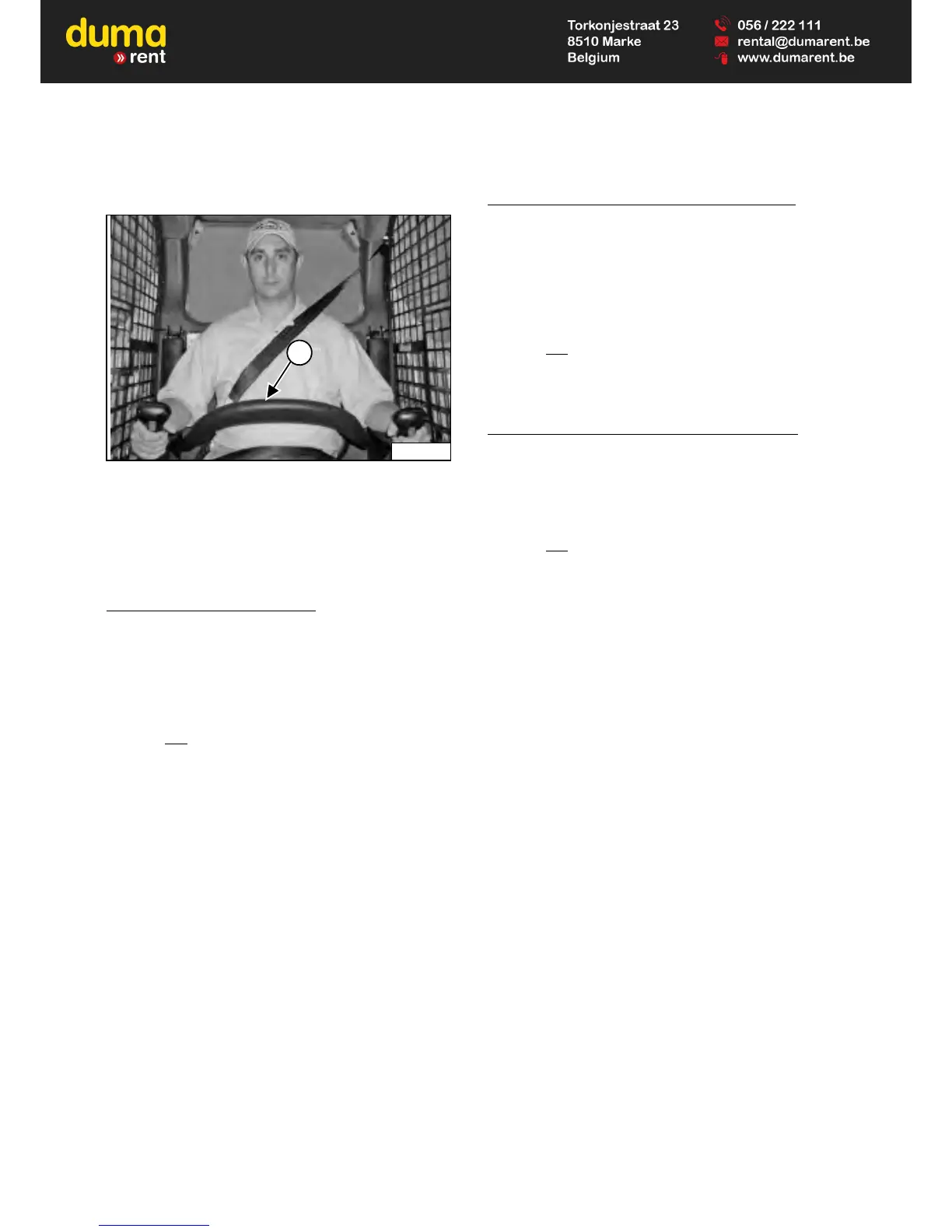
Figure 170
The seat bar restraint system has a pivoting seat bar with
armrests (Item 1) [Figure 170].
The operator controls the use of the seat bar. The seat
bar in the down position helps to keep the operator in the
seat.
Models with Standard Controls
have hydraulic valve
spool interlocks for the lift and tilt functions. The spool
interlocks require the operator to lower the seat bar in
order to operate the foot pedal controls.
When the seat bar is down, the engine is running, the
PRESS TO OPERATE LOADER button is activated, and
the brake is released; the lift, tilt, and traction drive
functions can
be operated.
When the seat bar is up, the lift and tilt control pedals are
locked when returned to the NEUTRAL position.
Models with Advanced Control System (ACS)
have
mechanical interlocks for the handles and pedals. The
interlocks for the handles and pedals require the operator
to lower the seat bar in order to operate the selected
controls.
When the seat bar is down, the engine is running, the
PRESS TO OPERATE LOADER button is activated, and
the brake is released; the lift, tilt, and traction drive
functions can
be operated.
When the seat bar is up, the handles and pedals are
locked when returned to the NEUTRAL position.
Models with Selectable Joystick Controls (SJC)
have
electrical deactivation of lift and tilt functions. Activation of
functions require the operator to lower the seat bar.
When the seat bar is down, the engine is running, the
PRESS TO OPERATE LOADER button is activated, and
the brake is released; the lift, tilt, and traction drive
functions can
be operated.
When the seat bar is up, the lift and tilt functions are
deactivated even though the joysticks do not
mechanically lock.


 To Next Page
 Loading...