186 S450 Operation & Maintenance Manual
TYRE MAINTENANCE
Wheel Nuts
See the SERVICE SCHEDULE for the correct service
interval. (See SERVICE SCHEDULE on Page 134.)
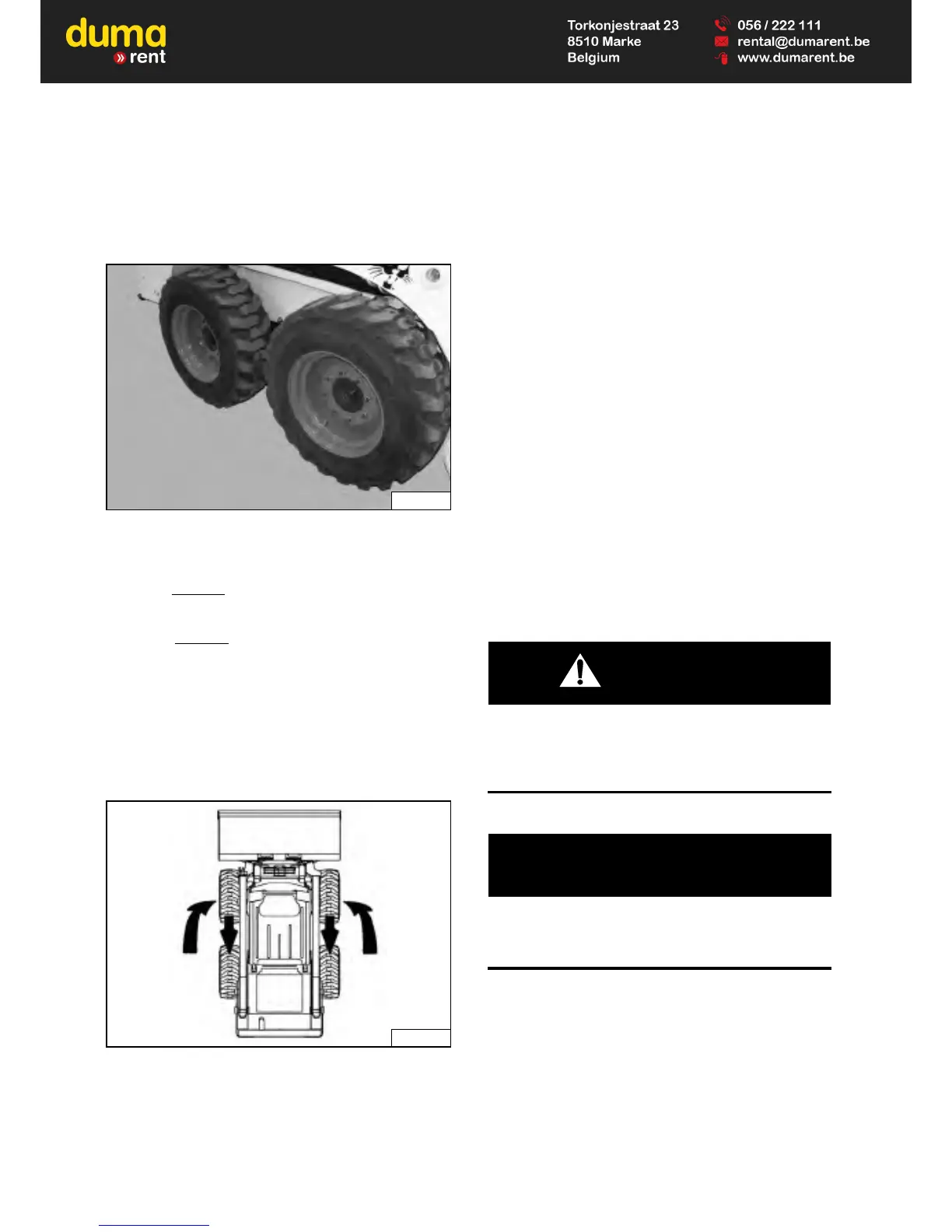
Figure 262
Follow the torques specified below for the wheel nuts
[Figure 262]:
When installing
wheel nuts, tighten to 217 N•m (160
ft-lb) torque.
When checking
wheel nut torque, set the torque
wrench to 190 N•m (140 ft-lb) to prevent
overtightening.
Rotating
Check the tyres regularly for wear, damage, and
pressure.
Figure 263
Rear tyres usually wear faster than front tyres. To keep
tyre wear even, move the front tyres to the rear and rear
tyres to the front [Figure 263].
The same size tyres must be used on each side of the
loader. If different sizes are used, each tyre will turn at a
different rate and cause excessive wear. The tread bars
of all the tyres must face the same direction.
Recommended tyre pressure must be maintained to
avoid excessive tyre wear, loss of stability, and loss of
handling capability. Check for correct pressure before
operating the loader. (See Tyres on Page 222.)
Mounting
Tyres are to be repaired only by an authorised person
using the proper procedures and safe equipment.
Tyres and rims must always be checked for correct size
before mounting. Check rim and tyre bead for damage.
The rim flange must be cleaned and free of rust.
The tyre bead and rim flange must be lubricated with a
rubber lubricant before mounting the tyre.
Avoid excessive pressure that can rupture the tyre and
cause serious injury or death.
During inflation of the tyre, check the tyre pressure
frequently to avoid over inflation.


 To Next Page
 Loading...