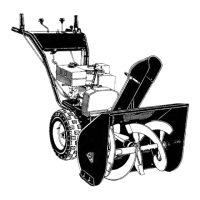
The Bolens Snow Thrower, encompassing models 225, 225E, 300, 300E, 350, 350E, 500, 500E, and 520, is a single-stage piece of equipment designed for snow removal. It is engineered for good performance when properly operated and maintained, offering various features for efficient and safe use.
Function Description:
The primary function of the Bolens Snow Thrower is to clear snow from various surfaces. It utilizes a triple-paddle impeller system to collect and discharge snow. The unit is designed to be user-friendly, with controls for directing snow discharge and engaging the impeller. It can be started either manually via a recoil starter or, on electric start models, with an electric starter button. The machine is suitable for clearing snow from driveways, sidewalks, and other areas, with specific operational guidelines for different snow conditions.
Important Technical Specifications:
The models vary in engine type, horsepower, cutting width, and weight:
- Models 225, 225E, 300, 300E: These models feature a 2-cycle Tecumseh engine. The 225 and 225E have a 2.25 HP/1.7 kW engine, while the 300 and 300E have a 3.0 HP/2.2 kW engine. All these models share a 2 qt./1.9 L fuel capacity and a 20"/51 cm cutting width. They weigh approximately 42 lbs./19.0 Kg.
- Models 350, 350E, 500, 500E, 520: These models are equipped with a 4-cycle Tecumseh engine. The 350 and 350E have a 3.5 HP/2.6 kW engine, and the 500, 500E, and 520 models feature a 5 HP/3.7 kW engine. All these models have a 2 qt./1.9 L fuel capacity. The 350, 350E, and 520 models have a 20"/51 cm cutting width, while the 500 and 500E models have a wider 24"/61 cm cutting width. Weights vary: 350/350E/520 are 50 lbs./22.7 Kg, and 500/500E are 52 lbs./23.6 Kg.
- Impeller System: All models use a Triple-Paddle Impeller Hi Capacity Poly V Belt system.
- Paddle Size: Models 225, 225E, 300, 300E, 350, 350E, and 520 use 1.5 x 6" Rubber paddles (3.8 x 15.2 cm). Models 500 and 500E use slightly larger 1.5 x 7" Rubber paddles (3.8 x 17.8 cm).
- Wheel Size: All models feature 1.5 x 6" Rubber wheels (3.8 x 15.2 cm).
- Start Type: All models are available with manual start. Electric start kits are available for manual start units. Models 225E, 300E, 350E, and 500E are explicitly listed with electric start capability.
- Auger Clutch: Models 350, 350E, 500, 500E, and 520 are equipped with an auger clutch.
- Snow Discharge: All models offer 3-Way Directional snow discharge.
- Fold Down Handles: All models except 225 and 300 feature fold-down handles for easier storage.
Usage Features:
- Controls: The snow thrower includes a vane control to direct snow discharge left, right, or straight ahead. An ignition key is used for starting and stopping the engine. A choke control assists in cold engine starting. The recoil starter allows manual engine start, while electric start models have a button for electric starting. A primer button is used to hand prime the carburetor, especially in cold temperatures. Some models are equipped with an auger clutch control to engage or disengage the impeller.
- Starting Procedures: For recoil start, the ignition switch is turned "ON," the choke is pulled, the primer button is pushed 1-4 times depending on temperature, and then the starter rope is pulled. For electric start, the cord is plugged into the starter switch connector and a 120-volt outlet, then the starter button is pressed.
- Operation Tips: It is recommended to inspect the area for foreign objects before snow removal. Spraying the impeller housing and vanes with silicone spray or paste wax can prevent snow buildup. The engine should be warmed up for about five minutes before use. Removing snowfall as soon as possible yields the best results. For optimal performance, vanes should be in a vertical position, snow discharged downwind, and passes slightly overlapped. The machine's forward speed should be adjusted based on snow type and depth; tilting the unit forward can aid propulsion in light snow, while heavy, wet snow may require slower speeds and overlapping passes to prevent overloading.
- Safety Precautions: Emphasizes reading the manual, understanding controls, and knowing how to stop the unit quickly. Children should not operate the equipment. The area of operation must be kept clear of people and pets. Caution is advised to avoid slipping, especially in reverse. Thorough inspection of the area for foreign objects is crucial. Appropriate winter clothing and footwear are recommended. Fuel handling requires extreme care due to flammability; refueling should be done outdoors with a cold engine, using an approved container, and the cap securely replaced. Never put hands or feet near rotating parts or the discharge opening. Exercise caution on gravel drives or roads. Stop the engine immediately after striking a foreign object or if abnormal vibration occurs. Always stop the engine before leaving the operating position, unclogging the collector/impeller, or performing repairs/adjustments. Do not run the engine indoors except for transport. Guards and safety devices must always be in place. Avoid directing discharge at bystanders or near glass enclosures, automobiles, or window wells. The exhaust muffler can be hot.
Maintenance Features:
- General Maintenance: Regular checks of engine mounting bolts and scraper bar mounting bolts for tightness are recommended.
- Spark Plug: Clean and regap the spark plug as necessary. 2-cycle engines require a .035" (0.9mm) gap, while 4-cycle engines require a .030" (0.76mm) gap. Only resistor spark plugs should be used for compliance with radio interference regulations.
- Engine Crankcase (4-Cycle Engines only): Models 350, 350E, 500, 500E, and 520 require the crankcase to be filled with oil before operation. Oil should be changed after the first 2 hours and then every 25 hours. Oil level should be checked every 5 operating hours.
- Fuel Mixture (2-Cycle Engines only): Models 225, 225E, 300, and 300E require a fuel mixture of oil and fresh, clean unleaded automotive gasoline (32:1 mixture). SAE 30 or 40 outboard or 2-cycle oil should be used. Mixing should be done in a separate container, not directly in the engine fuel tank.
- Carburetor Adjustments: Factory settings are generally satisfactory. For 4-cycle engines, the high-speed adjustment needle regulates fuel flow. For 2-cycle engines, the mixture adjusting screw regulates fuel flow. Adjustments should be made carefully to avoid damage.
- Impeller Clutch Adjustment (if equipped): The cable for the auger clutch can be adjusted to ensure proper impeller engagement.
- Paddle Replacement: If paddles become worn and fail to propel snow, all three paddles should be replaced simultaneously.
- Belt Adjustment (Models 225, 225E, 300, 300E): If the idler pulley does not apply enough tension, the belt can be adjusted by repositioning the anchor screw.
- Maintenance Schedule:
- Before Each Use: Check crankcase oil level (4-cycle engines) and check for loose screws and nuts.
- After Each Use: Clean the machine of snow and slush, brushing out housing to remove sand and gravel.
- During Each Season (as needed): Lubricate the idler arm, vane control mechanism, impeller bearings, and wheels with lightweight motor oil.
- After Each Season: Check for belt wear, perform storage instructions, and wipe oil or grease on all bare metal surfaces.
- Storage: Remove snow and ice, perform storage instructions as outlined in the engine manual, touch up chipped paint, and coat unpainted areas with oil or grease to prevent rust. Store the unit in a dry area, with handles folded down for additional protection.

 Need help?
 General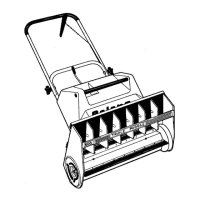

 To Next Page