
 Need help?
Do you have a question about the Bosch AL 2204 CV and is the answer not in the manual?
General safety instructions for using the battery charger to prevent electric shock, fire, and injury.
Technical specifications including output voltage, charging current, and charging time for the battery charger.
Details about the product's components, such as the battery pack and charge indicator.
Instructions for initiating the charging process, including mains voltage and battery insertion.
Details on how the charging process works, including intelligent charging and storage benefits.
Explanation of the battery charge indicator states: flashing and continuous light.
Guidance on charger heating during repetitive charging cycles and battery replacement indicators.
Information on obtaining support, spare parts, and contact details for Bosch service.
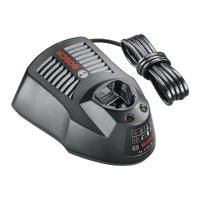
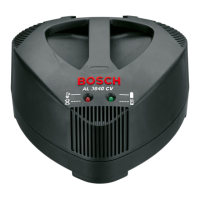
This document describes the Bosch AL 2204 CV and AL 2215 CV battery chargers, designed for charging Bosch lithium-ion batteries. The manual provides essential information for safe and effective operation, maintenance, and troubleshooting of these devices.
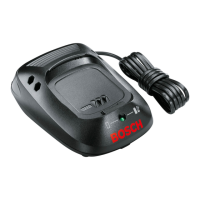
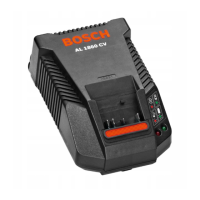
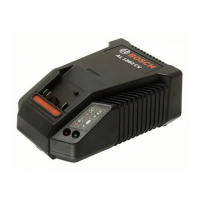
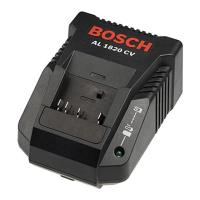
The Bosch AL 2204 CV and AL 2215 CV are intelligent battery chargers specifically engineered for Bosch lithium-ion batteries or lithium-ion batteries integrated into Bosch products. Their primary function is to efficiently and safely recharge these batteries, ensuring optimal performance and extending battery life. The chargers automatically detect the battery's charging condition and apply the most suitable charging current, taking into account factors like battery temperature and voltage. This intelligent charging method contributes to a longer lifespan for the battery and ensures it is fully charged when stored in the charger.
The charging process is initiated by inserting the mains plug of the battery charger into a socket and then placing the battery pack (or a power tool with a slide-on battery) onto the charger. The charger features a green battery charge indicator that communicates the status of the charging process. A flashing indicator signifies that charging is in progress, while a continuous light indicates that the battery is fully charged or that charging is temporarily paused due to the battery temperature being outside the allowable range. If no battery is inserted, a continuous light on the indicator confirms that the charger is ready for operation and the mains plug is properly connected.
The chargers are designed with safety as a priority, incorporating features and warnings to prevent electric shock, fire, and injury. Users are advised to keep the charger away from moisture, ensure it is clean, and regularly inspect it for damage. In the event of damage to the charger, cable, or plug, it should not be used and must be repaired by a qualified technician using original spare parts. The chargers should not be operated on easily flammable surfaces to mitigate fire hazards from heat generated during charging.
The Bosch AL 2204 CV and AL 2215 CV chargers are straightforward to use, but require adherence to specific guidelines for safe and effective operation. Before use, it is crucial to verify that the mains voltage matches the specifications on the charger's nameplate. The charging procedure involves a simple two-step process: first, insert the mains plug into a socket, and then place the battery pack onto the charger. The battery pack slides onto the front of the charger and is then pressed down at the rear to secure it. To remove the battery, the process is reversed.
During charging, the power tool itself cannot be switched on, ensuring that the battery is dedicated solely to the charging process. The intelligent charging system automatically manages the charging current based on the battery's condition, optimizing the process for longevity and full charge. It's important to note that charging can only occur if the battery temperature falls within the allowable charging temperature range (0–45 °C). If the battery is outside this range, the charger will indicate a continuous light, pausing the charging until the temperature normalizes.
The battery charge indicator (a green LED) provides clear visual feedback on the charging status. A flashing light means the battery is actively charging. A continuous light means the battery is fully charged, or charging is temporarily suspended due to temperature, or the charger is plugged in and ready but no battery is inserted. This intuitive feedback system helps users understand the state of their battery at a glance.
For troubleshooting, the manual provides guidance on common issues. If the battery charge indicator shows a continuous light but no charging occurs, it could be due to an improperly inserted battery, contaminated battery contacts, or a defective battery pack. Solutions include properly inserting the battery, cleaning the contacts, or replacing a defective battery. If the indicator does not light up at all, it suggests issues with the mains plug connection, the socket outlet, the mains cable, or the charger itself, requiring checks of these components.
Maintaining the Bosch AL 2204 CV and AL 2215 CV chargers primarily involves ensuring cleanliness and regular inspection to guarantee safe and optimal performance. Users are advised to keep the battery charger clean to prevent contamination, which could lead to an electric shock hazard. A clean charger also ensures proper ventilation, preventing overheating and maintaining operational efficiency.
Before each use, it is essential to visually inspect the battery charger, its cable, and the plug for any signs of damage. If any damage is detected, the charger must not be used. Crucially, users should never attempt to open or repair the battery charger themselves. All repairs must be performed by a qualified technician using original spare parts to ensure safety and maintain the integrity of the device. Damaged battery chargers, cables, and plugs significantly increase the risk of electric shock, making professional repair or replacement imperative.
The ventilation slots of the battery charger must not be covered. Obstructing these slots can cause the charger to overheat, leading to improper operation or potential damage. Ensuring clear ventilation pathways is a simple yet critical maintenance step.
The manual also addresses the lifespan of batteries in relation to charging. A significantly reduced working period of a battery after charging indicates that the battery is worn out and needs to be replaced. While the charger itself is designed for durability, recognizing when a battery has reached the end of its useful life is part of effective tool maintenance.
For any questions regarding maintenance, repair, or spare parts, Bosch's after-sales service is available. Users can find exploded views and information on spare parts on the Bosch website. When contacting service, it is important to provide the 10-digit article number found on the type plate of the battery charger to ensure accurate assistance. This structured approach to maintenance, combining user vigilance with professional support, helps extend the life of both the charger and the batteries it serves.
 General
| Input voltage | 230 V |
|---|---|
| Output voltage | 18 V |
| Input frequency | 50/60 Hz |
| Battery recharge time | 1 h |
| Product type | Battery charger |
| Product color | Black |
| Brand compatibility | Bosch |
| Compatible battery sizes | - |
| Number of batteries supported | 1 |
| Compatible battery technologies | Lithium-Ion (Li-Ion) |
| Batteries included | No |
| Type | Indoor battery charger |
| Housing material | Plastic |







 To Next Page