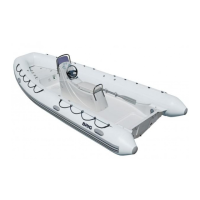
2022 Owner’s Manual Eagle 8 BRIG ltd
68
GENERAL BOATING SAFETY.
We strongly suggest that you thoroughly familiarize yourself and friends or members of your family with safe
boating practices before setting out. Remember, that along with the freedom and exhilaration of boating comes the
responsibility that you have for the safety of your passengers and other boaters who share the water with you.
Boating regulations are vary. Check with your local authorities for the regulations pertaining to your area.
Check with local FM weather stations, Coast Guard, or on-line for the latest weather conditions.
Remember getting caught in severe weather is hazardous. Check weather conditions periodically while you are boating. If
you are forced to operate your boat in a storm condition, take common sense precautions; wear PFD’s (personal flotation
device), store gear, reduce speed and if possible head for safe refuge.
Always check the weather before departure. Be particularly cautious of forecasted electrical storms and high
winds. Always have up-to date charts aboard as a backup to your plotter and auto pilot option. Charts can be obtained at
a marina, on-line store or by contacting with federal government agencies. Always file a float plan. Leave details of your
trip with someone responsible who will be remaining on shore. Include expected return, plus name and phone number of
a contact person in case of emergency.
It is best to avoid operating your boat in foggy weather. When fog sets in, take bearings, log courses and speeds.
You are required to emit a five second blast from your horn or whistle once every minute. Also, have your passengers
wear PFD’s and observe for oncoming vessels.
If foul weather catches you at sea do the following:
1. Slow down. Proceed with caution and put on your life vests.
2. Try to reach the nearest safe shoreline.
3. Navigate your vessel slowly into the waves at a 45 degree angle.
4. Passengers should sit low in the center of the vessel.
5. Monitor your bilge pump. Make sure sump stays free of water.
6. Secure loose gear. Make ready emergency equipment.
7. Anchor over the bow but never over the stern.
Operation in shallow water presents a number of hazards including sand bars and water levels influenced by
tides. If the vessel strikes an underwater hazard, check for boat and engine damage.


 To Next Page
 Loading...