If blade bolts are allowed to run loose, the obvious danger is for the bolt to come completely loose,
allowing the blade, bolt, and nut to be ejected from the cutter.
Tightening Blade Bolts (continued)
The second danger is that when the bolt is not sufciently tight, the blade is allowed excess vertical
movement when it strikes an object, be it something it will cut or something into which it should not
come in contact. In this situation, the blade is being hammered against the blade carrier and exed, or
bent, up around the edge of the blade carrier at least twelve (12) times per second, generally fteen (15)
times per second. This situation will
cause the blade to break from fatigue
and to be ejected from the cutter.
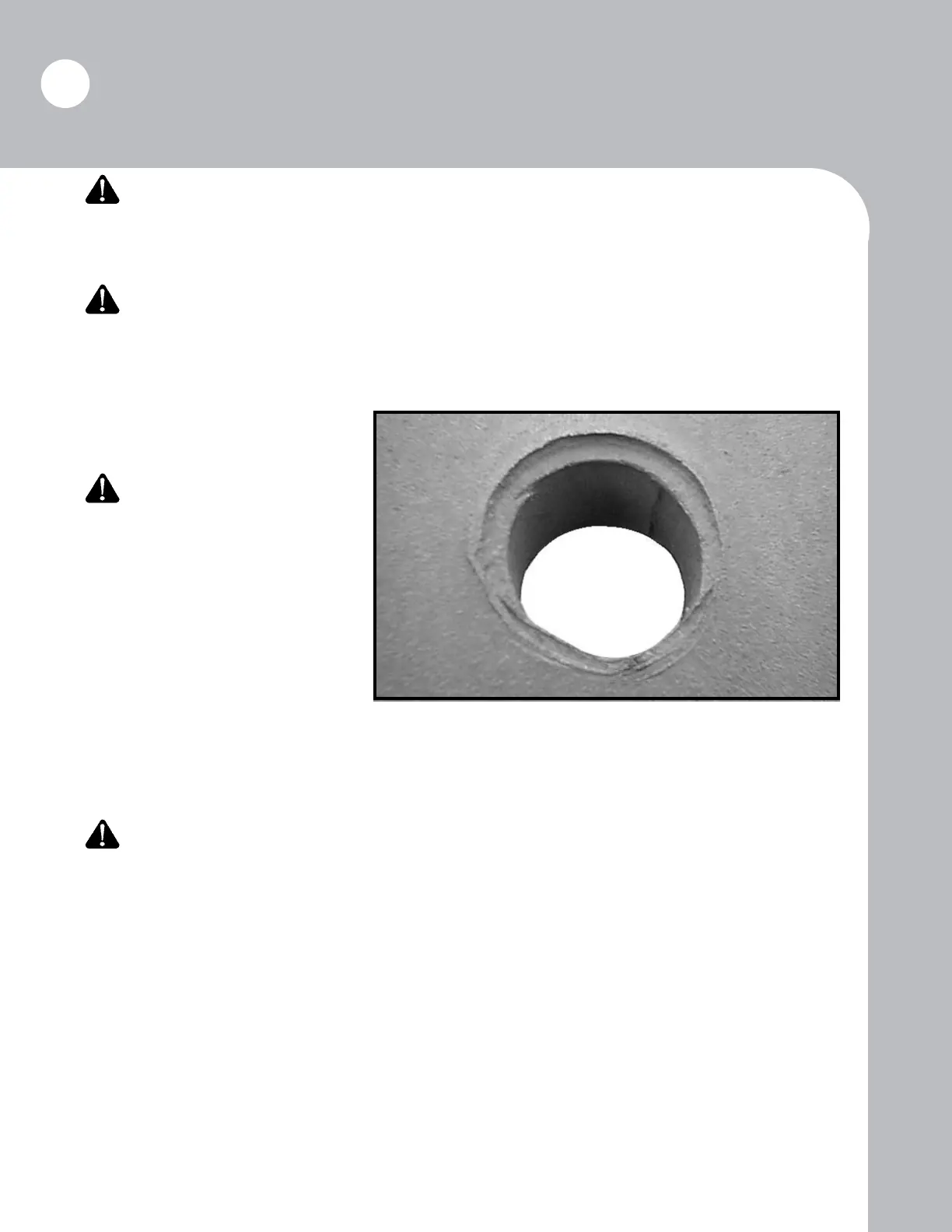
The third danger is that, while
the second situation is occurring,
the blade bolt is also hammering the
underside of the blade carrier; the
shoulder of the blade bolt beats an
indention around the blade bolt hole
into which the bolt shoulder will t.
When this damage occurs, the blade
bolt will pull up into the indention
when the bolt is tightened, causing
the blade to jam so that it can no longer pivot on the blade bolt. A jammed blade will break either from
fatigue or from catastrophic occurrence and will allow the blade to be ejected. A blade carrier damaged
in this manner must be taken out of service immediately. Repair the blade carrier (contact Brown Mfg.
Corp. for instructions) and replace the blades and blade bolts before returning the machine to service.
All three of the described occurrences will cause the blades to break and be ejected. An
ejected blade can and will cause serious injury or death.
REMEMBER: Blades must pivot freely and blade bolts must be tight!
Maintenance
34


 To Next Page