t;
Exposure
time
duri
ng
daily
shift
(8h)
Up
to
30
min
.
> 30 min.
to
1h
> 1 h
to
2h
>
2h
to
4h
> 4h
to
8h
Hand-Arm
Vibration
Exposure
(ms-
2
rms, dB
re
1 o-
6
ms-
2
)
( Reference Frequency 160 Hz)
Regularly
Interrupted
Un inter-
rupted
Duration
of
regular
time
interval
WITHOUT
vibration
or
not
(minutes per
working
hour)
regularly
interrupted
Up
to
10 > 10
to
20
> 20
to
30
> 30
to
40
> 40
40,152
40,152
-
-
- -
32,150
32,150
-
-
-
-
24, 147,5 24, 147,5 24, 147,5
32,150
40,152
40,152
16,144
16, 144
16,144
24, 147,5
32,150
40,152
8,
138 (x1)
8,
138 (x1)
8,
138 (x1) 16,
144
(x2)
24, 147,5 (x3)
32, 150 (x4)
810062
In
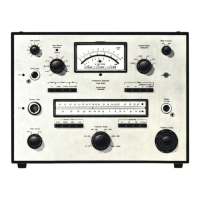
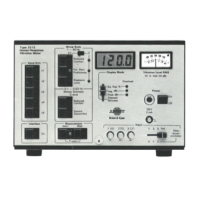
the Draft International Standard ISO/DIS 5349,
1979,
"Principles for the measurement and
the evaluation
of
human exposure to vibration transmitted to the hand", on which the
HAND-ARM section
of
the 2512 is based, equivalent exposure is not specifically defined, as it
is for WHOLE BODY measurements. However, using the amplitude-time weighting function for
uninterrupted Hand-Arm vibration of Fig.7, chapter
1,
the 2512 calculates
an
equivalent
exposure which depends on the proportion
of
rest periods to vibration exposure per working
hour, as defined by the pushkey selected on the HAND-ARM panel. When this proportion is
known before making the measurement, and the appropriate pushkey selected, the increase in
allowable exposure time resulting from the inclusion
of
rest periods is automatically taken into
account by the instrument when calculating the equivalent exposure. The appropriate pushkey
(x1, x2, x3, x4, but not x5, which was included in previous drafts but is now not used) can be
found from the table above.
Special Considerations Relating
to
Motion Sickness Measurements
28
The Equivalent Exposure
in
this mode of measurement is calculated using a linear relationship
between the square of the frequency-weighted vibration level (proportional to the energy
content
of
the signal) and time according to the equivalent energy principle, i.e. a factor of
~
times
the
level
(an
increase
of
3
dB)
corresponds
to
a
halving
of
the
duration
of
vibration
exposure allowed. For further details, see the relevant curves in Fig.
7,
chapter
1.
This fact
allows the long term Equivalent Vibration Level (in engineering units
or
in dB re
10-
6
ms-
2
)
to be
simply calculated from the equivalent exposure and the elapsed time readings using the
following equations:
For engineering units:
Equivalent Vibration Level (RMS)
=
Equivalent Exposure (%) x 0,3
Elapsed Time (min)
For dB re
10-
6
ms-
2
:
Equivalent Vibration Level
(Leq)
RMS
=
20
Log10
10-6
dB


 To Next Page
 Loading...