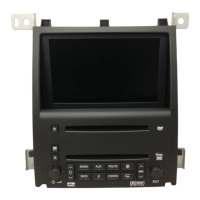
Radio Commands
AM: This command instructs the system to
change the audio source to AM.
FM1: This command instructs the system to
change the audio source to FM1.
FM2: This command instructs the system to
change the audio source to FM2.
XM1: This command instructs the system to
change the audio source to XM1.
XM2: This command instructs the system to
change the audio source to XM2.
RDS Message On, RDS Display Message
On: This command instructs the system to turn
on the RDS Message feature.
RDS Message Off, RDS Display Message
Off: This command instructs the system to turn
off the RDS Message feature.
RDS Traffic On: This command instructs the
system to turn on the RDS traffic feature.
RDS Traffic Off: This command instructs the
system to turn off the RDS traffic feature.
RDS Alternate Frequency On: This command
instructs the system to turn on the RDS alternate
frequency feature.
RDS Alternate Frequency Off: This command
instructs the system to turn off the RDS alternate
frequency feature.
Radio Tune: This command instructs the system
to change the current radio station by saying the
command and then the frequency of the radio
station. For example, if you say “radio tune ninety
four point seven,” the station will switch to 94.7 FM.
If you are changing the station for the AM band, say
“radio tune ten seventy” for 1070 instead of “one
zero seven zero.” If the station frequency has two or
three zeros, such as 600 or 1000 AM, say “radio
tune six hundred” or “radio tune one thousand.” The
exception is a station frequency that includes a zero
between other numbers. In this case, say “oh”
instead of zero as in “radio tune one oh seven point
nine” for frequency 107.9 FM. This feature does not
work with XM™.
Seek Up, Seek Down: These commands instruct
the system to seek up or down to the next or
previous station and stay there.
97



 To Next Page
 Loading...