[Type here] [Type here] [Type here]
6 Position the Pockets
The number of pockets used in a joint is determined by the stock width and the
function of the components being assembled. For example, it is possible to fasten a
narrow rail in a cabinet face frame with a single pocket and glued joint on either end
to minimize the risk of splitting. You may wish to fasten wider rails with two pockets.
Wide panels generally require pockets spaced about 6 to 8 inches apart on center,
with the first and last pocket spaced about 2 to 3 inches from the edges of the panel.
In your design layout, note all pocket locations to ensure that there is no interference
and then mark the locations on the individual components to ensure accurate
positioning. Note that precise pocket spacing is not critical for a strong joint if these
general guidelines are followed.
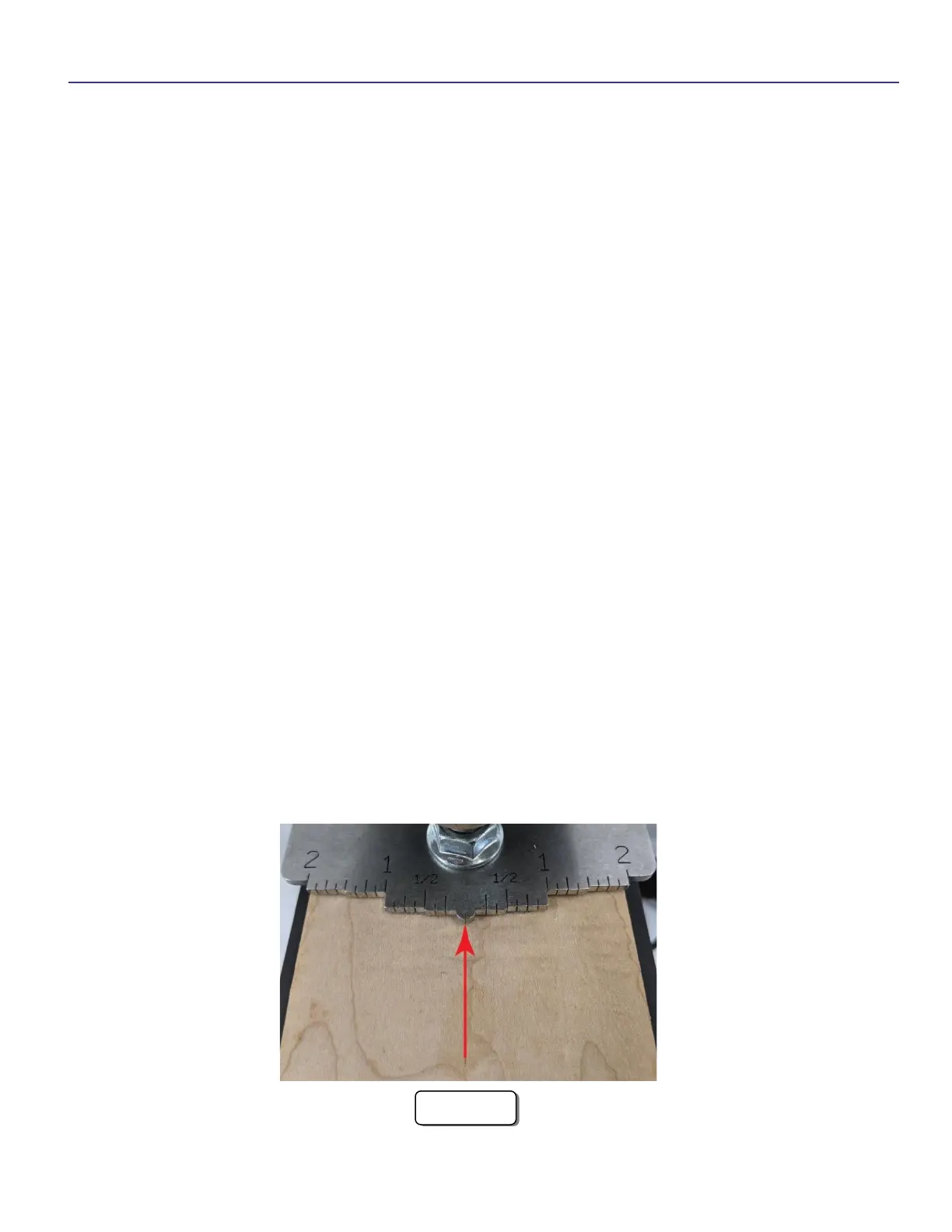
Your Castle 110 provides several methods to accurately locate the pockets. The
clamping plate has a centerline and inch scale which can be used to position the
pockets freehand, or the centerline or inch scale can be aligned with pencil marks to
indicate where the pockets should be located. (Figure 6a) For example, if you wish
to locate the outside pockets 1⁄2 inch from either edge, simply align the stock with
the 1⁄2 inch mark on the plate, cut the first pocket, and repeat this operation to
position the second pocket on the other side. (Figure 6b)


 To Next Page
 Loading...