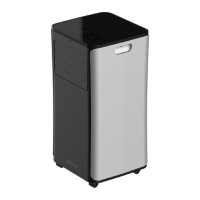
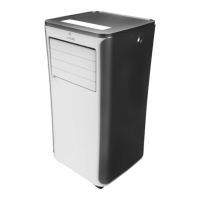
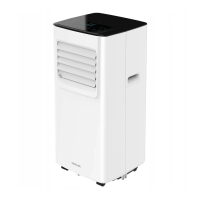
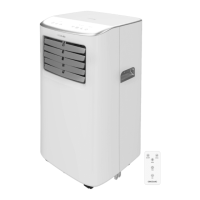
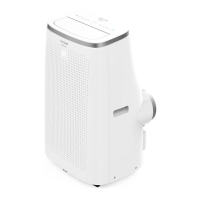
FORCECLIMA 7150 STYLE / FORCECLIMA 7550 STYLE CONNECTED/ FORCECLIMA 9150 STYLE
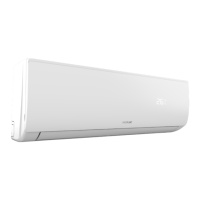
FORCECLIMA 9450 STYLE HEATING / FORCECLIMA 9550 STYLE HEATING CONNECTED/ FORCECLIMA 12650 STYLE HEATING
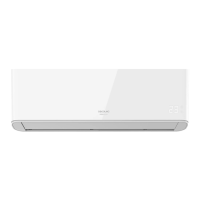
FORCECLIMA 12850 STYLE HEATING CONNECTED
FORCECLIMA 7150 STYLE / FORCECLIMA 7550 STYLE CONNECTED/ FORCECLIMA 9150 STYLE
FORCECLIMA 9450 STYLE HEATING / FORCECLIMA 9550 STYLE HEATING CONNECTED/ FORCECLIMA 12650 STYLE HEATING
FORCECLIMA 12850 STYLE HEATING CONNECTED
8382
ENGLISH ENGLISH
5. Detection of ammable refrigerants
Under no circumstances should potential ignition sources be used in the search for or detection
of refrigerant leaks. Do not use a halide lamp or any other detector using a naked ame.
6. Leak-detection methods
- The following leak-detection methods are considered acceptable for systems containing
ammable refrigerants.
- Electronic leak detectors should be used to detect ammable refrigerants, but the
sensitivity may not be adequate, or may need recalibration (the detection equipment should
be calibrated in a refrigerant-free area). Ensure that the detector is not a potential ignition
source and that it is suitable for the refrigerant used. The leak-detection equipment must
be set to a percentage of the lower ammability limit of the refrigerant and calibrated for
the refrigerant used with the appropriate percentage of gas (maximum 25%) conrmed.
- Leak-detection uids are suitable for use with most refrigerants, but the use of detergents
containing chlorine must be avoided, as chlorine can react with the refrigerant and corrode
copper pipes.
- If a leak is suspected, all naked ames must be eliminated/extinguished.
- If a refrigerant leak is found and requires brazing, all refrigerants must be recovered from
the system, or isolated (by means of shut-o valves) in a part of the system far away from
the leak. Oxygen-free nitrogen must then be purged through the system both before and
during the brazing process.
7. Removal and evacuation
When intervening in the cooling circuit for repairs or any other purpose, conventional
procedures must be followed. However, it is important that best practices are followed, as
ammability is a matter to be taken seriously. The following procedure is to be followed:
1. Remove the refrigerant.
2. Purge the circuit with inert gas.
3. Evacuate.
4. Purge again with inert gas.
5. Open the circuit by cutting or brazing.
- The refrigerant charge must be recovered from the correct recovery cylinders. The system
must be ushed with oxygen-free nitrogen to render the unit safe. This process may need
to be repeated several times. Oxygen or compressed air must not be used for the task.
- Cleanliness must be achieved by breaking the vacuum in the system with oxygen-
free nitrogen and continuing to ll until working pressure is reached, then venting to
atmosphere, and nally pushing to a vacuum. This process must be repeated until there
is no refrigerant left in the system. When using the oxygen-free nitrogen end-charge,
the system must be vented to atmospheric pressure to allow for work. This operation is
absolutely vital if brazing operations are to take place on pipes.
- Ensure that the vacuum pump outlet is not near any source of ignition and that ventilation
is available.
8. Loading procedure
In addition to conventional loading procedures, the following requirements must be followed.
- Ensure that no contamination of dierent refrigerants occurs when using the loading
equipment. Hoses or lines should be kept as short as possible to minimise the amount of
refrigerant contained in them.
- Cylinders must be kept in an upright position.
- Ensure that the refrigeration system is grounded before loading the system with
refrigerant.
- Tag the system when charging is complete (if not already).
- Extreme care must be taken to avoid overlling the cooling system.
Before reloading, the system must be pressure-tested with oxygen-free nitrogen. The system
shall be leak-tested upon completion of loading, but prior to commissioning. A subsequent
leakage test must be carried out before leaving the site.
9. Commissioning
Before performing this procedure, it is essential that the technician is thoroughly familiar with
the equipment and all its details. It is recommended good practice that all refrigerants are
safely recovered. Before the task is carried out, a sample of oil and refrigerant should be taken
in case an analysis is required before the recovered coolant is reused. It is essential for there to
be power before starting with the task.
A. It is important to get familiar with the equipment and its operation.
B. Electrically isolate the system.
C. Before attempting the procedure, ensure that
- the mechanical-handling equipment is available, if required, for the handling of refrigerant
cylinders;
- all personal protective equipment is available and correctly used;
- the recovery process is supervised at all times by a competent person;
- cylinders and recovery equipment conform to appropriate standards.
D. Pump the cooling system, if possible.
E. If vacuum is not possible, make a manifold so that refrigerant can be removed from various
parts of the system.
F. Ensure that the cylinder is positioned on the scale before recovery takes place.
G. Switch on the recovery machine and operate it according to the manufacturer’s instructions.
H. Do not overll cylinders (no more than 80% of the liquid charge by volume).
I. Do not exceed the maximum working pressure of the cylinder, even temporarily.
J. When the cylinders have been correctly lled and the process is complete, ensure that
the cylinders and equipment are promptly removed from the site and that all equipment
isolation valves are closed.
K. Recovered refrigerant must not be charged to another refrigeration system, unless
cleaned and checked.




 To Next Page