2. Open engine compartment and all hatches, windows, doors and
compartments closed during fueling. Inspect these areas for fuel
fumes or fuel line leakage visually and by smelling. Check out
any sign of fuel leakage or any indication of fumes and correct
problem before starting the engine.
3. Run bilge blower at least four minutes before restarting engine
to ventilate engine compartment.
OPERATING YOUR BOAT
Starting the Engine
Important: Falls from moving boats are a major cause of fatal
recreational boating accidents. Do not allow passengers to ride
on the bow with feet hanging over the side or ride while sitting
on the stern, gunwales, or seat backs. The Coast Guard con-
siders these acts to be negligent or grossly negligent operation
and prohibits them by law.
The following information is only a general guide. Chapter 4 has
specific starting instructions for boats with battery selector switches.
Detailed instructions are also in the engine owner’s manual. Be sure
to read and follow all of those instructions.
1. Secure boat to the dock or mooring slip before attempting to start
engine. Keep boat secure until engine is running and warmed up.
2. Check lubricating fluid levels. Check fuel supply to make sure
you have enough fuel for your planned excursion.
3. To prevent an explosion or fire, look for leaks in fuel, oil, coolant,
exhaust, and power steering systems. Be aware of any odors of
these fluids.
4. Make sure the throttle is in the neutral position.
5. Start the engine. Refer to your engine owner’s manual for rec-
5-9
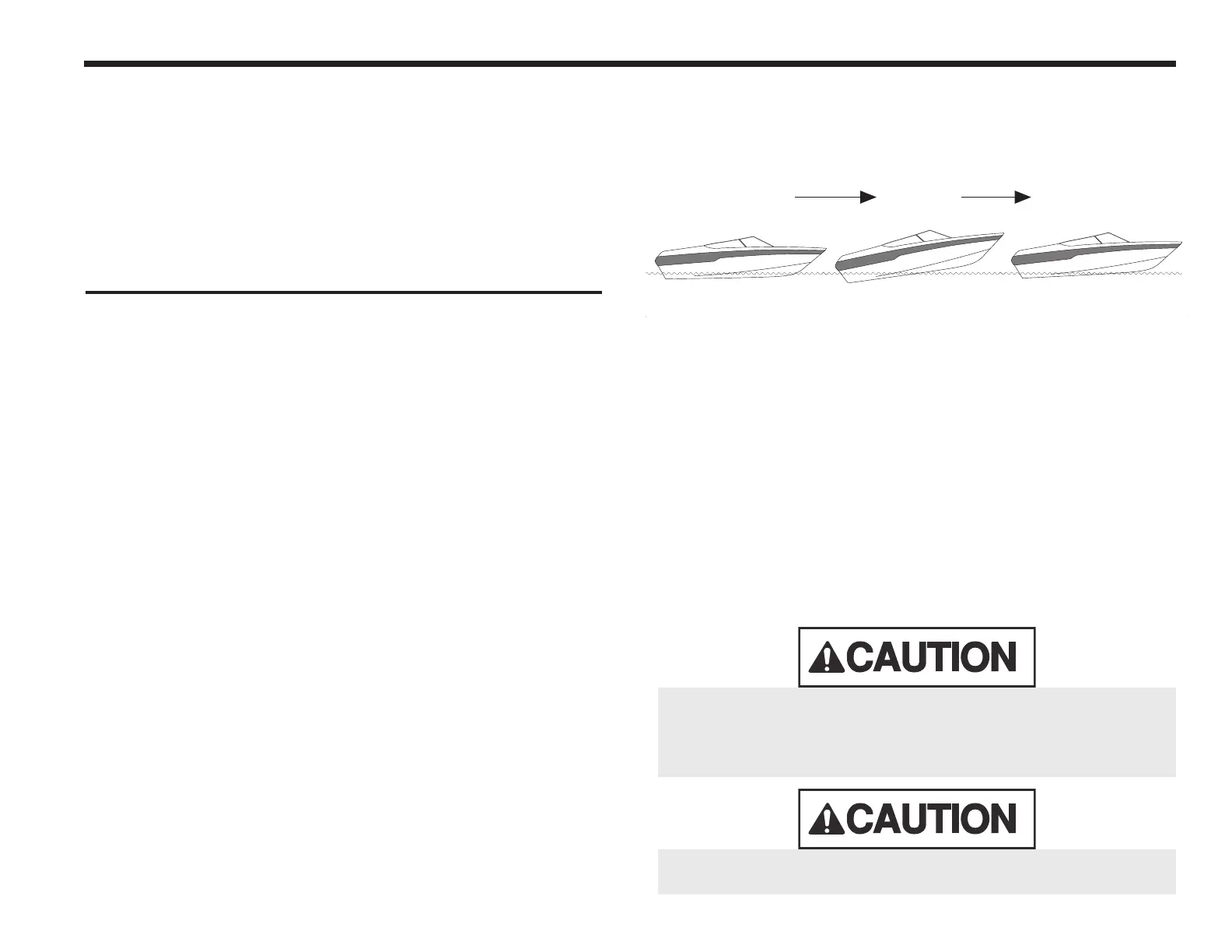
BOW RISES PLANING ATTITUDE
ACCELERATE
Figure 5.2 Boat Acceleration and Attitude
CAUTION: When shifting between forward and reverse, always
pause in neutral for a few seconds before reversing the rotation
of the propeller. This will prevent unnecessary damage to the
drive system.
CAUTION: High speed acceleration in reverse can create a
wake that could wash over the transom and flood the boat.


 To Next Page