the reserve occurs (on the ground). This is 10 ensure that the release pins are rst pulled out of the release pin loops, before tension
between the release handle webbing and the inner container occurs.
C.The outer container is made of impregnated nylon fabric. lt consists of a base section and four side aps. The underside of the
outer container has velcro and four harness strap loops to allow optimal attachment of the reserve to various hamesses. The „Easy
Go“ front container is described in the appendix of this instruction manual. lt is important to ensure that the connection between the
outer container and the hamess is strong!
Before each ight, check that the release pins are in the release pin loops, and that the velcrose on the container covering these
pins opens easily.
Instructions for Use
1. Necessary Documentation: lnspection records, operation instructions manual, Gutesiegel label.
2. Mode of Operation of the Reserves: In an air emergency situation, the release handle is pulled rmly (approximately 5 - 8 kPa).
This breaks the break tie, allowing the release pins to be pulled out of the release pin loops. The break tie prevents the release pins
from slipping out unwantedly). The inner container holding the reserve, which is attached to the release handle, is ung strongly into
clear air. As the reserve lines stretch, the inner container opens and the canopy is inated by the air current. The reserve is open,
and the inner container is lost. This throwing action must be as quick and as strong as possible, and should be practised on the
ground before each repack of the reserve. This procedure should also be often practised mentally.
After landing, be careful to minimise the damage to the canopy.
Service and Maintenance Instructions
1. General: Reserves need special servicing and careful treatment - the life of the user can depend on their condition and airwort-
hiness.
These reserves should only be serviced by registered packers or the manufacturer. OnIy a comprehensive knowledge and
established routine on the part of the packer can guarantee a quick and reliable rescue of the pilot.
The company Charly Produkte guarantees a quick turnaround (within 4 days) when servicing your reserve.
2. Repack and Retest Intervals: The reserve should be repacked every 4 months or if it has become damp or wet (snow, wet
landing area etc). The repack includes opening, airing and repacking the reserve.
A retest is required: after EVERY emergency opening
after repair or alterations
two years after the previous retest.
Retests should only be performed by the manufacturer.
3. Checking and Preparation of the Reserve Prior to Repacking: Before the reserve is repacked it must be hung above the
ground and aired for a minimum of six hours in a ventilated room, away from direct sunlight. Should the reserve have got damp,
ensure that the suspension lines are supported - this is to ensure the suspension lines do not stretch due to the extra weight of the
moisture. Do not use heaters to dry the canopy.
The packer needs to check the reserve for possible damage. lt the reserve is being repacked after an emergency opening, a retest
is required before it is packed.
4. Procedure for Damaged Reserve: If, whilst being checked, the reserve is found to be damaged ,it must be sent to the general
distributor or the manufacturer for repairs. This is also the case if there is a suspicion of damage which may affect the reserve‘s
airworthiness.
Repairs should only be carried out by the manufacturer.
5. Storage: The reserve should be stored in a dry, well ventilated room, away from oil, grease, acid and paint. For longer periods of
storage, the reserve should be opened and stored with the canopy loosely rolied up.
6. Cleaning: Dirty reserve canopies and containers can be washed with tap water. Acid or mildew can effect the strength of the
reserve. These reserves should be sent to the manufacturer for checking and any necessary repairs.
Reserves which have had contact with salt-water should be washed as quickly and as thoroughly as possible with fresh water.
Never scrub or wring the wet reserve canopy.
7. Tools required tor repacking: 2 approximately 40 cm draw cords, special rubber bands for packing reserves, special 3 kg break
tie (available from Charly Produkte), and a weight such as a sandbag are required for repacking the reserve.
The packing should occur on a dust-free and smooth surface.
The company Charly Produkte and appointed distributors do not accept any Iiability for damage related to paragliding
or hangliding. Likewise, accidents caused by detached reserves, incorrectIy handling, unsatisfactory care and servicing,
direct and indirect damage, that become apparent through the use of the reserve, are the responsibility of the user.
THIS DESCRIPTION DOES NOT GIVE YOU THE RIGHT TO PACK A RESERVE - EITHER YOURS OR SOMEONE ELSES.
Should you have any further questions regarding packing of your Charly reserve, please contact us at the following
address.
Fa. CHARLY PRODUKTE Tel: ++49 (0)8364 1286
AM OSTERÖSCH 3 Fax: ++49 (0)8364 8426
D - 87637 SEEG Mail: info@charly-produkte.de
Packanleitung:
Fassung vom 18.10.2000
1.Der Rettungsschirm wird in seiner gesamten Länge gestreckt und die Fangleinen
entwirrt. Alle alten Packgummis sind von der Packunterlage zu entfernen, da es sein kann, daß sie sich beim Packen
im Kappenmaterial verfangen können.
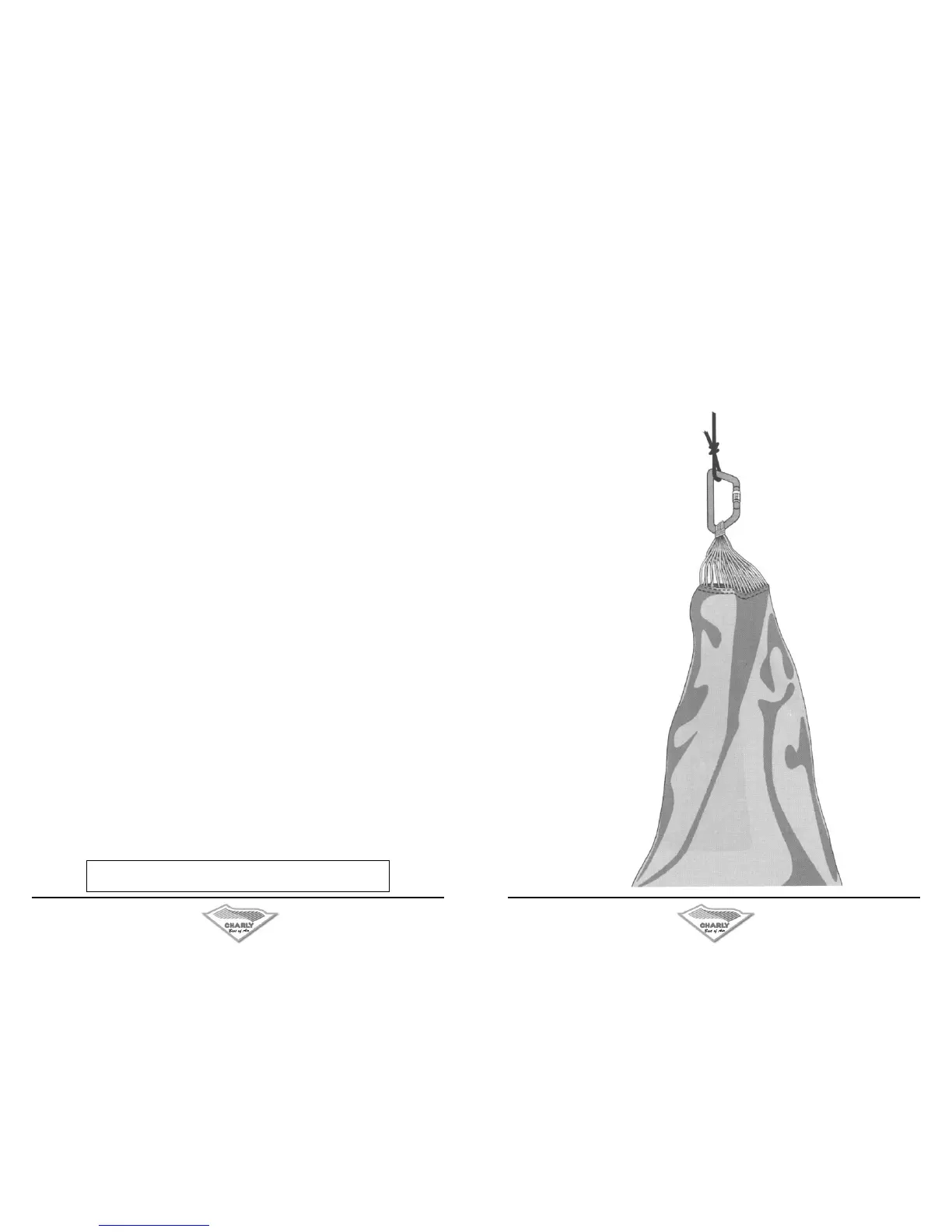
Den Kappenscheitel an den Scheitelleinen neben der Mittelleine mittels eines Karabiners an einem festen Gegenstand
in Bodennähe xieren.
Packing lnstructions:
The reserve is stretched out to
its full length
and the suspension lines disent-
angled. All old
rubber bands should be remo-
ved from the packing surface to
prevent them getting caught up
in the canopy.
The apex is xed near ground
level using a carabiner.
Abb. 1


 To Next Page
 Loading...