Vehicle Care 10-67
.
The tire has a bump, bulge,
or split.
.
The tire has a puncture, cut,
or other damage that cannot
be repaired well because of
the size or location of the
damage.
Tire Rotation
Tires should be rotated every
12 000 km (7,500 miles).
See Scheduled Maintenance on
page 11‑3.
The purpose of a regular tire
rotation is to achieve a uniform
wear for all tires on the vehicle.
This will ensure that the vehicle
continues to perform most like it
did when the tires were new.
Any time you notice unusual
wear, rotate the tires as soon as
possible and check wheel
alignment. Also check for
damaged tires or wheels.
See When It Is Time for New
Tires on page 10‑69 and Wheel
Replacement on page 10‑74.
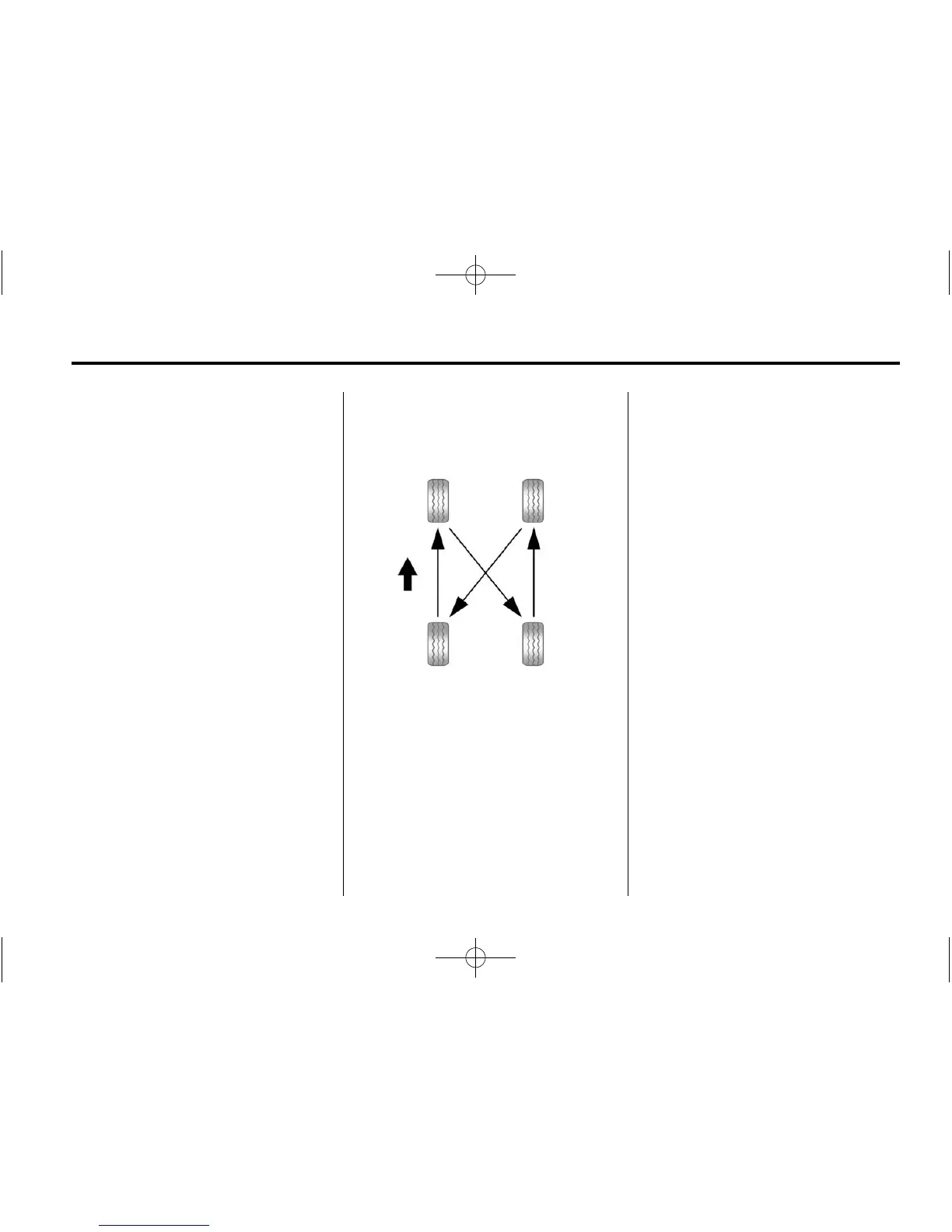
When rotating the vehicle's tires,
always use the correct rotation
pattern shown here.
The compact spare tire, if the
vehicle has one, is not included
in the tire rotation.
After the tires have been
rotated, adjust the front and rear
inflation pressures as shown on
the Tire and Loading Information
label. See Tire Pressure on
page 10‑60 and Vehicle Load
Limits on page 9‑12.
Reset the Tire Pressure Monitor
System. See Tire Pressure
Monitor Operation on
page 10‑63.











 To Next Page