10-64 Vehicle Care
Dual Tire Rotation
When the vehicle is new,
or whenever a wheel, wheel bolt,
or wheel nut is replaced, check
the wheel nut torque after
160, 1 600, and 10 000 km
(100, 1,000, and 6,000 mi) of driving.
For proper wheel nut tightening
information, see “Removing the Flat
Tire and Installing the Spare Tire”
later in this section, under If a Tire
Goes Flat on page 10‑72. Also see
“Wheel Nut Torque” under
Capacities and Specifications on
page 12‑2.
The outer tire on a dual wheel setup
generally wears faster than the
inner tire. Tires last longer and wear
more evenly if they are rotated. See
Tire Inspection on page 10‑62 and
Tire Rotation on page 10‑62. Also
see Maintenance Schedule on
page 11‑3.
{
WARNING
If the vehicle is operated with a
tire that is underinflated, the tire
can overheat. An overheated tire
can lose air suddenly or catch
fire. You or others could be
injured. Properly inflate all tires,
including the spare.
See Tires on page 10‑49 and Tire
Pressure on page 10‑56 for more
information on proper tire inflation.
When It Is Time for
New Tires
Factors such as maintenance,
temperatures, driving speeds,
vehicle loading, and road conditions
affect the wear rate of the tires.
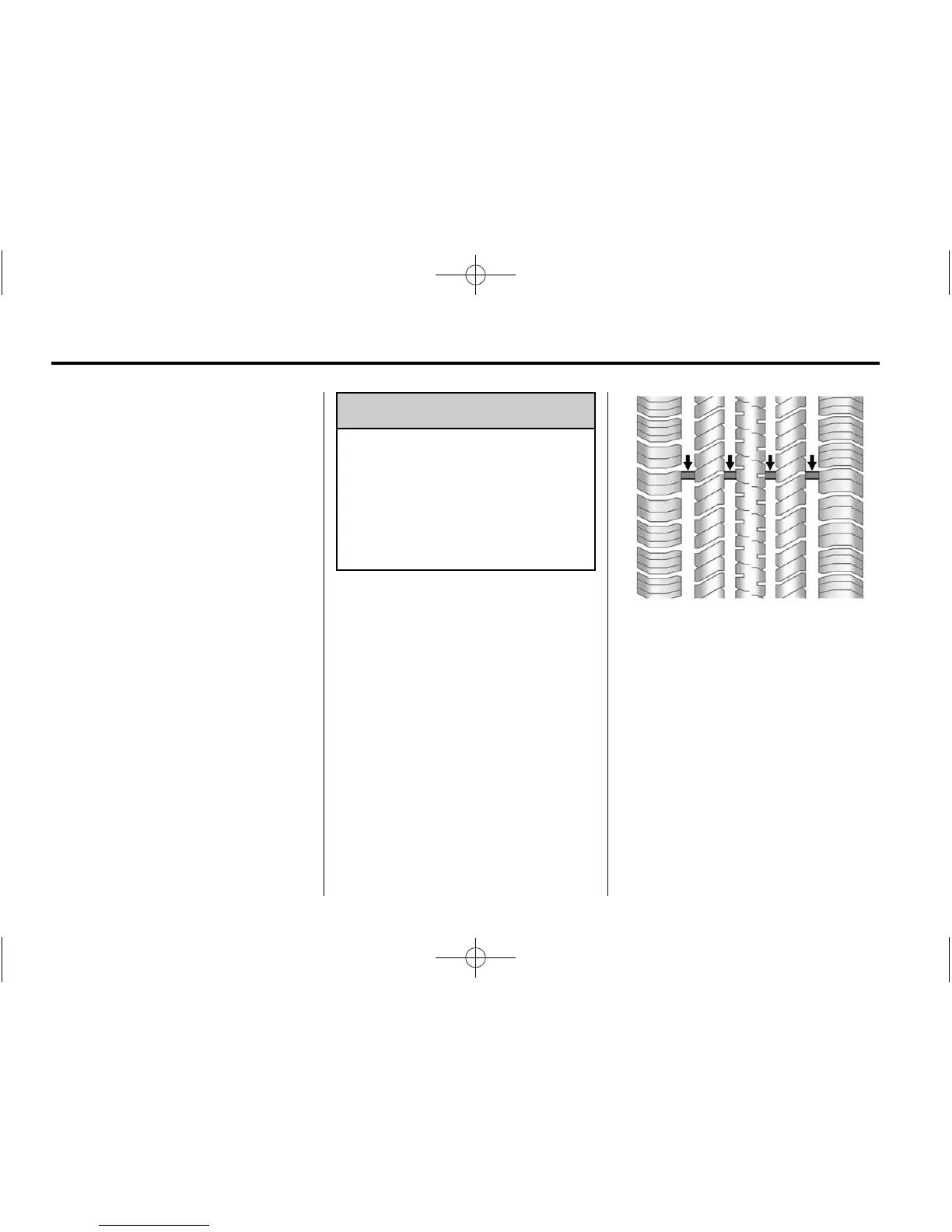
Treadwear indicators are one way to
tell when it is time for new tires.
Treadwear indicators appear when
the tires have only 1.6 mm (1/16 in)
or less of tread remaining.
Some commercial truck tires,
including Goodyear LT225/75R16
G949 RSA and Goodyear LT225/
75R16 G933 RSD, may not have
treadwear indicators. If the tires do
not have treadwear indicators,
replace the tires when the tread
depth is down to 3.2 mm (1/8 in) for
the front tires, or 1.6 mm (1/16 in) for
the rear tires.









 To Next Page