3
HYDRO
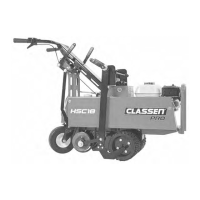
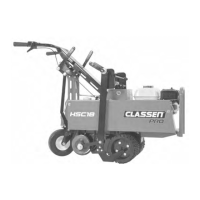
SOD CUTTER
SAFETY
MAINTENANCE SAFETY
In general
• Maintain machine according to manufacturer's
schedule and instructions for maximum safety
and best results.
• Park machine on level ground.
• Never allow untrained personnel to service ma-
chine.
• Guards should only be removed by qualied
maintenance technician for maintenance/service.
Replace when work is complete.
• Adjust or repair only after the engine has been
stopped and the blade has stopped moving.
• Disconnect spark plug wire(s) before doing any
maintenance.
• Replace parts if worn, damaged or faulty. For best
results, always replace with parts recommended
by the manufacturer.
• Do not dismantle the machine without releasing or
restraining forces which may cause parts to move
suddenly.
• Provide adequate support, e.g. jack stands for
lifted machine or parts if working beneath.
• Do not put hands or feet near or under
rotating parts.
• Clean up spilled oil or fuel thoroughly.
• Replace faulty mufers.
• To reduce re hazards, keep the engine, mufer,
and fuel storage area free of grass, leaves, debris
buildup or grease.
Blades
The sod cutter blade is sharp
and can cut. Use extra caution
when handling. Remove ob-
structions with care. Wrap the
blade or wear gloves.
• Only replace blade. Never
straighten or weld.
• Keep other persons away from blades.
Fuel
• Petrol (gasoline) and diesel
fuels
are ammable; petrol
(gasoline) vapors are
explosive. Use extra care
when handling.
• Store only in containers specically designed for
fuel.
• When refueling or checking fuel level:
• Stop the engine and allow to cool;
• Do not smoke;
• Refuel outdoors only;
• Use a funnel;
• Do not overll;
• If fuel is spilled, do not attempt to start the
engine until the spill is cleaned up and vapors
have cleared.
• Replace caps on fuel containers and tanks
securely.
Sparks from static electricity can start res or cause
explosions. Flowing fuel can generate static electricity.
To prevent static electricity sparks:
• Keep fuel containers electrically grounded. Do not
ll containers in a vehicle or on a truck or trailer
bed with a plastic liner. Fill containers on the
ground away from the vehicle.
• When practical, remove petrol (gas) powered
equipment from the truck or trailer and refuel it on
the ground. If equipment must be refueled on the
truck or trailer, refuel from a portable container
rather than a dispenser nozzle.
• Keep the dispenser nozzle in contact with the rim
of the fuel tank or container opening until fueling is
complete. Do not use a nozzle lock-open device.
Storage Safety
• Stop the engine and allow to cool before storing.
• Drain the fuel tank outdoors only.
• Store fuel in an approved container in a cool, dry
place.
• Keep the machine and fuel containers in a locked
storage place to prevent tampering and to keep
children from playing with them.
• Do not store the machine or fuel container near
heating appliances with an open ame, such as a
water heater, or an appliance with a pilot light.
• Keep gasoline (petrol) storage area free of grass,
leaves and excessive grease to reduce re haz-
ard.
• Clean grass and debris from cutting units, drives,
mufers and engine to help prevent res.
!
WARNING
!
WARNING


 To Next Page
 Loading...