INTRODUCTION
MAIN OPERATING FEATURES
The
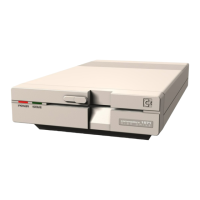
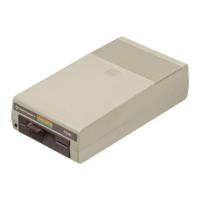
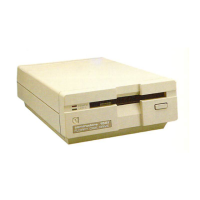
1571
is
a versatile disk drive that handles multiple disk formats and data transfer
rates. Disk formats range from single-sided, single-density
to
double-sided, double-
density. The
1571
can be used with a variety
of
computers, including the Commodore
128, the Commodore 64, the Plus 4, C16, and
VIC
20.
When used with the Commodore
128
Personal Computer, the
1571
offers the
following features:
• Standard
andfast
serial data transfer
rates-
The
1571
automatically selects the
proper data transfer rate (fast or slow) to match the three operating modes
available on the Commodore
128
computer (C128 mode, C64 mode, and CP/M
mode).
• Ability to read and write
in
double-density MFM
format-
This allows access to
the CP/M software libraries
of
other personal computers.
• Double-sided, double-density data
recording-Provides
up
to
339K storage ca-
pacity per disk (l69K per side).
• Special high-speed burst
commands-
These commands, used for machine lan-
guage programs, transfer data several times faster than the standard or fast serial
rates.
When used with the Commodore 64 computer, the
1571
disk drive supports the
standard single-density GCR format disks used with the Commodore
1541,1551,4040,
and 2031 disk drives.
NOTE
CP/M disks are included
in
Commodore 128
carton; CP/M operating information is pre-
sented
in
the Commodore 128 user manuals.
HOW THIS GUIDE IS ORGANIZED
This guide
is
divided into two main parts and seven appendices,
as
described below:
PART
ONE: BASIC OPERATING INFORMATION-includes all the information
needed by novices and advanced users
to
set
up
and begin using the Commodore
1571
disk drive.
PART
ONE
is
subdivided into four chapters:
• Chapter I tells you how
to
use disk software programs that you buy, like Perfect
Writer®
and
Jane®.
These pre-written programs help you perform a variety of
activities in fields such
as
business, education, finance, science, and recreation.
If
you're interested only
in
loading
ard
running pre-packaged disk programs,
you
need read no further than this chapter.
If
you
are
also interested in saving, loading,
and running your own programs, you will want
to
read the remainder
of
the guide.
• Chapter 2 describes
the
use
of
the BASIC 2.0 disk commands with
the
Commo-
dore 64 and Commodore
128
computers.


 To Next Page
 Loading...