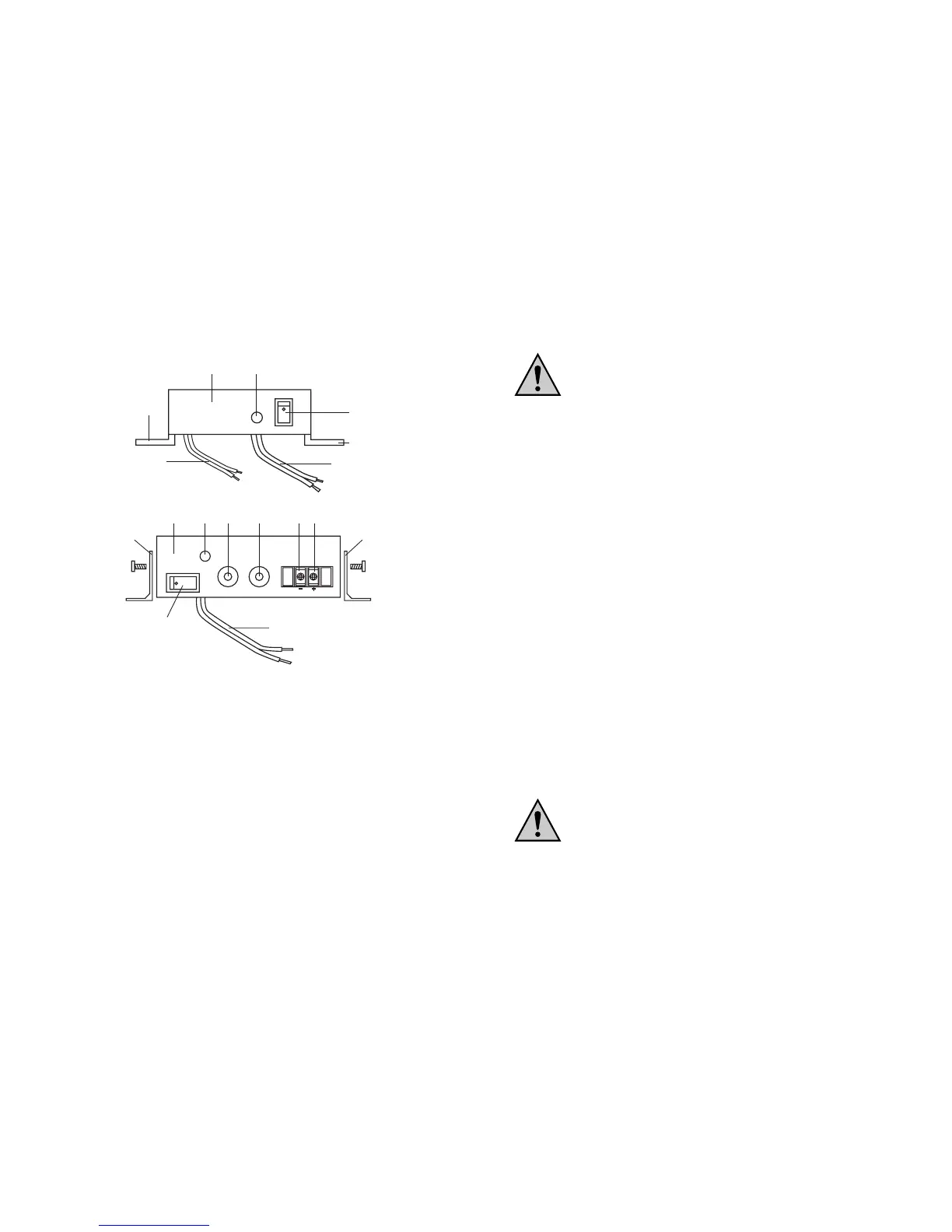
Illustration
SDC 210
SDC
225/245
1. Câble d'entrée positive (blanc pour le modèle SDC 210, rouge
pour les modèles SDC 225 et 245) et négative (noir), position ou-
verte
2. Convertisseur avec indicateur de fonctionnement 2a (Del) et in-
terrupteur marche/arrêt 2b
3. Câble de sortie (210) positive (rouge), position ouverte ou douille
de sortie (225 et 245) positive (rouge) ou répartiteur (15 A maxi-
mum pour modèles 225 et 245 uniquement)
4. Câble de sortie (210) négative (noir), position ouverte ou douille
de sortie (225 et 245) négative (noir) ou répartiteur (15 A maxi-
mum pour modèles 225 et 245 uniquement)
5. Equerres de fixation (fixes pour le modèle 210), à visser pour les
modèles SDC 225 et SDC 245.
22
c) Replacement of fuses
Make sure that only fuses of the specified type and
the specified rated amperage are used for replace-
ment. The use of "repaired" fuses or shorting out
the fuse holder is not admissible.
If the control LED in the unit is not lit despite a sufficient voltage
being applied to the input, this may be due to a faulty fuse in the
converter. If you open the unit, this will rule out your warranty
claims. The fuse thought to be defective may only be exchanged
by a qualified specialist workshop.
Disposal
After the DC/DC converter has become useless (beyond repair), it
must be disposed of as provided by law.
Maintenance
Besides occasional cleaning of the housing, the venting slots/coo-
ling fins and the connecting cables, and replacement of fuses, the
converter is maintenance-free. Use a clean, dry, antistatic and lint-
free cleaning cloth for cleaning.
Do not use any carbon-based cleaning agents or
gasolines, alcohols or similar fluids for cleaning.
These might attack the surface of the unit. Moreo-
ver, the vapours are unhealthy and explosive. Do
not use any sharp-edged tools, screw-drivers or
metal brushes etc. for cleaning either.
19


 To Next Page
 Loading...