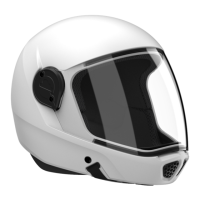
How to Adjust the Ventilation System
There are two sliding actuators in the front of the chinbar. Figure 9.
1. The ventilation that is directed toward the inside surface of the visor to aid in reducing fogging Air Flow A
2. The ventilation that is directed towards your mouth. Airow B
We advise that the upper vent slider Air Flow A is always in the open position when used for skydiving
specic activities Figure 10.
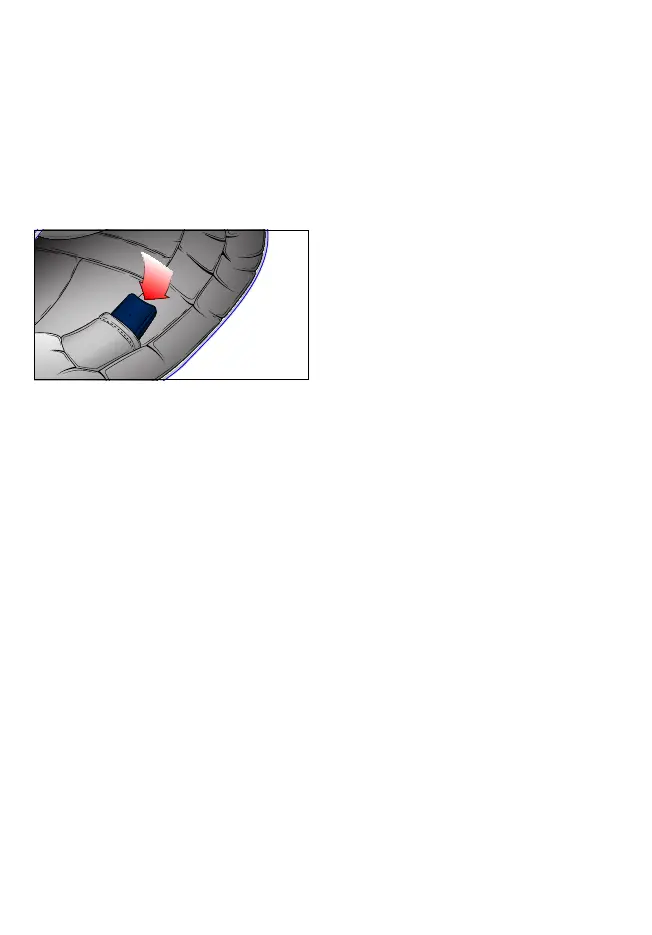
The Liner
Your G4 helmet features an unique liner. This liner can be replace
.Please visit www.ycookie.com for instructions on removing
and replacing your liner.
Caring for your G4 Helmet
Your G4 Helmet should be cleaned using water, mild detergent and a soft cloth. Ammonia and acid based
cleaning products should not be used at all. Any use of paints or adhesives can damage the exterior of the
helmet and reduce the helmets ability to provide protection. Please store your helmet away from direct
light or heat source as this can damage the helmet. When traveling we recommend using the helmets
original packaging.
An impact to the G4 helmet can cause damge even if there are not any visible signs. A damaged helmet
will not protect you against further impacts. If you suspect the helmet to have been damaged it must be
replaced immediately.
We recommend replacing your helmet afer every three years of use as we cannot guarantee that it will
oer sucient protection after this period. You must also replace your helmet if it is showing signs of
Cracking, Peeling and any Deformation. Childrens helmets should be replaced once they no longer t
Your should Always
1. Wear your G4 helmet low over your forehead and the chinstrap beneath your chin.
2.
Fasten your buckle and ensure the neck curtian is tight around the rear of your head and neck.
Adjust the Anchor Cord if required.
3. Make sure these adjustments are correct prior to use.
4. Store your helmet in a cool and dry place.
5. Replace your G4 helmet after and accident, even if no damage is shown.
6. Ensure the visor is tted and closed when wearing it for Skydiving or Flying in a Wind Tunnel.
7. Ensure your visor is clean befor use and replace it if it is dicult to see through or if the lens
begins to fog.
Your should Never
1. Wear a helmet that has been in an accident, even if no damage is shown.
2.
Wear a helmet with an unfastened chinstrap or if the neck curtain is loose around the rear of your head.
3. Wear this helmet for any activities that is not Skydiving or Wind Tunnel ying.
4. Clean this helmet with Chemical Cleaners.
5. Fit any non Cookie Composites accessory to the helmets shell.
Installing the Audible Altimeter
Install your audible altimeter into the pocket located over each ear
Figure 11.
Figure 9.
How to Open your G4 Visor
Place your index nger in position A on the top of visor locking plate
and your thumb on the bottom position B. Next you will need to push
the visor locking plate in the forward direction unlocking the mechansim.
Once you have moved the visor locking plate forward 9mm or 3/8 .inch [•)
you can now begin to rotate the visor locking plate in an upward direction.
It is best to do this with the G4 on your head. It may take a couple of tries to
perfect the movement and holding your elbows upwards in line with your
shoulders can assist with this movement. To close the visor, simply hold the
top of the visor and rotate downward. The visor will make a loud sound as it locks
into place and the springs return the visor to the locked position.
HELMET OWNER’S MANUAL
English
HELMET OWNER’S MANUAL
English
Figure 10.
A
A
B
A
Figure 11.
Abbildung 11.
Installation des hörbaren Höhenmessers
Bringen Sie Ihren hörbaren Höhenmesser in
der Tasche über jedem Ohr an (Abbildung 11).
Das Futter
Ihr G4 Helm hat eine einzigartige Fütterung.
Diese kann ausgetauscht werden. Anweisungen
für das Entfernen und Austauschen finden Sie
unter www.flycookie.com.
Dies sollten Sie stets beachten
1. Der G4 Helm muss tief über die Stirn
gezogen und der Kinnriemen unter dem Kinn
befestigt werden.
2. Halten Sie die Schnalle fest und stellen
Sie sicher, dass der Nackenschutz an
der Rückseite Ihres Kopfes und Halses
festsitzt. Gegebenen falls müssen Sie den
Befestigungsgurt nachstellen.
3. Vergewissern Sie sich vor dem Gebrauch,
dass alle Einstellungen vorschriftsmäßig
vorgenom men wurden.
4. Bewahren Sie Ihren Helm an einem kühlen
und trockenen Ort auf.
5. Ersetzen Sie Ihren G4 Helm nach einem
Unfall, auch zwar auch, wenn kein sichtbarer
Schaden entstanden ist.
6. Stellen Sie sicher, dass vor einem Fallschirm
sprung oder Flug in einem Windkanal das
Visier angebracht und geschlossen ist.
7. Stellen Sie vor dem Gebrauch sicher, dass
das Visier sauber ist. Ersetzen Sie das Visier,
wenn Sie durch dieses keine klare Sicht
mehr haben oder dieses beschlägt.
Dies sollten Sie auf jeden Fall unterlassen
1. Tragen Sie nie einen Helm, mit dem sich ein
Unfall ereignet hat, auch nicht, wenn keine
Beschädigungen sichtbar sind.
2. Tragen Sie keinen Helm mit einem nicht
befestigten Kinnriemen oder wenn sich
der Nackenschutz auf der Rückseite Ihres
Kopfes gelockert hat.
3. Tragen Sie diesen Helm nur beim
Fallschirmspringen oder bei Aktivitäten
im Windkanal.
4. Reinigen Sie diesen Helm nie mit
chemischen Reinigungsmitteln.
5. Befestigen Sie kein Originalzubehör an
dem Helm.
Pflege Ihres G4 Helms
Ihr G4-Helm darf nur mit Wasser, einem
milden Reinigungsmittel und einem weichen
Tuch gereinigt werden. Ammoniak- und
säurehaltige Reinigungsmittel dürfen auf
keinen Fall verwendet werden. Farben oder
Klebstoffe können die Außenseite Ihres Helms
beschädi gen und dessen Schutzfähigkeit
beeinträchti gen. Bitte schützen Sie
Ihren Helm bei der Lagerung vor direkter
Sonneneinstrahlung und Wärmequellen,
da dieser sonst beschädigt werden kann.
Für die Mitnahme auf Reisen empfehlen wir
die Originalverpackung.
Bei einem Aufprall mit dem G4 Helm können
Beschädigungen entstehen, die nicht unbedingt
sichtbar sind. Mit einem beschädigten Helm
geschützt. Wenn Sie den Verdacht haben, dass
der Helm beschädigt sein könnte, müssen Sie
diesen sofort austauschen.
Wir empfehlen einen Austausch des Helms
nach jeweils drei Nutzungsjahren, da wir
keinen ausreichenden Schutz nach diesem
Zeitraum gewährleisten können. Zudem
müssen Sie Ihren Helm austauschen, wenn
dieser Risse, Ablösungen oder Verformungen
aufweist. Kinderhelme sollten ausgetauscht
werden, sobald sie nicht mehr passen.
ANLEITUNG FÜR DEN HELMB ESITZER
Deutsche
12 13


 To Next Page
 Loading...