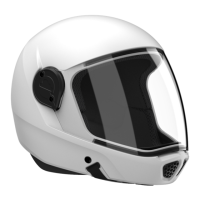
The G4 Helmet is certied according to Standard XP S 72-600 and is designed exclusively for Skydiving
and Wind tunnel use and should not be worn for any other activities. It should not be used on Motorised
and Non-Motorised means of transport. This helmet is intended to reduce the user’s risk of head injury
within the area covered by the helmet This helmet is not a toy. Do not let children wear it while climbing
or doing other activities as there is a risk of hanging/strangulation. For best protection, the helmet must
be properly tted and attached to the user’s head. Read the user’s manual and follow all warnings and
instructions before using the helmet. This helmet is designed to absorb energy of one signicant impact
and should be replaced after such an event. In the event of any impact whether in use or dropped
accidently, the helmet should be replaced. Cookie Composites generally recommends helmet replace-
ment every THREE years. Although this helmet provides some protection it cannot provide complete
protection from all foreseeable impacts. Please use responsibly
Position and Fit
In order for your G4 helmet to perform its functions it must be tted and worn correctly. Follow these
steps to get the correct position and t.
1. Firstly undo the clip beneath the chin and extend the helmet padding at the back of the helmet so
that the liner is fully open Figure 1. Put the helmet on your head and
hold the fabric by the chin area and
rotate the helmet over your face so your chin enters the helmet and the liner sits beneath your chin
Figure2.
2. Grasping the buckle in your right hand, pull the webbing horizontally until the helmet is liner closes
rmly against the back of your head or neck. Now mate the buckle Figure 4. If the buckle is unable to be
fastened or the helmet t is too loose you’ll have to adjust the t using the internal line and anchor
system shown in Figure 5-6.
Figure 5.
Figure 6.
Figure 1.
Figure 2.
Figure 3.
Figure 4.
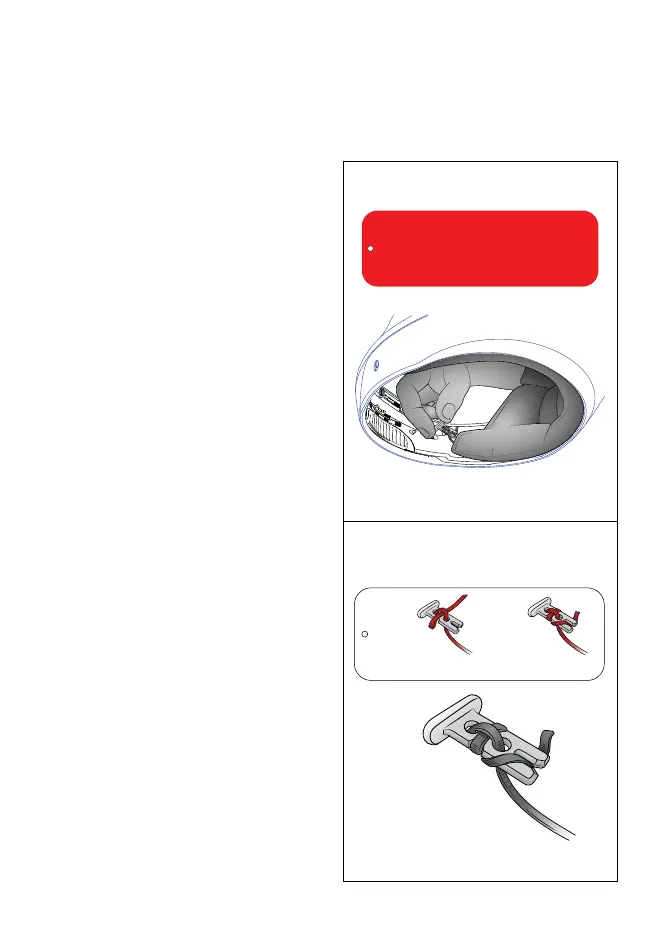
3. To make this adjustment, locate the RED label axed to the Anchor and pull this away from the cheek pad.
You can either shorten or lengthen the adjustment cord at the anchor depending on your requirements.
Shortening will make the rear skirt tighter on the back of you neck. Lengthening the cord will make the rear
skirt looser . Note that any adjustment should be made at the anchor and not at the strap buckle. After making
your adjustment lock the cord of acording to Figure 6. Tuck the anchor and excess cord into the channel
opening and pull the chinstrap to seat the anchor into position . Once adjusted properly the helmet will t
without the need for further adjustment.
G4 Helmet Ventilation
Figure 7.
Figure 8.
The G4 helmet has a unique ventilation syetem to control the airow within the helmet
HELMET OWNER’S MANUAL
English
HELMET OWNER’S MANUAL
English
To make adjustment
Loosen off the cord.
Once completed.
Lock off cord and reinstall.
ANCHOR
IMPORTANT BEFORE USE
To acheive a correct fit. The rear neck cutain
must be tight against your neck and head when the
chinstrap is fastenend beneath your chin. The cord at the anchor
can be adjusted to ensure the correct fit.
RETURN THE ANCHOR TO HOME POSITION AND CHECK FITTING BEFORE USE
22 23
Una volta completato,
bloccare la cordicella
e reinstallare.
Per eseguire la
regolazione, allentare
la cordicella.
SISTEMA DI
SICUREZZA
Posizionamento e indossatura
Affinché il casco G4 esegua le sue funzioni deve
essere posizionato e indossato correttamente.
Attenersi alla seguente procedura per il
posizionamento e l’indossatura corretti.
1. Innanzitutto slacciare la clip sotto il mento
ed estendere l’imbottitura del casco nella
parte posteriore del casco, in modo da aprire
completamente il rivestimento. Figura 1.
Posizionare il casco sulla testa, tenere il
tessuto con la zona del mento e ruotare il
casco sul viso, in modo che il mento entri
nel casco e il rivestimento appoggi dietro al
mento. Figura 2.
2. Afferrare la fibbia con la mano destra
e tirare il cinturino di sicurezza
orizzontalmente finché il rivestimento del
casco non si chiude saldamente contro la
parte posteriore della testa o del collo. A
questo punto agganciare la fibbia. Figura
4. Se la fibbia non può essere allacciata o
il casco è troppo allentato, è necessario
regolare l’indossatura con il rivestimento
interno e il sistema di sicurezza mostrato
nelle Figura 5-6.
3. Per eseguire questa regolazione, individuare
l’etichetta ROSSA applicata al sistema di
sicurezza e tirarla in direzione opposta
all’imbottitura per le guance. È possibile
accorciare o allungare la cordicella di
regolazione del sistema di sicurezza a
seconda delle proprie necessità. Se viene
accorciata, la protezione sul retro diventa
più aderente sulla parte posteriore del
collo. Se viene allungata, la protezione
sul retro si allenta. Si prega di notare che
qualsiasi regolazione deve essere eseguita
al sistema di sicurezza e non alla fibbia
della cinghia. Dopo la regolazione bloccare
la cordicella come indicato nella Figura 6.
Riporre il sistema di sicurezza e la cordicella
in eccesso nell’apertura del canale e tirare
la cinghia per il mento per posizionare il
sistema di sicurezza. Una volta regolato
correttamente, il casco si adatterà senza la
necessità di ulteriori regolazioni.
Figura 5.
Figura 6.
MANUALE DELL’UTENTE DE L CASCO
Italiano
IMPORTANTE PRIMA DELL’USO
Per una corretta indossatura, la protezione sul retro per il collo deve
aderire al collo e alla testa quando la cinghia per il mento è allacciata
sotto il mento. La cordicella del sistemadi sicurezza può essere
regolata per garantire un’indossatura corretta.
RIPORTARE IL SISTEMA DI SICUREZZA NELLA POSIZIONE INIZIALE E
CONTROLLARE L’INDOSSATURA PRIMA DELL’USO.


 To Next Page
 Loading...