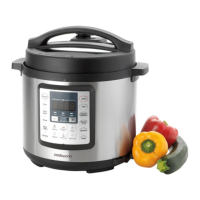
The Cookworks Pressure Cooker, Model No. MY-CJ6002W, is a versatile kitchen appliance designed for household and indoor use, offering efficient pressure cooking and sautéing functionalities. This manual provides comprehensive instructions for its safe operation, maintenance, and includes various recipe ideas.
Function Description:
The primary function of this device is pressure cooking, which significantly reduces cooking times for a variety of foods, including casseroles, stews, meats, pulses, and vegetables. It achieves this by creating a high-pressure environment inside the sealed pot, allowing food to cook faster while retaining moisture and nutrients. The pressure cooker also features a sauté function, enabling users to brown ingredients before pressure cooking or to reduce sauces after cooking.
Important Technical Specifications:
- Rated Voltage: 220-240V AC 50/60Hz
- Power Consumption: 1000W
- Max. Capacity: 4.5 litres
- Working Pressure: 70kPa
- Class Rating: I (earthed)
- BS 1362 Fuse: 13A
Usage Features:
The pressure cooker is designed for ease of use with several key components:
- Control Knob (Mode / Timer knob): Used to select desired cooking times for pressure cooking or to activate the 'Saute' function.
- Indicators: A red POWER indicator illuminates when the appliance is plugged in, and a COOK indicator illuminates when the cooker is actively working.
- Lid and Sealing Mechanism: The lid features an alignment mark (▲) and 'unlocked'/'locked' padlock symbols to ensure correct and secure fitting. A removable seal ensures a tight, pressure-retaining closure.
- Float Valve: This valve pops up when the cooker reaches pressure and drops down when the pressure normalizes, serving as a safety and operational indicator.
- Exhaust Valve: Located on the lid, this valve can be turned to release pressure, either slowly for natural depressurization or quickly for delicate foods. It has a removable cover for cleaning.
- Condensate Cup: Slides into position at the reverse of the pressure cooker to collect any condensation during cooking.
- Removable Bowl: The inner cooking pot, suitable for non-stick utensils, has a MAX (10) mark to indicate the maximum fill level. For foods that expand, it should not be filled past halfway.
- Accessories: Includes a steam trivet, small ladle, rice spoon, and measuring cup to facilitate various cooking tasks.
Operating Procedures:
- Preparation: Wash all removable parts before first use. Place the cooker on a stable, heat-resistant surface. Fit the condensate cup and remove the lid.
- Power Connection: Unwind the cable, plug it into the cooker housing, and then into the mains supply. The red POWER indicator will light up.
- Adding Ingredients: Place ingredients and at least 2 cm of liquid into the bowl, ensuring not to exceed the MAX (10) mark.
- Lid Closure: Check the seal is fitted correctly, then position and turn the lid clockwise until the 'locked' padlock symbol aligns with the alignment mark (▲).
- Exhaust Valve: Turn the exhaust valve to the pressure position.
- Setting Timer: Select the desired cooking time using the control knob. The COOK indicator will illuminate.
- Pressure Build-up: The float valve will pop up when the cooker reaches pressure. Some hissing and steam release are normal during this phase.
- Cooking Completion: A bell will sound, and the COOK indicator will extinguish when cooking is finished. Allow pressure to normalize naturally until the float valve drops.
- Quick Pressure Release (Optional): For delicate foods, use an oven glove to slowly turn the exhaust valve to the exhaust position to release pressure more quickly. Do not reach over the cooker.
- Lid Removal: Once pressure has normalized, remove the lid slowly, angling it away to allow any remaining steam to escape.
Sauté Function:
- Preparation: Ensure the bowl is clean and dry. Place the cooker on a stable, heat-resistant surface.
- Activation: Remove the lid. Turn the control knob to the 'Saute' position. The COOK indicator will illuminate.
- Sautéing: Allow the bowl to heat, then sauté food as normal. Do NOT fit the lid during sautéing.
- Completion: Turn the control knob to OFF or switch off at the mains.
Food Safety:
- Thoroughly defrost frozen meat, poultry, fish, and seafood.
- Keep raw and cooked foods separate.
- Wash hands and disinfect surfaces after handling raw meat/poultry.
- Use separate utensils for raw and cooked food.
- Ensure meat and poultry juices run clear and the product is piping hot throughout. Fish should appear opaque and flake easily.
General Pressure Cooking Advice:
- Always use at least 2 cm of liquid in the bowl.
- Do not overfill; leave space for steam build-up. For expanding foods, do not fill past halfway.
- Cooking times start when the cooker is pressurized (float valve pops up).
- Adding hot liquid can shorten pressure build-up time.
- Cooking liquid does not reduce, so adjust quantities accordingly. Sauces and gravies should be thickened after pressure cooking.
- For vegetables with a bite, depressurize 5-10 minutes before the end of the cycle, add vegetables, and then repressurize.
- Trim excess fat from meat.
- Add fresh milk, cream, or yogurt after the pressure cooking cycle, unless specified otherwise by a recipe.
Maintenance Features:
- Cleaning: All parts should be cleaned before first use and after each use.
- Removable Parts: The condensate collector, seal, exhaust valve, exhaust valve cover, float valve gasket, and float valve are all removable for thorough cleaning. These parts, along with the lid, removable bowl, and utensils, can be washed in hot water with washing-up liquid, rinsed, and dried. They are NOT suitable for dishwashers.
- Housing: Wipe the pressure cooker housing surfaces with a damp cloth. Do not use detergents or abrasives. Never immerse the motor housing, cable, or plug in water.
- Refitting: Ensure all parts are correctly refitted after washing.
Troubleshooting:
The manual includes a troubleshooting guide for common issues:
- Difficult to close lid: Check if the seal is installed correctly or if the float valve is catching on the push rod.
- Lid won't open: Indicates the cooker is still pressurized; allow pressure to normalize.
- Steam leaks from lid: Check for an incorrectly fitted or missing seal ring, or a damaged seal ring. Ensure the lid is closed correctly.
- Steam leaks from float valve: Check for food debris on the float valve gasket or a damaged float valve.
- Steam coming out of exhaust valve: Ensure the exhaust valve is in the pressure position.
- Float valve not rising: May indicate too little food or water in the bowl.
- POWER indicator not illuminated: Check for a damaged power cable or a power cut.
The Cookworks Pressure Cooker is a robust and user-friendly appliance designed to simplify and speed up cooking processes, making it a valuable addition to any kitchen.

 Need help?
 General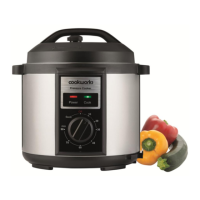

 To Next Page