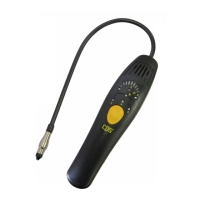
The CPS LS790B is a sophisticated, microprocessor-driven refrigerant leak detector designed for professionals in the MAC (Mobile Air Conditioning) and refrigeration industries. Developed from over 20 years of engineering experience and sensor research, it incorporates three patented technologies to offer advanced, yet user-friendly, leak detection capabilities.
Function Description:
The primary function of the LS790B is to quickly and accurately locate refrigerant leaks in air conditioning and refrigeration systems. It is designed to effectively detect all CFC, HFC, and HCFC refrigerants, as well as refrigerant blends, making it highly versatile in an evolving market with new refrigerants. The device utilizes a patented Ion-Pump® sensor to enhance sensitivity and reliability, and a patented filter to eliminate false signals caused by moisture, a common issue in leak detection. The LS790B provides clear feedback through a 10-segment LED leak size indicator and offers three individually selectable alarm indicators: audible only, visual only, or a combination of both. Its "LOCK-OUT™" mode is a key feature for eliminating background contamination when searching for leaks in highly contaminated areas, allowing the device to focus on the highest concentration of refrigerant.
Important Technical Specifications:
- Sensor Type: Patented Ion-Pump® Sensor
- Detection Capability: Detects all halogenated refrigerants (CFCs, HFCs, HCFCs, and blends).
- Sensitivity Ranges: 10 selectable sensitivity ranges, allowing adjustment based on refrigerant type and leak size. The lowest sensitivity range is automatically selected upon power-on.
- Leak Size Indicator: 10-segment LED display to visually indicate leak size.
- Alarm Indicators: Three selectable modes: Audible Only, Visual Only (LEDs), or Audible and Visual.
- Battery Life: Approximately 40 hours of operation.
- Battery Type: 4 AA Alkaline Batteries (not rechargeable).
- Power Management: Automatic Power Saver feature to conserve battery life.
- Low Battery Indicator: A specific LED segment (the 5th LED) flashes to indicate low battery.
- Probe: 18-inch flexible probe for accessing remote or restricted areas.
- Certifications: Certified to SAE J1627 and CE Approved.
- Patents: U.S. Patent 4,609,875, 5,264,833, and 5,371,467.
Usage Features:
The LS790B is designed for ease of use with a steel-domed tactile feedback keypad.
- ON/OFF Keys: Simple buttons to power the unit on or off.
- ALARM SELECT Key: This key cycles through the three alarm modes: audible only (default on startup), visual only, and a combination of audible and visual.
- SENSITIVITY Key: Allows the user to adjust the sensitivity across 10 ranges. Depressing and holding this key moves the LED indicator from LO to HI sensitivity. For R-134a, levels 4-7 are recommended. The instrument automatically selects the lowest sensitivity range when switched on.
- LOCK-OUT Key: This feature is crucial for contaminated environments. When activated (confirmed by three short beeps), the LS790B measures and records the highest concentration of refrigerant detected. It then ignores any concentrations lower than this, allowing the user to pinpoint the actual leak source, which will trigger a distinct two-tone alarm.
- CLEAR Key: This key serves two purposes: it resets the memory locations stored in the microprocessor when in LOCK-OUT mode, and it recalibrates the unit to the surrounding ambient conditions.
Operating Tips:
- Probe Contamination: Avoid contaminating the probe tip with dirt, condensate, or cleaners/solvents, as these can affect detector sensitivity.
- System Tracing: Visually inspect the entire refrigerant system for signs of lubricant leakage, damage, or corrosion. Systematically trace all lines, hoses, components, fittings, and service ports.
- Continuous Path: Always follow a continuous path around the refrigerant system to ensure no potential leak areas are missed.
- Probe Movement: Move the probe slowly (25-50 mm/second or 1-2 in/second) and close to the surface (no more than 5 mm or 1/4 in) to maximize leak detection likelihood.
- Leak Verification: If a leak is suspected, verify it by blowing shop air into the area and re-checking. For very large leaks, blowing out the area can help pinpoint the exact location.
- Evaporator Core Testing: For evaporator leaks, turn the A/C blower on high for 15 seconds, then off for ten minutes to allow refrigerant to accumulate. Insert the probe into the blower resistor block, condensate drain hole, or other openings near the evaporator.
- Post-Service Testing: Always leak test repairs and service ports after any system service.
- Windy Conditions: Avoid leak testing in windy areas, as escaping gas dissipates quickly. Fabricate a gas trap or shield the search area if necessary.
- Recommended Sensitivity: MAC recommends starting at level five or six. The ideal sensitivity allows the alarm and visual indicators to operate within the 10 LED segments without full saturation. If the highest audible tone is constant or all ten LEDs are always lit, the sensitivity is too high.
- Selective Filter Housing: For areas with high moisture content (e.g., around evaporators), use the patented Selective Filter Housing to eliminate false alarms caused by moisture.
Maintenance Features:
The LS790B requires minimal field maintenance, primarily focusing on cleaning, sensor replacement, and battery changes.
- Low Battery Condition: Indicated when the center segment of the LED display (the 5th LED) illuminates upon power-on. Replace with "AA" alkaline batteries only; rechargeable batteries are not supported.
- Ion-Pump® Sensor Replacement: The Ion-Pump® sensor will eventually need replacement, typically indicated by erratic performance at the lowest sensitivity. CPS recommends changing the sensor at the beginning of each A/C & R season and keeping a spare sensor available. The unit must be turned OFF before attempting to change the sensor.
- Patented Selective Housing Filter: Ensure the sensor housing inlet and outlet air vents are clean and free of obstructions. If vents become dirty, remove the housing and sensor (with the unit OFF), then attempt to clean contaminants using LOW-PRESSURE shop air or by hand only. If the housing remains contaminated, it should be replaced.

 Need help?
 General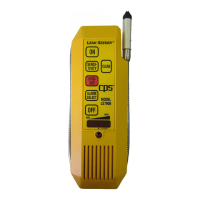

 To Next Page