7
BICYCLE MANUAL&WARRANTY
6. ADJUSTMENTS
It is possible to make some adjustments to your bicycle that will inuence
your riding position. These adjustments can make a great difference to riding
pleasure, speed and safety - so unless you are a very competent cyclist and
mechanic, do not attempt to execute any of these adjustments yourself. Seek
advice at your local bicycle shop. The basic adjustment points are as below:
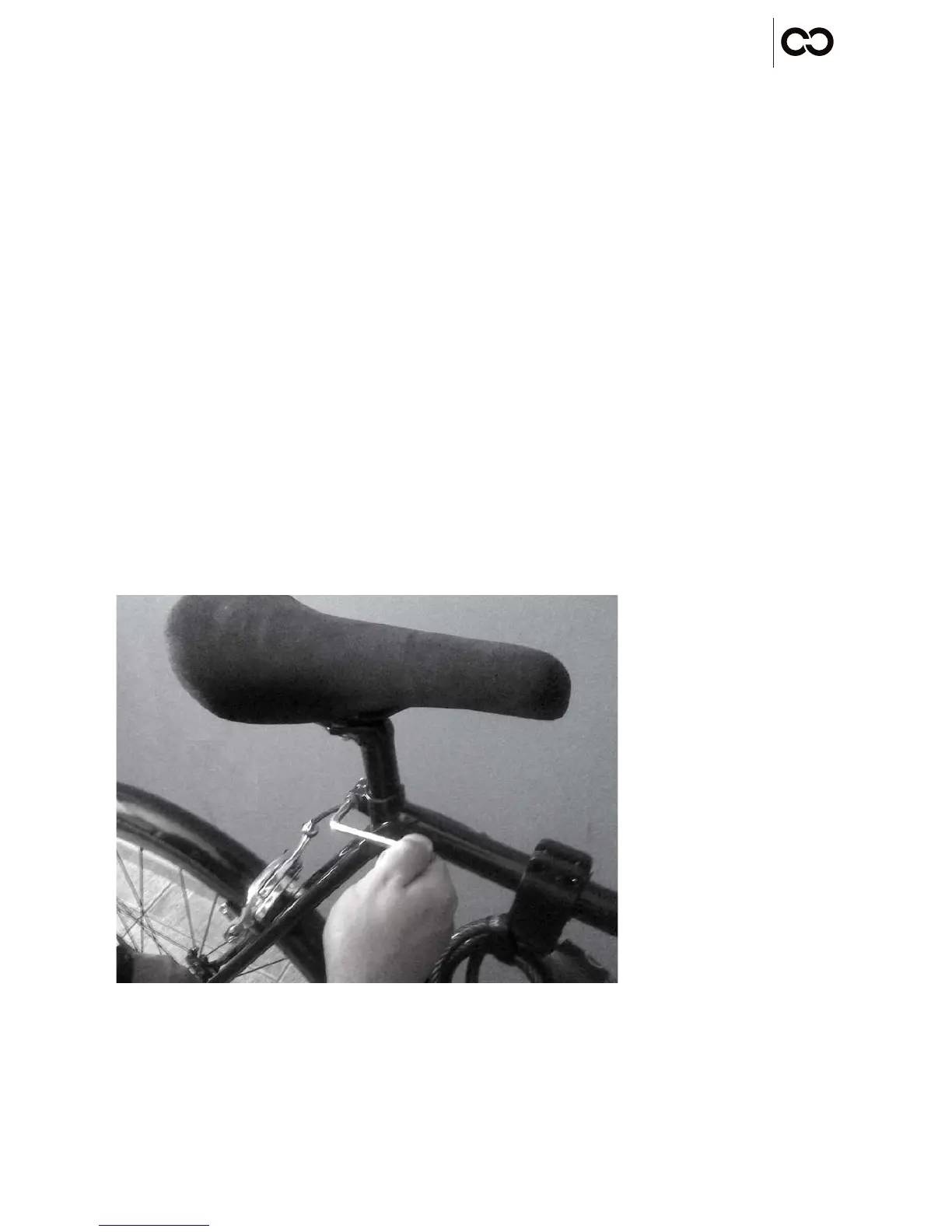
6.1 Adjusting saddle height. This should be carried out using an 5 mm hex
wrench. Unscrew the seat binder bolt, set the saddle at a certain height, then
re-tighten the bolt and sit on the bicycle. Repeat until you nd the best posi-
tion. The tightening torque of the seat binder should be around 12Nm. When
adjusting saddle height never extend the seat post above the warning sign
that is printed on the post. Check FIG 1. A general rule for performance riding
is that the saddle height should be set so that when you are seated and place
the heel of your foot on the pedal in it’s lowest position, your leg should be
almost straight. However, for comfort riding you should not follow this rule -
the saddle should actually by quite a bit lower.
WARNING: Never extend the seat post above the minimum insertion
mark that can be found on the lower part of the seat post!
FIG 1: Adjusting saddle height
6.2 Adjusting the saddle position. This should be done using a 6mm hex
wrench. When you loosen this bolt, it is possible to change the angle of the
saddle and it’s fore and aft position FIG 2. Try experimenting with various
combinations. A general rule is that the saddle should be set more or less in
the central position, and should be tilted slightly to the rear (the nose should



 To Next Page
 Loading...