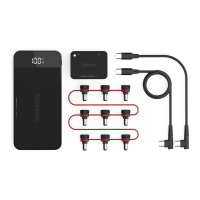
*Please Note Polarity is very important, please read and follow instructions carefully! Match
the color code on the wire and plug body to make proper connections with the standard
5.5mm jack polarity used on the effects pedals. For effects pedals the center pin (tip) is
negative (ground) and the outer barrel (sleeve) is positive (hot). There are rare instances
where a pedal has reversed polarity, but it is very uncommon. Also be careful not to plug just
any power supply with a 5.5 mm barrel jack into your pedal board. Connecting a tip positive
power supply to your system could cause permanent damage to your effects pedals. Do not
exceed 1500mA power draw.
Intended for in door use only. Install in accordance with the manufacturer’s instructions. Only use
attachments/accessories specified by the manufacturer. Do not use this apparatus near water or liquids. Protect
power cord from being walked on, rolled over or pinched. Do not install near heat sources such as radiators,
heaters, stoves, or other devices or appliances that produce heat. Unplug adapter during lightning storms or
when unused for long periods of time. The adapter and battery are not serviceable. Please contact original
retailer, distributor, or the manufacturer if unit stops working. DO NOT ATTEMPT TO OPEN THE ADAPTER OR
BATTERY. This device complies with Part 15 of the FCC Rules. Operation is subject to the following two
conditions: (1) this device may not cause harmful interference, and (2) this device must accept any interference
received, including interference that may cause undesired operation.
NOTE: This equipment has been tested and found to comply with the limits for a Class B digital device, pursuant to
part 15 of the FCC Rules. These limits are designed to provide reasonable protection against harmful interference in
a residential installation. This equipment generates, uses and can radiate radio frequency energy and, if not installed
and used in accordance with the instructions, may cause harmful interference to radio communications. However,
there is no guarantee that interference will not occur in a particular installation. If this equipment does cause
harmful interference to radio or television reception, which can be determined by turning the equipment off and on,
the user is encouraged to try to correct the interference by one or more of the following measures:
• Reorient or relocate the receiving antenna.
• Increase the separation between the equipment and receiver.
• Connect the equipment into an outlet on a circuit different from that to which the receiver is connected.
• Consult the dealer or an experienced radio/TV technician for help.


 To Next Page
 Loading...