Need help?
Do you have a question about the Daikin FKCA50AV16 and is the answer not in the manual?
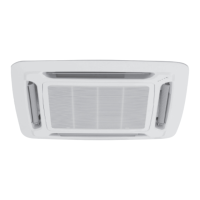
This document provides comprehensive instructions for the installation, operation, and maintenance of Daikin split system air conditioners, specifically the FKCA50AV16 and FKCA71AV16 models, which are ceiling-mounted cassette type (single flow model) units. It is crucial for installers and users to carefully read and retain this manual for future reference, as it contains vital safety precautions and operational guidelines.
The Daikin split system air conditioner is designed to provide cooling, program dry, and fan operation modes for various indoor environments. These units are suitable for household, business, and light industry applications. The system utilizes R32 refrigerant, a fluorinated greenhouse gas with a GWP (global warming potential) value of 675. The refrigerant quantity is specified on the unit's nameplate.
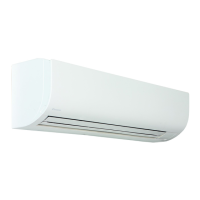
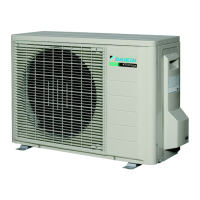
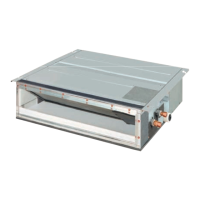
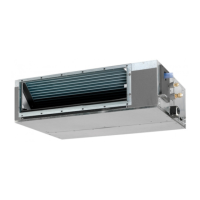
The air conditioner operates by circulating refrigerant between an indoor unit and an outdoor unit. The indoor unit, a ceiling-mounted cassette type, is responsible for distributing conditioned air into the room. It features an air outlet, horizontal and vertical blades for airflow direction adjustment, a suction grille, and an air filter. A built-in drain pump and float switch manage condensed water, ensuring proper drainage.
Control of the air conditioner is primarily achieved through a remote controller, which can be either wired (BRC1E63) or wireless (BRC91A157 with BRC63AV receiver kit). The remote controller allows users to set temperature, fan speed, and airflow direction. The system supports various control configurations, including individual control (one remote controller for one indoor unit), group control (one remote controller for up to 16 indoor units), and control with two remote controllers for a single indoor unit (one main, one sub).
The unit also incorporates computerized control features, allowing for forced off and on/off operations via external input. This enables integration with centralized control systems, providing flexibility in managing multiple units.
Installation and Setup: Installation of the indoor unit involves careful positioning within the ceiling, ensuring adequate space for air circulation and maintenance. The unit must be installed on a solid foundation capable of supporting its weight, with proper reinforcement to prevent vibration or falling. Refrigerant piping, drain piping, and electrical wiring must be installed according to specific instructions, using specified accessories and parts to prevent leaks, electric shocks, or fire hazards. The drain piping, in particular, requires a downward gradient of at least 1/100 to prevent air embolism and ensure complete drainage.
Electrical wiring work must be performed by qualified electricians, adhering to local laws and regulations. A separate power supply circuit is required, and all electrical connections must be secure, with no external forces acting on the terminals. Earth leakage circuit breakers are mandatory to prevent electric shocks.
Operation Modes: The air conditioner offers:
Airflow Direction Adjustment: The unit allows for precise control over airflow direction. With a wired remote controller, there are five settings for airflow direction, including an "Auto Swing" function for up and down movement. A wireless remote controller offers one setting. The horizontal blades close when the indoor unit is stopped.
Field Settings: After installation, specific field settings can be configured using the remote controller to optimize performance based on the installation environment. These include setting fan speed during thermostat off and configuring the filter sign, which indicates when the air filter needs cleaning.
Safety Features: The system includes several safety devices. In case of malfunction, the unit may stop operation, and a malfunction code may be displayed on the remote controller. These codes help in diagnosing issues and guide service personnel for repairs. The unit is designed to prevent operation under conditions that could lead to water leakage, electric shocks, or fire hazards, such as excessive refrigerant concentration in small rooms or improper electrical connections.
Regular Cleaning: The air filter, located inside the suction grille, requires periodic cleaning. The remote controller will display a "Filter cleaning" signal when cleaning is due (approximately every 2500 hours for normal use, or 1250 hours for more contaminated environments). To clean, the suction grille is opened, the air filter is removed, and dust is collected or washed with water and a neutral detergent. The filter should be dried in a shaded place before reinstallation. After cleaning, the "filter cleaning signal resetting" key on the remote controller must be pressed.
Professional Maintenance: For internal cleaning of the indoor unit or any complex repairs, it is recommended to contact a qualified service person. Improper cleaning or repairs can lead to plastic part breakage, water leakage, electric shocks, or other damage. Daikin ensures the availability of key components and parts for at least nine years after discontinuing production of the air conditioner type.
Troubleshooting: The manual provides a troubleshooting guide for common issues such as the unit not operating, stopping unexpectedly, insufficient cooling, or unusual noises. It advises users to check basic conditions like power supply, circuit breakers, blocked air inlets/outlets, and clogged air filters. For more complex problems or when malfunction codes are displayed, users are instructed to contact their local dealer, providing the model name and malfunction code for efficient service.
Long-Term Storage: If the air conditioner is not used for extended periods, it is recommended to turn off the main power supply switch to save energy. Before re-operating, the main power supply switch should be turned on at least six hours in advance for smooth running.
Disposal Requirements: The product is marked with a symbol indicating that electrical and electronic products should not be mixed with unsorted household waste. Dismantling, refrigerant treatment, oil, and other parts must be handled by a qualified installer in accordance with relevant local and national legislation. Batteries from the remote controller must also be disposed of separately.
 General
| Cooling Capacity | 5.0 kW |
|---|---|
| Refrigerant | R32 |
| Seasonal Energy Efficiency Ratio (SEER) | 6.10 |
| Power Supply | 220-240 V, 50 Hz |
| Indoor Unit Noise Level | 30 dB(A) |

 To Next Page