9
BUY ONLINE OR CLICK AND COLLECT IN STORE @ WWW.DIAMONDBACK.CO.UK
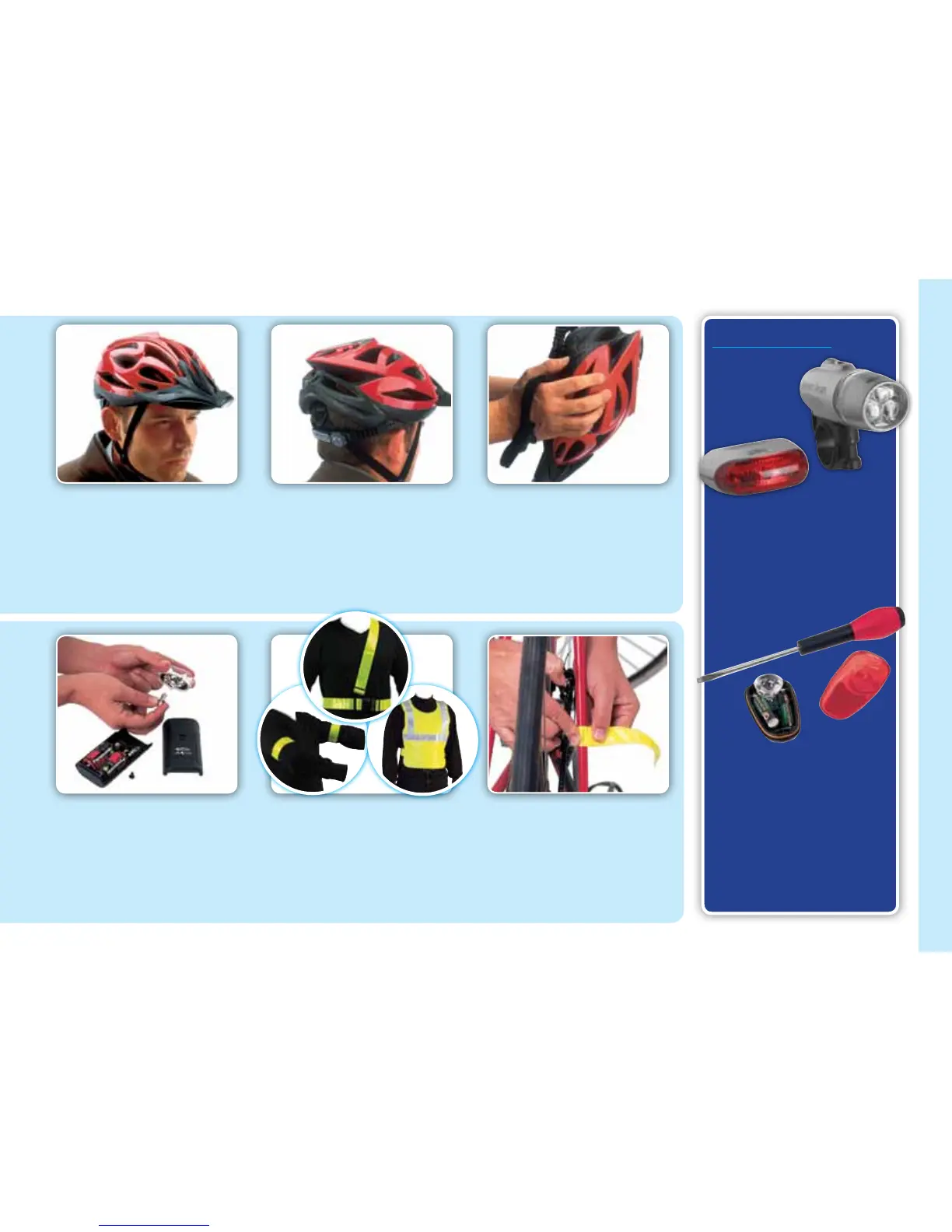
When buying a helmet, try out
several different styles and
different sizes within each style
as well. Select one that feels
comfortable and secure, that fits
well down on your forehead and
which has straps that lie well
away from your ears.
Once you’ve got a good fit, adjust
the straps carefully, making
sure that the adjusters sit well
below the ears and don’t get
twisted. Many helmets also
have an adjustable nape strap at
the back of the helmet. Follow
manufacturers’ instructions.
To get a good fit, helmets have
either an exterior adjuster,
simple pads or inflatable side
pieces. Once adjusted, hold
the helmet upside down with
the straps out of the way to
make it easier to put on. Follow
manufacturers’ instructions.
Check frequently that your lights
are as bright as they should be.
The batteries in particular need
changing frequently, so keep
spares at home and at work.
When replacing bulbs, especially
halogen ones, don’t touch the
glass at all.
You can also fit reflective material
to the bike itself. Large areas are
best but even small strips make
you more visible. It’ll stick better if
you clean any grease or oil off the
frame before fitting. Try to blend
the reflective areas in with the
shape of the bike.
Good lighting should be backed up
by other visibility aids. If a bright
yellow reflective jersey is too much
for you, wear a reflective belt,
preferably one that goes round
waist and shoulders. They’re very
effective at letting motorists know
you’re on the road.
LED bike lights usually have a clip
so you can attach them to your
clothing. There is also a switch to
select a steady or a flashing light.
They should only be fitted as a
back-up to a legal light, or to a
dynamo.
Most LED lights have a close-
fitting plastic case. To fit new
batteries, find the notch in the
case and prise the two halves
apart with a screwdriver. There
is no bulb as such. When putting
the case back together, take care
to avoid damaging or moving the
rubber seal.


 To Next Page