SAFETY 161
3. Does the shoulder belt cross the child’s
shoulder between the neck and arm?
4. Is the lap part of the belt as low as possible,
touching the child’s thighs and not the
stomach?
5. Can the child stay seated like this for the
whole trip?
If the answer to any of these questions was “no,”
then the child still needs to use a booster seat in
this vehicle. If the child is using the lap/shoulder
belt, check seat belt fit periodically and make
sure the seat belt buckle is latched. A child’s
squirming or slouching can move the belt out of
position. If the shoulder belt contacts the face or
neck, move the child closer to the center of the
vehicle, or use a booster seat to position the seat
belt on the child correctly.
Recommendations For Attaching Child Restraints
WARNING!
Never allow a child to put the shoulder belt
under an arm or behind their back. In a crash,
the shoulder belt will not protect a child
properly, which may result in serious injury or
death. A child must always wear both the lap
and shoulder portions of the seat belt
correctly.
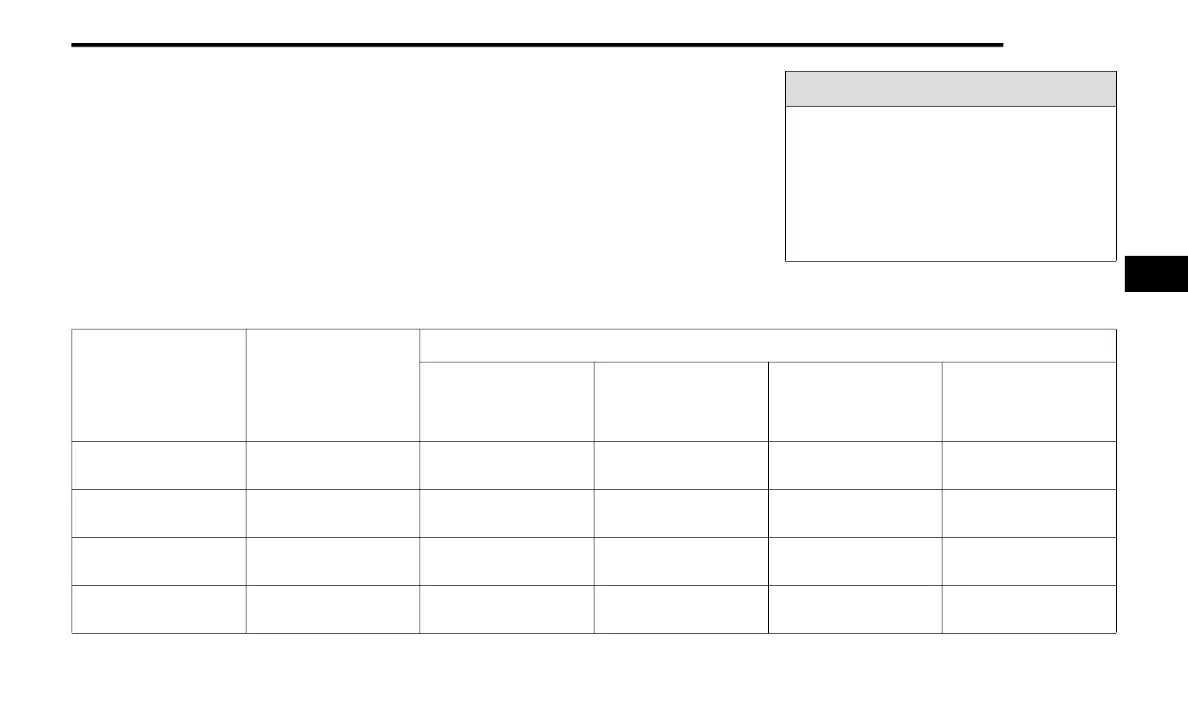
Restraint Type
Combined Weight of
the Child + Child
Restraint
Use Any Attachment Method Shown With An “X” Below
LATCH – Lower
Anchors Only
Seat Belt Only
LATCH – Lower
Anchors + Top
Tether Anchor
Seat Belt + Top
Tether Anchor
Rear-Facing
Child Restraint
Up to 65 lbs
(29.5 kg)
X X
Rear-Facing
Child Restraint
More than 65 lbs
(29.5 kg)
X
Forward-Facing
Child Restraint
Up to 65 lbs
(29.5 kg)
X X
Forward-Facing
Child Restraint
More than 65 lbs
(29.5 kg)
X
4
20_WD_OM_EN_USC_t.book Page 161





 To Next Page