24
Extract: For details, see the Instructions for Use/data sheets for the sensors used
1)
1)
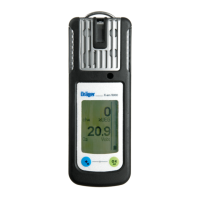
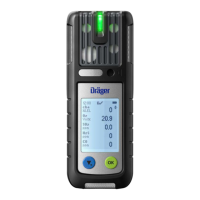
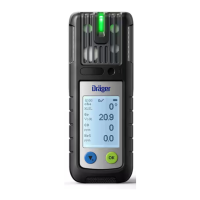
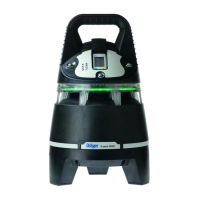
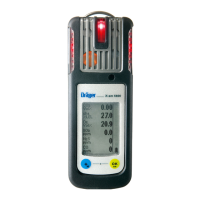
The Technical Handbook and Instructions for Use/data sheets for the sensors used and the PC software CC-Vision for Dräger X-am 5600
are available on the product page of the X-am 5600 at the following
Internet address: www.draeger.com. See also attached Instructions for Use and Data Sheets of the sensors used.
DrägerSensor
XXS O
2
XXS H
2
S XXS H
2
S LC XXS H
2
HC
Measuring principle electrochemical electrochemical electrochemical electrochemical
Meauserement value configuration time t
0...90
for methane
for propane
≤ 10 seconds ≤ 15 seconds ≤ 18 seconds ≤ 20 seconds
Measurement value configuration time t
0...50
for methane
for propane
≤ 6 seconds ≤ 6 seconds ≤ 6 seconds ≤ 11 seconds
Measuring range 0 to 25 vol.-%
0 to 200 ppm H
2
S
2)
2) Certified for 1 to 100 ppm.
0 to 100 ppm H
2
S
3)
3) Certified for 0.4 to 100 ppm.
0 to 100 %LEL
or
0 to 4 vol.-%
Lower limit of measuring range
(EN 45544)
– – – 1 ppm 0.4 ppm – – –
Zero error (EN 45544) – – – 2 ppm 0.4 ppm 0.02 vol.-%
Instrument drift – – – ≤ 1 % of the
measured value/month
≤ 1 % of the
measured value/month
≤ 4 % of the
measured value/month
Warm-up time ≤ 5 minutes ≤ 5 minutes ≤ 5 minutes ≤ 60 minutes
Effect of Sensor poisons, hydrogen sulphide
H
2
S, 10 ppm: halogenated hydrocarbons, heavy
metals, substances containing silicone or sul-
phur or polymerisable substances:
– – – – – – – – – – – –
Linearity error ≤ 0.3 vol.-% ≤ 2 %
of the measured value
≤ 2 %
of the measured value
≤ 70 %LEL: ≤ 4 %LEL
> 70 %LEL:
≤
6.5
%LEL
Standards
(Measuring function for explosion protection and
measurement of oxygen deficiency and oxygen
surplus as well as toxic gases,
DEKRA EXAM GmbH, Essen, Germany:
BVS 10 ATEX E 080X, PFG 10 G 001 X
EN 50104
4)
(measurement of oxygen
deficiency and oxygen
surplus)
EN 50271
4) The measuring signals can be affected negatively by ethane, ethene, ethine, carbon dioxide and hydrogen.
EN 45544-1
5)
EN 45544-2
EN 50271
5) The measuring signals can be affected additively by sulphur dioxide, nitrogen dioxide and hydrogen and negatively by chlorine.
EN 45544-1
5)
EN 45544-2
EN 50271
EN 60079-29-1
6)
EN 50271
6) The measuring signals can be affected additively by ethine, sulphur monoxide and carbon monoxide. Increased hydrogen concentrations within the measuring range of the XXS H
2
HC can lead to false
alarms by the additive affect with the XXS H
2
S and the XXS CO as well as by the negative affect with the XXS O
2
.
Cross sensitivities
7)
7) A table of the cross sensitivities is contained in the Instructions for Use or the data sheet of the respective sensor.
exist exist exist exist


 To Next Page
 Loading...