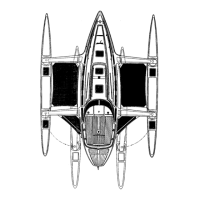
CLEANING UP FOR THE WINTER:
1. You are recommended to wash the boat completely clean, wax and polish all
surfaces except the non-skid.
2. Make sure to take off the sails, sprayhood and cockpit tent. Wash and rinse out
dirt and salt. Everything must be completely dry, before stowed away for the
winter and kept in a dry place.
3. Cushions:
For cleaning cushions you can remove the cover by unfastening the zip on the
back of the cushion. For washing or dry-cleaning, check which material your
cushions are made of.
4. Various steel wires can be washed in warm soap and water, rinsed clean, dried
and afterwards wiped with an oilcloth.
5. All ropes and blocks should be washed in warm soap and water, rinsed and
dried.
6. Rigging and boom:
Make sure all lines and halyards are intact. Should a halyard have a failure at
the end, turn it over. Every year all halyards and reefing lines should be
shortened approx. 25 cm.
7. The water tank must be emptied and cleaned – is located under the front bunk.
8. The outboard engine:
Please contact your local dealer, but have it serviced and run the engine in fresh
water to get all the salt out of it.
9. The marine battery is removed from the boat and discharged, then you recharge
the battery and store it like the cushions and sails in a nice dry place. A good
thing for the battery, is, during the winter to partly "drain" the battery and
charge it again, fx. 2 or 3 times during the winter.
10. Dry out the hulls completely to avoid frost damage in all bilges/compartments.
11. Make sure that ventilation is good before storing the boat for the winter. The
best thing to do is to store the boat indoors for the winter period, if you use a
canvas cover make sure it does not touch the boat as it may scratch it.
12. Never cover the mast with plastic – this will create blisters between the carbon
mast and the paint. Quorning Boats cannot be held responsible towards blisters
on the mast.



 To Next Page