
 Need help?
Do you have a question about the Dunlop JERRY CANTRELL CRY BABY and is the answer not in the manual?
Adjusts tone of toe-down rocker position.
Describes power options: battery, adapter, or power supplies.
Step-by-step guide for connecting and using the wah pedal.
Details input and output impedance values.
Specifies frequency ranges for heel-down and toe-down settings.
Defines maximum input and output signal levels.
Provides gain values at center frequency for heel/toe down.
Lists noise floor levels in dB for heel and toe down positions.
Includes bypass type, current draw, and power supply requirements.
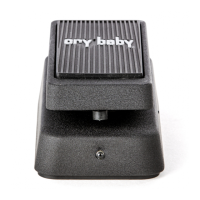
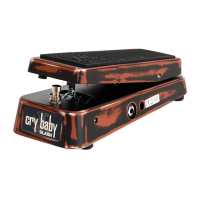
The Jerry Cantrell Cry Baby Wah is a specialized effects pedal designed to provide expressive, vocal-like tones for guitarists, embodying the distinctive sound associated with Jerry Cantrell. This pedal is a variation of the classic Cry Baby Wah, tailored to deliver specific tonal characteristics and functionality preferred by the artist. Its primary function is to allow the user to dynamically sweep through a range of frequencies, creating the iconic "wah" effect that can add significant character and emotional depth to guitar playing.
At its core, the Jerry Cantrell Cry Baby Wah operates as a variable filter, controlled by a rocker pedal. As the user pivots the pedal with their foot, the filter's center frequency shifts, emphasizing different parts of the guitar's tonal spectrum. Pushing the toe of the pedal down moves the filter to a higher frequency range, producing a brighter, more pronounced "wah" sound, often described as a "toe-down" position. Conversely, rocking the pedal back towards the heel shifts the filter to a lower frequency range, resulting in a darker, more resonant tone, known as the "heel-down" position. This continuous sweep between high and low frequencies is what generates the characteristic vocal-like quality that has made the Cry Baby Wah a staple in countless guitar rigs across various genres, from rock and blues to funk and metal.
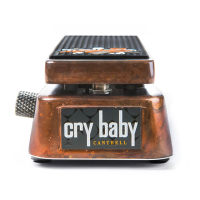
A key feature distinguishing the Jerry Cantrell model is its "FINE TUNE" knob. This control allows for precise adjustment of the toe-down rocker position's tone. By rotating this knob, players can fine-tune the upper end of the wah sweep, enabling them to dial in a brighter or darker toe-down response according to their preference or the specific demands of a song. This level of customization ensures that the pedal can be adapted to a wide array of musical contexts and guitar setups, providing a versatile tool for shaping the guitar's voice. The ability to fine-tune the toe-down position is particularly valuable for achieving specific expressive nuances, allowing guitarists to craft their wah sound with greater precision than standard wah pedals might offer.
The pedal is designed for ease of integration into an existing guitar rig. It features standard instrument and amplifier jacks, facilitating a straightforward connection between the guitar and the amplifier. The activation of the wah effect is achieved by pushing the toe of the pedal down until a distinct "click" is felt, indicating that the effect is engaged or disengaged. This tactile feedback ensures that players can confidently switch the effect on or off during live performances without needing to look down at the pedal. When disengaged, the pedal typically operates in a hardwire bypass mode, meaning the guitar signal passes directly through the pedal without any coloration or degradation, preserving the instrument's natural tone.
The sonic character of the Jerry Cantrell Cry Baby Wah is specifically voiced to capture the essence of Jerry Cantrell's signature sound. This often implies a wah effect that is robust, articulate, and capable of cutting through a mix, while also retaining a certain warmth and musicality. The pedal's design aims to deliver expressive tones that are both powerful and nuanced, allowing for dynamic phrasing and emotive solos. The vocal quality of the wah is paramount, enabling the guitar to "sing" and interact with the music in a highly expressive manner.
Operating the Jerry Cantrell Cry Baby Wah is intuitive, making it accessible to both seasoned professionals and those new to wah pedals. The basic operation involves connecting your guitar to the pedal's "INSTRUMENT" jack and then connecting the pedal's "AMPLIFIER" jack to your amplifier's input. This standard setup ensures compatibility with most guitar and amplifier configurations.
Once connected, the pedal is activated by simply pushing the toe of the pedal down until you feel a "click." This action engages the wah effect, allowing you to begin manipulating the tone. To disengage the effect, you push the toe down again until you feel another "click." This on/off mechanism is designed for quick and reliable switching during performance.
The core of the wah effect is controlled by rocking your foot back and forth on the pedal. Moving your foot towards the toe of the pedal will sweep the filter to higher frequencies, producing a brighter, more piercing sound. Conversely, moving your foot towards the heel will sweep the filter to lower frequencies, creating a darker, more resonant tone. The continuous motion between these two extremes allows for a smooth, vocal-like sweep that is the hallmark of the Cry Baby Wah. The responsiveness of the pedal to foot movement is crucial for expressive playing, enabling subtle nuances or dramatic sweeps as desired.
The "FINE TUNE" knob is a critical usage feature for tailoring the pedal's sound. Located on the side of the pedal, this knob allows you to adjust the tone of the toe-down rocker position. Rotating the knob clockwise will result in a brighter toe-down response, emphasizing higher frequencies and adding more bite to the wah sound. Rotating it counterclockwise will yield a darker toe-down response, mellowing out the high end and providing a smoother, less aggressive tone. This adjustability is invaluable for matching the pedal's output to different guitars, amplifiers, and musical styles, ensuring that the wah effect always sits perfectly within the mix. It allows players to personalize the "peak" of their wah sweep, which is often where the most distinctive vocal qualities reside.
Powering the Jerry Cantrell Cry Baby Wah offers flexibility. It can be powered by a single 9-volt battery, which is installed by removing the bottom plate of the pedal. This option provides portability and allows for use in situations where an AC power source might not be readily available. For more permanent setups or to avoid battery changes, the pedal is also compatible with various external power supplies. These include the Dunlop ECB003 9-volt adapter, as well as multi-output power supplies like the DC Brick, Iso-Brick, and Mini Iso-Brick. These external power options ensure consistent power delivery, which can be beneficial for maintaining optimal performance and reducing the risk of power-related noise.
The robust construction of the pedal, typical of Cry Baby Wahs, means it is built to withstand the rigors of live performance and frequent use. The heavy-duty metal casing and sturdy rocker mechanism are designed for durability, ensuring a long lifespan even under demanding conditions. The textured surface of the rocker pedal provides good grip for the foot, preventing slippage during energetic playing.
Maintenance for the Jerry Cantrell Cry Baby Wah is generally straightforward, focusing on ensuring reliable operation and longevity.
The primary maintenance task related to power is battery replacement. If you are using a 9-volt battery, it will eventually need to be replaced. The manual indicates that the bottom plate of the pedal must be removed to access the battery compartment. This process typically involves unscrewing a few screws on the bottom of the pedal, lifting the plate, and then replacing the old battery with a new 9-volt alkaline battery. It's good practice to keep spare batteries on hand, especially for live performances, or to switch to an external power supply to avoid unexpected power loss. Regularly checking the battery level, or simply replacing it before critical events, can prevent interruptions.
For those using external power supplies, maintenance primarily involves ensuring the power adapter is functioning correctly and that the power cable is securely connected and free from damage. Using the recommended Dunlop ECB003 9-volt adapter or compatible multi-output power supplies helps ensure the pedal receives the correct voltage and current, which is crucial for optimal performance and to prevent damage to the internal circuitry.
Cleaning the pedal is another aspect of maintenance. Over time, dust, dirt, and debris can accumulate on and around the rocker mechanism, potentially affecting its smooth operation. Wiping down the pedal's exterior with a soft, dry cloth can help keep it clean. For more stubborn grime, a slightly damp cloth can be used, but care should be taken to avoid getting moisture into the internal components or jacks. Periodically inspecting the pivot points and the gear mechanism (if visible) for any obstructions or excessive wear can also be beneficial. While the internal components are generally sealed, keeping the exterior clean contributes to the overall health of the pedal.
The input and output jacks should also be kept clean. Over time, oxidation or dirt can accumulate on the metal contacts inside the jacks, leading to intermittent signal or noise. Using a specialized contact cleaner or a cotton swab with a small amount of isopropyl alcohol can help clean these contacts, ensuring a strong and clear signal path. It's important to ensure the pedal is unplugged and powered off before attempting to clean the jacks.
The "FINE TUNE" knob, like any potentiometer, can sometimes accumulate dust or experience wear over time, potentially leading to scratchy sounds when adjusted. While not a common issue with modern, sealed components, if such an issue arises, a specialized electronic contact cleaner designed for potentiometers might be used, though this typically requires opening the pedal and should only be attempted by those comfortable with such procedures. For most users, simply keeping the knob and surrounding area clean will suffice.
Finally, regular inspection of the pedal's overall physical condition is good practice. Check for any loose screws, damaged cables, or signs of wear on the rocker mechanism. Addressing minor issues promptly can prevent them from escalating into larger problems. The robust construction of the Cry Baby Wah means it is designed for durability, but like any piece of electronic equipment, proper care and occasional inspection will help ensure its continued reliable performance for years to come.
 General
| Type | Wah Pedal |
|---|---|
| Model | JERRY CANTRELL CRY BABY |
| Artist Series | Jerry Cantrell |
| Power Supply | 9V DC |
| Weight | 3.7 lbs |
| Controls | On/Off switch |
| Output Impedance | 10 kΩ |
| Dimensions | 10 x 4 x 2.5 inches |
| Input Impedance | 1 MOhm |


 To Next Page