The Eastwood Abrasive Media Blast Cabinet – B60 is a heavy-duty, powder-coated unit designed for abrasive media blasting, offering years of reliable service. Its primary function is to provide a contained environment for cleaning, stripping, or finishing various objects using abrasive media. The cabinet is equipped with an LED work lamp for enhanced visibility and features a baffled, flow-through ventilation design with an external vacuum connection, allowing for the use of portable or bolt-on vacuums.
The manual emphasizes several critical safety precautions. Users are warned of potential hazards including electric shock, health risks, and operational dangers.
- Electric Shock Hazard: Always plug the unit into a properly grounded outlet. Abrasive blasting can generate static electricity, and grounding the cabinet according to local electrical codes is recommended. The unit is for indoor use only.
- Health Hazard: It is crucial not to use sand containing crystalline silica, as exposure can lead to silicosis, cancer, and death. Dust generated during blasting may contain hazardous materials like lead, zinc chromate, and cadmium, necessitating the use of a NIOSH-approved breathing apparatus. The cabinet should never be operated with the door open; it must be securely latched and sealed. A properly filtered shop-type dust collecting vacuum is essential; if dust seeps out, the vacuum filter must be replaced immediately.
- Operation Warnings: The maximum weight capacity for objects to be blasted is 132 lbs, and for blast media, it is 100 lbs. Inlet air pressure must not exceed 120 PSI, as excessive pressure can cause permanent damage and personal injury. The air supply must be disconnected before any adjustments, accessory changes, or storage. Bottled gas should never be used as an air source.
- Notice: A clean, dry, regulated air supply is mandatory, as moisture or oil in the air supply will clog the blast media.
Technical Specifications:
- Electrical Current Requirement (Lamp): 120 Volt AC, 60Hz; 0.034 amp.
- Air Supply Requirements: 7 CFM @ 90 PSI.
- Internal Dimensions: 36" wide x 24" deep x 23" high.
Usage Features:
The cabinet is designed for efficient and safe abrasive blasting.
- Media Suction Tube: Facilitates the delivery of abrasive media to the blasting gun.
- Glove Seats and Gloves: Allow the operator to manipulate objects inside the cabinet while maintaining a sealed environment. The gloves should be installed on the correct sides with thumbs upward.
- Air Input Regulating Disk: Used to adjust the vacuum airflow.
- Vacuum Elbow and Baffle: Connect to an external vacuum system to manage dust and maintain visibility within the cabinet.
- Door Struts: Support the door when open.
- LED Lamp: Provides illumination inside the cabinet for better visibility during operation.
- Hopper Drain Door: Allows for easy removal or sifting of blast media.
- Window Shield: The tempered glass window is equipped with a replaceable, peel-off, self-adhesive flexible shield that will become cloudy with use. Replacement involves peeling off the worn shield, cleaning the glass, and applying a new shield to ensure an abrasive-proof seal.
Set-Up Cabinet for Use:
- Air Supply: Requires a moisture separator to remove moisture and impurities, which can cause media clumping and clogging. A regulator is needed to limit incoming air pressure to a maximum of 90 PSI (80 PSI is ideal).
- Vacuum System: A heavy-duty vacuum with 1.0 to 2.0 peak horsepower is recommended. The vacuum hose slips over the Vacuum Elbow at the rear of the cabinet. Only a light amount of negative pressure is needed to prevent dust clouds. Airflow can be adjusted by rotating the Air Input Regulating Plate. Proper vacuum operation is indicated by the blast gloves "ballooning" slightly; if they lift up and stick straight, there's too much vacuum; if they lie flat, there's not enough.
- Media Loading: Ensure the Hopper Drain Door is tightly closed. Add 50 lbs. of Eastwood approved Blast Media (up to 100 lbs. may be used). Do not use sand. For best results and to avoid nozzle clogging, media larger than 60 grit particle size should not be used.
Maintenance Features (Troubleshooting):
The manual provides a troubleshooting guide for common issues:
- Insufficient Air to Blasting Gun:
- Compressor Inadequate: A compressor capable of at least 10 CFM @ 80-90 PSI is recommended for optimal performance.
- Air Line Too Small/Long: Use a 5/16” or larger air supply line, with a maximum length of 25’.
- Pinched/Damaged Hose: Replace the suction hose (automotive fuel or heater hose works well).
- Media Surging:
- Moisture/Oil in Air Supply: Install a moisture separator.
- Dirt/Residue in Gun Nozzle: Clean the gun nozzle, then drain and sift blast media.
- Excessive Media in Hopper: Operate the blaster with the media suction tube buried several inches in media; 25 lbs. is generally sufficient.
- Media Stream Suddenly Stops:
- Dirt/Debris in Suction Hose: Dislodge blockage by placing a gloved finger over the nozzle outlet and briefly depressing the trigger.
- Contaminated Media: Drain and sift blast media.
- View Obstructed:
- Vacuum Not Operating Correctly: Check vacuum system function and adjust the Air Inlet Regulating Plate.
- Worn Lens Shield: Clean the inside of the window and replace the peel-off lens shield.
Accessories:
Eastwood offers a range of accessories for the B60 cabinet, including:
- Dust Collection System (#30998)
- Blast Cabinet Foot Pedal and Gun (#21133)
- Blast Media Sifter Screen (#22022)
- Filter/Regulator Unit with Gauge (#20608)
- Various types of blast media (Silicon Carbide, Aluminum Oxide, Glass Bead in different grits)
- Replacement Nozzles, 4pc (#20068)
- Window Liners, 5pc (22" x 10-1/2") (#20071)
The manual emphasizes the importance of proper assembly, sealing all interior joints with RTV Sealer, and ensuring all components are correctly installed for optimal performance and safety.

 Need help?
 General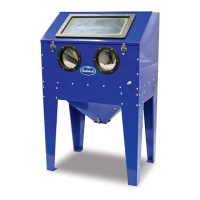

 To Next Page