6
Function diagram Description
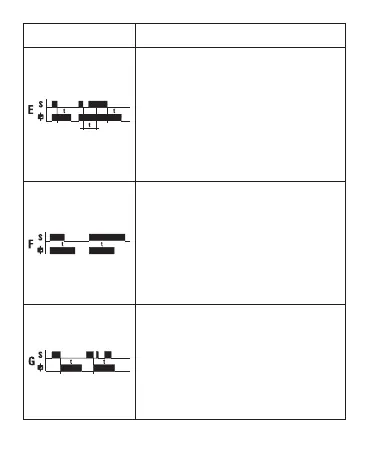
Leading edge On / Trailing edge Delay Off.
After the relay is energized, it remains in a
steady state until a signal (S) is detected. As
soon as the signal is detected, contacts 15-
16 (25-26) open, contacts 15-18 (25-28) close,
and relay remains in the steady state while the
signal (S) is being detected. As soon as the sig-
nal (S) disappears, a countdown (T) is started.
Once the countdown is nished, contacts 15-
18 (25-28) open, and contacts 15-16 (25-26)
close. The cycle repeats when the signal (S)
reappears.
Delay Off (Leading edge).After the relay is
energized, it remains in a steady state until
a signal (S) is detected. As soon as the signal
is detected, contacts 15-16 (25-26) open, con-
tacts 15-18 (25-28) close, and the countdown
(T) is started. Once the countdown is nished,
contacts 15-18 (25-28) open, and contacts 15-
16 (25-26) close. The cycle repeats when the
signal (S) reappears. Reappearance of the
signal (S) while the countdown is running does
not affect the execution of the relay scenario.
Delay Off (Trailing edge)After the relay is
energized, it remains in a steady state until
a signal (S) is detected and then disappears.
As soon as the signal disappears, contacts
15-16 (25-26) open, contacts 15-18 (25-28)
close, and the countdown (T) is started.
Once the countdown is nished, contacts
15-18 (25-28) open, and contacts 15-16 (25-
26) close. The cycle repeats when the
signal (S) appears and disappears again.



 To Next Page