Need help?
Do you have a question about the Euromaid HTL65 and is the answer not in the manual?
Essential safety precautions for using the washing machine, covering usage, electrical safety, and maintenance.
Specifies the product's design for domestic use only and not for commercial purposes.
Guidelines to protect children from hazards associated with packaging and electrical products.
Details on the recyclability of packaging materials and proper disposal methods.
Instructions for environmentally responsible disposal of the washing machine at its end of life.
Information regarding compliance with WEEE and RoHS Directives for electrical equipment.
Identifies the main parts and components of the washing machine with a diagram.
Lists key technical details such as capacity, dimensions, power input, and spin speed.
Guidance on selecting a suitable, stable, and safe location for placing the washing machine.
Instructions for connecting the washing machine to the water supply, including pressure requirements.
Procedures for correctly connecting the drain hose to ensure proper water discharge.
Steps to level the washing machine by adjusting its feet for stability and optimal performance.
Guidelines for safely connecting the washing machine to the electrical power supply.
Details on connecting the water inlet hose to the tap, ensuring secure and leak-free attachment.
Comprehensive instructions for connecting the water supply, including hose types and temperature limits.
Guidance on selecting and using detergents, softeners, and bleach correctly with the machine.
Advice on sorting laundry by fabric type, color, and soil level before washing.
Steps for preparing clothes, such as checking pockets, closing zippers, and washing delicates.
Recommendations for using the washing machine in an energy-efficient and ecological manner.
Information on determining the maximum load capacity based on laundry type and program.
Instructions on how to load laundry items into the machine for optimal washing results.
Details regarding the advanced detergent drawer compartments for different washing agents.
Information about the simple detergent drawer and its single compartment for main wash.
Explanation of the washing machine's control panel, buttons, and display indicators.
Steps to prepare the machine before starting a wash cycle, including power and program selection.
Description of the different main wash programmes available for various fabric types and soil levels.
Guide to selecting and using additional functions like soaking, rinse, and spin.
A table detailing programmes, load capacities, functions, and estimated consumption.
Instructions for regular cleaning of the detergent drawer to prevent residue buildup.
Guidance on cleaning the exterior body and the control panel of the washing machine.
Steps for cleaning the filters at the water intake valves to ensure proper water flow.
Procedures for draining residual water and cleaning the pump filter for optimal performance.
A guide to identifying and resolving common issues such as power loss, drainage, and leaks.
Lists error messages displayed by the machine and their corresponding causes and solutions.
This document is the user's manual for the Euromaid HTL65 Washing Machine. It provides comprehensive information on the safe and efficient operation, installation, and maintenance of the appliance.
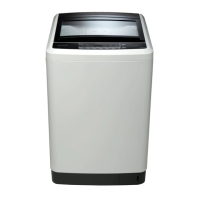
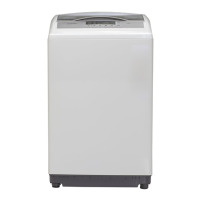
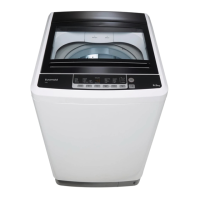
The Euromaid HTL65 is an automatic washing machine designed for domestic use, capable of washing and rinsing laundry. It offers a range of wash programs tailored to different fabric types, soil levels, and water temperatures, including Auto, Wool, Blanket, Normal, Small, Light, Heavy, and Tub Clean. The machine features a control panel with buttons for On/Off, Start/Pause, Air Turbo, Auxiliary Function, Water Level, Delayed Start Time, Water Supply, and Function selection, along with a digital display for remaining time, delay start time, and error codes.
The washing machine automatically adjusts the water level based on the laundry load for most programs, but users can manually select water levels (Low, Medium, High, Extra High) using the Water Level button. It supports both cold and hot water inlets, with an option to use a single (cold) water inlet by installing a stopper on the hot water valve. The machine also includes a Child Lock function to prevent accidental operation by children. Auxiliary functions like Wash, Soaking, Rinse, and Spin can be selected to customize wash cycles. The Air Turbo function is available to speed up laundry drying, particularly when a spin cycle is set. A Rinse Hold function allows water to remain in the machine after the last rinse, useful for preventing wrinkles if laundry cannot be removed immediately.
The manual emphasizes the importance of reading all instructions, following warnings, and contacting an Authorized Service Agent for installation and repairs to ensure safety and maintain warranty validity. It also highlights the product's compliance with EU WEEE and RoHS Directives, promoting responsible disposal and recycling.

 To Next Page
 General