SAFETY, WARNINGS, INSTALLATION NOTES
8
• In areas where there is a risk of freezing conditions, power must be available to the water heater at all
times and the electrical supply to the water heater should not be switched off, otherwise damage could
result.
Refer to:
◼ “Freeze Protection” on page 10, and
◼ “To Turn Off the Water Heater” on page 12.
• Do not use aerosols, stain removers and household chemicals in the vicinity of this water heater while
it is in operation. Gases from some aerosol sprays, stain removers and household chemicals are corrosive
to the materials used in the heat pump system.
• Do not store swimming pool chemicals, household cleaners, etc., near the water heater.
• Ensure the air flow, air inlet louvres and outlet grille are not obstructed in any way at any time.
WARNINGS – REFRIGERANT
• Be aware that the refrigerant used in this heat pump is flammable and may not contain an odour if it were
to leak.
• Do not use any means to accelerate the defrosting process of the evaporator coil or other components of
the heat pump.
• Do not pierce or burn any components of the heat pump.
RELIEF VALVES
Temperature Pressure Relief Valve
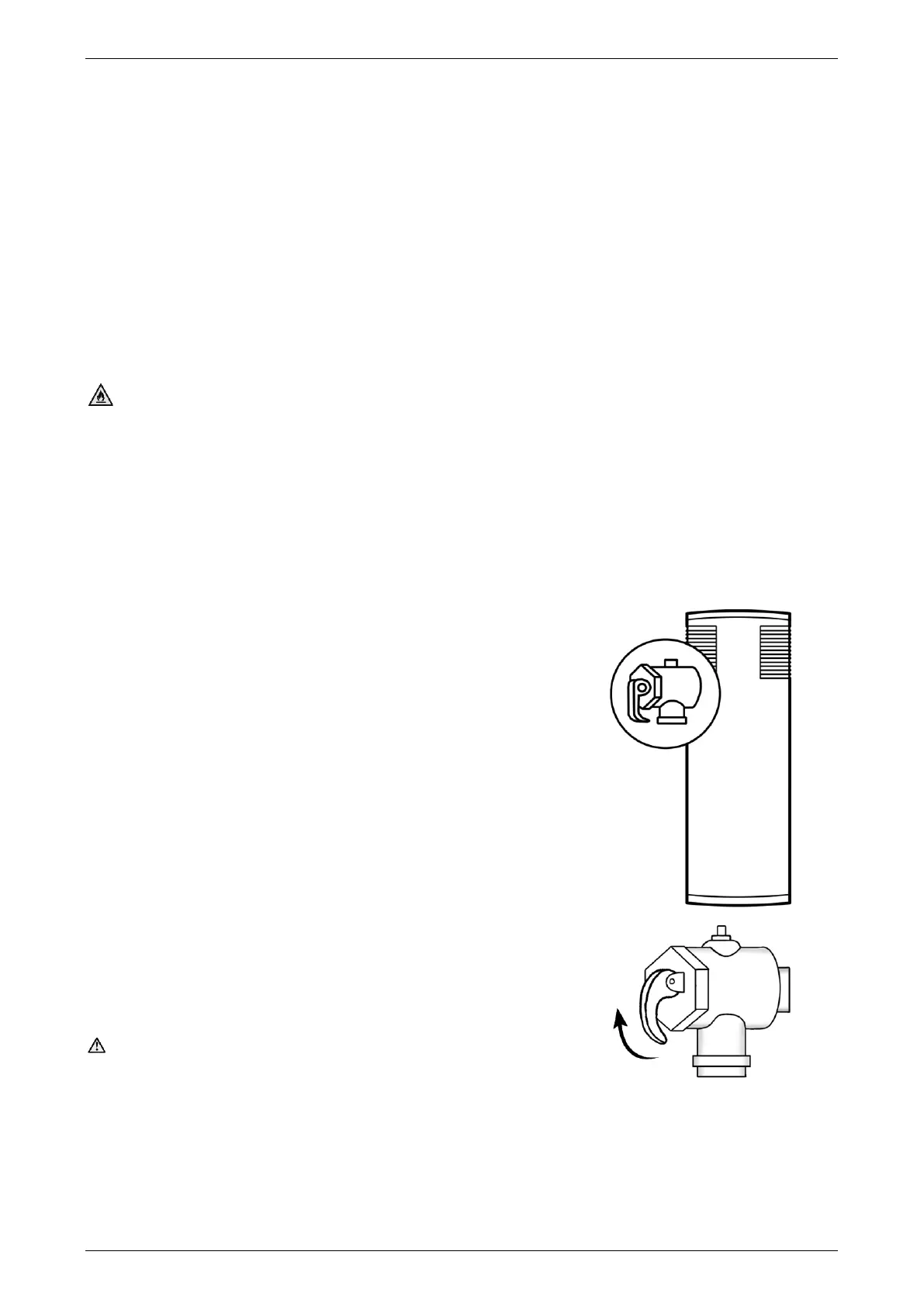
This water heater incorporates a temperature pressure relief valve
located near the top of the water heater. This valve is essential for the
water heater’s safe operation.
It is possible for the valve to discharge a quantity of water through the
drain line during each heating period. This quantity should be equal
to approximately 1/50 of the hot water used, as water expands by this
volume when heated.
Expansion Control Valve
In many areas, including South Australia, Western Australia and
scaling water areas, it is mandatory an expansion control valve is
fitted to the cold water line to the water heater.
The expansion control valve will discharge the quantity of water from
its drain line during the heating period instead of the temperature
pressure relief valve as it has a lower pressure rating.
Valve Operation
Continuous leakage of water from either valve and its drain line may
indicate a problem with the water heater. Refer to “Temperature
Pressure Relief Valve or Expansion Control Valve Running” on
page 28.
Warning: Never block the outlet of either valve or their drain lines
for any reason. A relief valve drain must be left open to atmosphere
and be installed in a continuously downward direction.
In locations where water pipes are prone to freezing, the relief valve
drain line must be insulated and not exceed 300 mm in length before
discharging into a tundish through an air gap.
Operate the easing lever on the temperature pressure relief valve and expansion control valve once every
six (6) months to clear any deposits and ensure the valve and its drain line are not blocked. It is very important
the lever is raised and lowered gently. Refer to “Minor Maintenance Every Six Months” on page 22.


 To Next Page