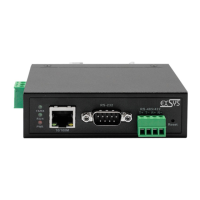
The EX-6002PoE is a 4-Port USB2.0 to Ethernet Adapter, also referred to as "The USB Server," designed to allow USB devices to be used over a network (IP) or the internet. This device acts as a USB over IP server, enabling remote access to USB peripherals as if they were directly connected to a local PC.
Function Description:
The primary function of the EX-6002PoE is to extend the reach of USB devices across a network. It provides four USB2.0 downstream host ports, allowing multiple USB devices to be connected and shared. With its client software, network users can access these remote USB devices over a local network or the internet. This is particularly useful for home offices, small offices, or industrial applications where USB devices need to be accessed remotely by multiple users or from different locations. The device supports a wide range of high-speed USB peripherals, including printers, scanners, digital cameras, and USB flash drives.
A key feature of the EX-6002PoE is its Power over Ethernet (PoE) capability. It acts as a Powered Device (PD), meaning it can receive power directly through the Ethernet cable from a standard Power Sourcing Equipment (PSE). This eliminates the need for an external AC power adapter, simplifying installation and reducing cable clutter.
The device also supports a standard USB Hub Mode. When connected to a PC's USB host port via its Type-B USB Upstream Port, the USB server switches to function as a simple USB hub. In this mode, the Ethernet port's ability to access the USB devices is disabled, and the devices are accessed directly by the connected PC. It's crucial to ensure that the Ethernet port is not actively accessing the USB devices (i.e., the USB devices are in a free device state) when operating in USB hub mode to prevent functionality issues.
Important Technical Specifications:
- USB Ports: 4 USB2.0 Downstream Host Ports.
- USB Hub Mode: Supports standard USB Hub Mode via an upstream USB connector.
- PoE Support: PoE (PD) feature, eliminating the need for an external AC power adapter.
- Ethernet Port: IEEE 802.3 10/100/1000Mbps, auto cross-over Ethernet port (RJ45 connector).
- Power Input:
- PoE (via Ethernet cable).
- DC Jack for +7~24V DC power input.
- 2-pin Terminal Blocks for +7~24V DC power input.
- Note: If PoE is not supported by the Ethernet cable, a 7V~24V DC power source is required via either the DC Jack or Terminal Blocks, but not both simultaneously.
- USB Speed: Supports High Speed/Full Speed USB2.0 peripherals.
- Operating System Compatibility: Supports Windows XP, 2003, Vista, and Win 7.
Usage Features:
- Remote Access: Allows remote USB devices to be used as if they were local.
- Client Software (USB Server Program): A user-friendly GUI utility is provided for client PCs. This software maps USB devices connected to the USB server onto the local host machine. It offers device mapping functionality to connect and disconnect devices found on the network.
- USB Server Manager: Integrated into the client software, this manager lists and provides options to configure various settings on the USB server remotely.
- Auto Cross-over Ethernet: The Ethernet port supports auto cross-over, meaning a standard straight-through Ethernet cable can be used to connect to a hub/switch or directly to a computer's Ethernet port without needing a cross-over type cable.
- Flexible Powering: Can be powered via PoE, a DC jack, or terminal blocks, offering flexibility in deployment.
Maintenance Features:
- Reset to Default Settings Switch: A physical switch is available to reset the device to its default settings.
- LED Indicators:
- USB Status LED: Indicates the status of USB devices.
- Power LED (PWR): Lights up when DC power is supplied.
- LAN LED Indicators (on RJ45 connector):
- Steady on: Ethernet connection is built and active.
- Off: Ethernet port disconnected.
- Blinking: Transferring Ethernet data.
- Off: No data transferring on Ethernet.
- Software Installation: The client software is provided on a driver CD, typically within a specific folder structure (e.g., Drivers 3.25 (E:)\USB_IP\ELITE\E3868). Installation involves running an
Install.exe program and following the on-screen instructions.
- Software Launch: Once installed, the USB Server Program can be launched via a desktop shortcut. After initial execution, it resides in the system tray for easy access.
- Detailed Manual: A PDF manual file is provided in the same folder as the software on the driver CD for more detailed instructions on using the USB Server Program.
Hardware Installation Guidelines:
- Static Electricity Precautions: Users are advised to discharge any static electricity potential from objects that may come into contact with the adapter before installation. This can be done by touching a bare metal chassis rail after turning off power.
- Power Source Connection: Connect the appropriate DC power source (DC Jack or terminal blocks) if PoE is not used.
- LAN Cable Connection: Connect a standard straight-through Ethernet cable to a hub, switch, or directly to a computer's Ethernet port.
- USB Device Connection: Connect USB devices to the USB server's downstream USB ports.
The EX-6002PoE is a robust and versatile solution for extending USB connectivity over a network, offering convenience, flexibility, and simplified management for various applications.

 Need help?

 To Next Page
 General