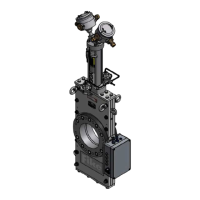
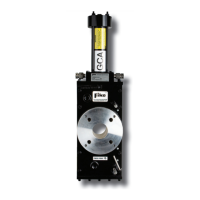
Scope
This document is intended to provide information and assist with the maintenance of Fike Europe Fast Acting Valves
(FAV). Individuals should read this manual carefully. Specific sections will be of particular interest depending upon
specific responsibilities. This information shall be used in conjunction with the drawings and additional information
provided for the specific application.
Fike Explosion Isolation Concept
The risk of an industrial explosion occurs in many stages of production, transport, and storage of combustible dusts
and gases. Apart from all the known preventive measures to avoid conditions, in which explosions may occur, a large
number of constructive protection measures can be taken.
Protective techniques are classified into explosion venting, suppression and isolation.
Explosion venting and explosion suppression are designed to protect process vessels from overpressurisation.
Explosion isolation is intended to keep explosions from spreading throughout a process. By isolating the explosion, the
effect of an explosion is limited to the equipment where the explosion initially occurred.
Responsive mechanical explosion isolation systems, commonly referred to as Fast Acting valves (FAV), are designed to
act upon the detection at the incipient stage of combustion by mechanically isolating the combustion and preventing
flame propagation.
The Fike Explosion Isolation System proceeds through 3 basic sequences to provide successful activation: detection,
initiation and closure of the valve. The Fike Fast Acting valve is the critical element in the sequence of successful
explosion isolation. The rapid closure provides the physical barrier which prevents flame propagation beyond the
isolating valve location.
Refer to Fike documents X.2.32.01-x Fast Acting Valve - FAV, X.2.66.01-x FAV Reload Kit, and X.2.26.01-x Valve
Actuator Assembly for detailed information.
Definitions
FAV: Fast Acting Valve
Explosion: The propagation of a flame in a premixed dispersion of combustible gases, dusts, mists or mixtures of
these, in a gaseous oxidant such as air in a closed or substantially closed vessel.
Deflagration: Explosions which propagate because of heat transfer and having two distinctive and separate parts - a
pressure wave and a flame. The deflagration type of explosion is generally referred to as a combustion reaction where
the flame front burns into the unburned material at a velocity lower than the speed of sound. The Fike hardware is
designed to provide protection against deflagrations only, not against detonations unless otherwise specified.
Explosion sensor: Device that is responsive to the changes of environmental parameters such as pressure caused by a
developing explosion.
Activation pressure Pa: That pressure threshold, above the pressure at ignition of the reactants (Pi), at which a
detection of the explosion is deemed to have occurred.


 To Next Page
 Loading...