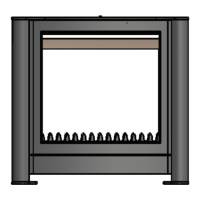
Cleaning the glass
We recommend wiping the glass after a fire to prevent the build up of deposits. This is best done using a paper
towel or a piece of newspaper.
Types of fuel
Wood needs to be well seasoned before it is burnt. Different woods take varying amounts of time to season but,
as a general guide, before being used in a stove, wood should be cut to length, split and then stacked under cover
(with the sides open to the air) for at least a year. Wood is ready for burning when radial cracks appear in the end
of the logs and the water content is no higher than 20%. It is then good practice to have it in the log basket, inside
the house, for a few days before it is actually used in the stove. The internal width of the firebox is 350mm and so
firewood should be no longer than this.
The table at the back of these instruction outlines the characteristics for different types of wood.
Do not burn unseasoned wood in your woodburner. Do not burn particle board, lacquered, painted or treated
wood, plastics, rubber or liquid fuels. The stove is not suitable for burning solid fuel ie. briquettes\ coal\coke\
smokless fuel. The stove should not be used as an incinerator.
Ashes
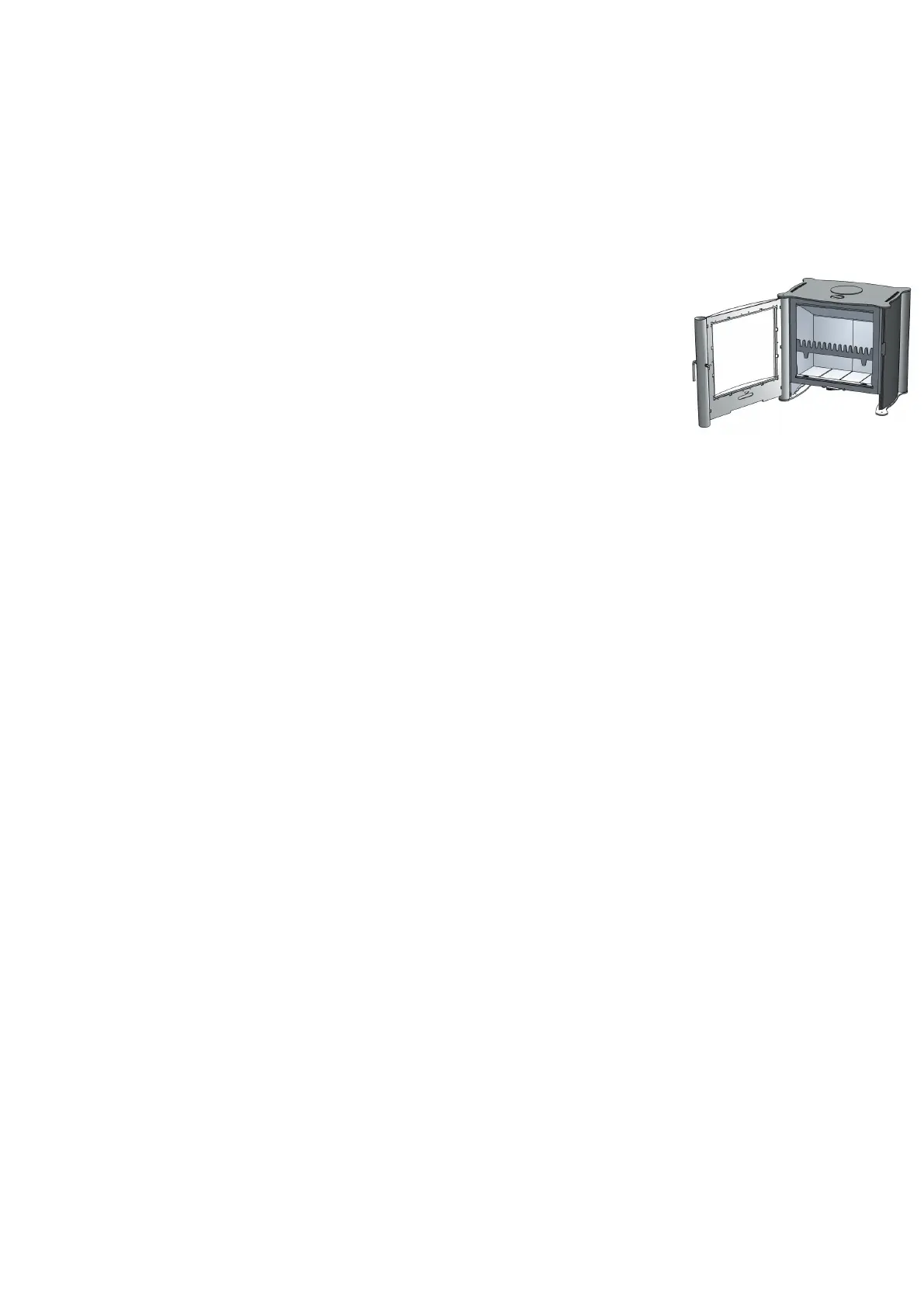
The ashes should only be removed when the fire is out and has been left to cool completely. The wood bar can be
removed to make access easier (figure 3). Wood burns well in it’s own ash and so a thin layer of ash can be left in the
bottom of the stove, this also helps to protect the base fire bricks.
Note: The above notes on operating your stove should be taken as guidlines only. Each stove installation is unique
and the operation of each stove is subject to many variables including; the fuel used, the size of the room, chimney
performance, ventilaion. As such, the best operation of your stove will be learned through experience only.
Maintenance & Cleaning
Any maintenance of the stove should only be carried out when it is cold. Daily maintenance is limited to vacuum
cleaning the stove externally, or brushing down with a soft brush. Never use spirits to clean the stove, as this will
remove the paint. Regularly check the flue exit from the stove to make sure there is no build up of deposits that will
restrict the exit of the flue gasses.
Note: The stove must not be modified by an unauthorised person and any replacement parts
should be as recommended by the manufacturer.
Chimney sweeping
The chimney should be swept a minimum once a year. If the stove is used regularly then the chimney should be
swept more often. Your stove should be given a preventive inspection every time the chimney is swept to check
the door rope seal, door handle, fire bricks and baffle and to remove any build up of soot and ashes.
Fire bricks
The fire brick insulation of the combustion chamber may, in time, become worn and damaged. Cracks in
the insulation have no effect on the efficiency of the stove. The insulation only needs to be replaced if it has
deteriorated to an extent that the insulation is no longer protecting the steel of the stove from flames.
Glass
If the glass is blackened with soot, it can easily be cleaned using one of the many specialist stove glass cleaning
products available from stove shops.
Surface
The high temperature paint finish normally requires no treatment. Any damage or wear to small areas of the paint
finish may be remedied using STOVEBRIGHT’s high temperature aerosol paint (colour ‘charcoal’, available from stove
shops and from Firebelly). Make sure the stove is cold and read the instructions on the can carefully before applying
the paint.
4
figure 3


 To Next Page
 Loading...