Your vehicle’s load capacity is designated by weight, not by volume, so
you cannot necessarily use all available space when loading a vehicle.
Towing a trailer places an additional load on your vehicle’s engine,
transmission, axle, brakes, tires and suspension. Inspect these
components carefully after any towing operation.
The hitch receiver was designed not to be removed. Any
modification or removal of the hitch receiver compromises the
safety benefit it was designed to provide.
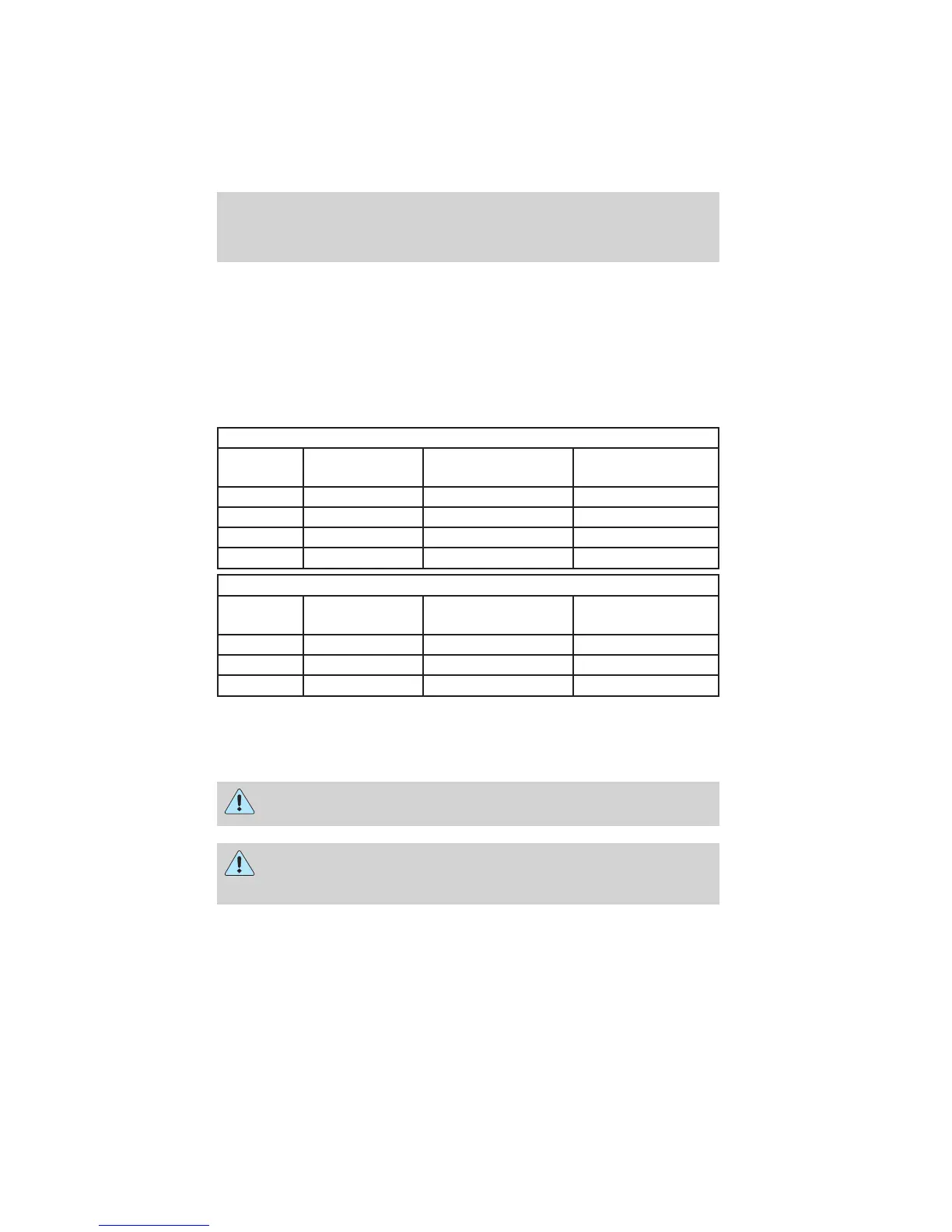
4x2 w/automatic transmission
Engine Rear axle
ratio
Maximum
GCWR-kg (lbs.)
Maximum trailer
weight-kg (lbs.)
5.4L 3.73 5 897 (13 000) 2 812 (6 200)
5.4L 4.10 6 350 (14 500) 3 266 (7 200)
6.8L 3.73 7 711 (17 000) 4 536 (10 000)
6.8L 4.30 9 072 (20 000) 4 763 (10 500)
4x4 w/automatic transmission
Engine Rear axle
ratio
Maximum
GCWR-kg (lbs.)
Maximum trailer
weight-kg (lbs.)
5.4L 4.10 6 350 (14 500) 3 266 (7 200)
6.8L 3.73 7 711 (17 000) 4 354 (9 600)
6.8L 4.30 9 072 (20 000) 4 990 (11 000)
The frame mounted hitch receiver is non-removable.
Towing a Class IV trailer (extra heavy duty) 2 268–4 536 kg
(5 001–10 000 lbs.) trailer weight requires a weight-distributing
or fifth-wheel hitch.
Do not exceed the GVWR or the GAWR specified on the
certification label.
Towing trailers beyond the maximum recommended gross trailer
weight could result in engine damage, transmission/axle damage,
structural damage, loss of control, and personal injury.
Driving
194








 To Next Page