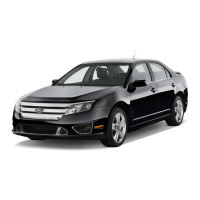
FCS-15129-13 2013 Fusion MKZ Hybrid Emergency Response Guide
11
• If possible, isolate and avoid contact with high-voltage vehicle components. If
contact with the high-voltage system cannot be avoided, Personal Protective
Equipment (PPE) such as a splash shield or safety goggles, gloves (latex, rubber
or Nitrile), an apron or overcoat and rubber boots are required when handling
damaged batteries. Exposure to electrolyte could cause skin and/or eye
irritation/burns. If exposed, rinse with large amounts of water for 10-15 minutes.
HIGH-VOLTAGE BATTERY PACKS - CONTINUED
• If the battery is exposed to intense heat (or other abusive conditions), it is
possible that flammable gases and liquid (electrolyte) have been released from
the cells. The gases include combustible hydrocarbons such as methane,
toxic gases such as carbon monoxide, and very small amounts of eye/skin/lung
irritants such as hydrofluoric acid could be released from the battery.
Appropriate precautions should be taken to make sure the area is properly
ventilated, such as opening the vehicle’s windows or doors. First responders
should wear Personal Protective Equipment (PPE) and self contained breathing
apparatus to safeguard against thermal, electrical, respiratory and skin/eye
hazards.
NOTICE: The following must be followed when working with a damaged battery:
• The high-voltage battery is located in the forward portion of the luggage
compartment. The high-voltage battery lies flat just behind the rear seat back
under the luggage compartment cargo cover.
• Removing the high-voltage service disconnect will disconnect the high-voltage
from the vehicle. The battery pack will remain live and dangerous.
• The battery cells contain a base electrolyte, consisting of lithium
hexafluorophosphate and organic solvents as the dominant active ingredient, that
is absorbed in special polymeric film. The electrolyte will not leak from the battery
under most conditions, however, if the battery is crushed, it is possible for a small
amount of electrolyte to leak.
• The total voltage of the battery pack is approximately 300-volts DC.
• Do not cut the high-voltage battery case. Do not penetrate the
batteries or case in any way.
WARNING: FIRES IN CRASH-DAMAGED ELECTRIC VEHICLES MAY EMIT TOXIC OR
COMBUSTIBLE GASSES. SMALL AMOUNTS OF EYE, SKIN OR LUNG IRRITANTS MAY BE
PRESENT. WEAR PERSONAL PROTECTIVE EQUIPMENT (PPE) AND SELF-CONTAINED
BREATHING APPARATUS WHEN WORKING IN CLOSE PROXIMITY OR IN A CONFINED AREA,
SUCH AS A TUNNEL OR GARAGE. VENTILATE THE VEHICLE INTERIOR BY OPENING
VEHICLE WINDOWS OR DOORS. VENTILATE THE WORKING AREA. FAILURE TO FOLLOW
THIS INSTRUCTION MAY RESULT IN SERIOUS PERSONAL INJURY OR DEATH.



 To Next Page
 Loading...