If leakage is found by the solenoid body connector, refer to Main Control Valve Body — Accumulator Body, Solenoid Body in this section.
Check the transmission sealing washers on the cooler bypass valve (CBV), fluid filler tube connection at the transmission case. If leakage is found, install a new short
fluid inlet tube.
Check the transmission sealing washers on the cooler bypass valve (CBV), fluid lines and fittings between the transmission and the fluid inlet short tube in the radiator
tank for looseness, wear or damage. If leakage cannot be stopped by tightening a fluid line tube nut, install new parts. When fluid is found to be leaking between the
case and the cooler line fitting, tighten the fitting to maximum specification. Refer to Section 307-02.
CAUTION: Do not try to stop the fluid leak by increasing the torque beyond specification. This can cause damage to the case threads and/or case
fittings.
If the leak continues, install new cooler line fitting and or sealing washers on cooler bypass valve and tighten to specification. The same procedure should be followed
for fluid leaks between the oil to air cooler and cooler line fittings.
If leakage is found at the manual control lever shaft, install a new seal.
Check for fluid leaking from the end of the extension housing. Leakage can result from a damaged seal, missing garter spring or worn extension bushing, or damaged
speed sensor plug. Install a new seal assembly and/or bushing, as necessary.
Inspect the line pressure plug for leakage. Make sure it is tightened to specification. Refer to Torque Specifications in this section. If tightening the plug does not stop
the leak, the case threads and/or plug could be damaged. Remove the plug, inspect the plug and case thread for damage and repair as necessary.
Check for leakage on or around the cooler bypass valve (CBV). Repair as required.
Fluid Leakage in Torque Converter Area
In diagnosing and correcting fluid leaks in the front pump assembly and torque converter area, use the following procedures to locate the exact cause of the leakage.
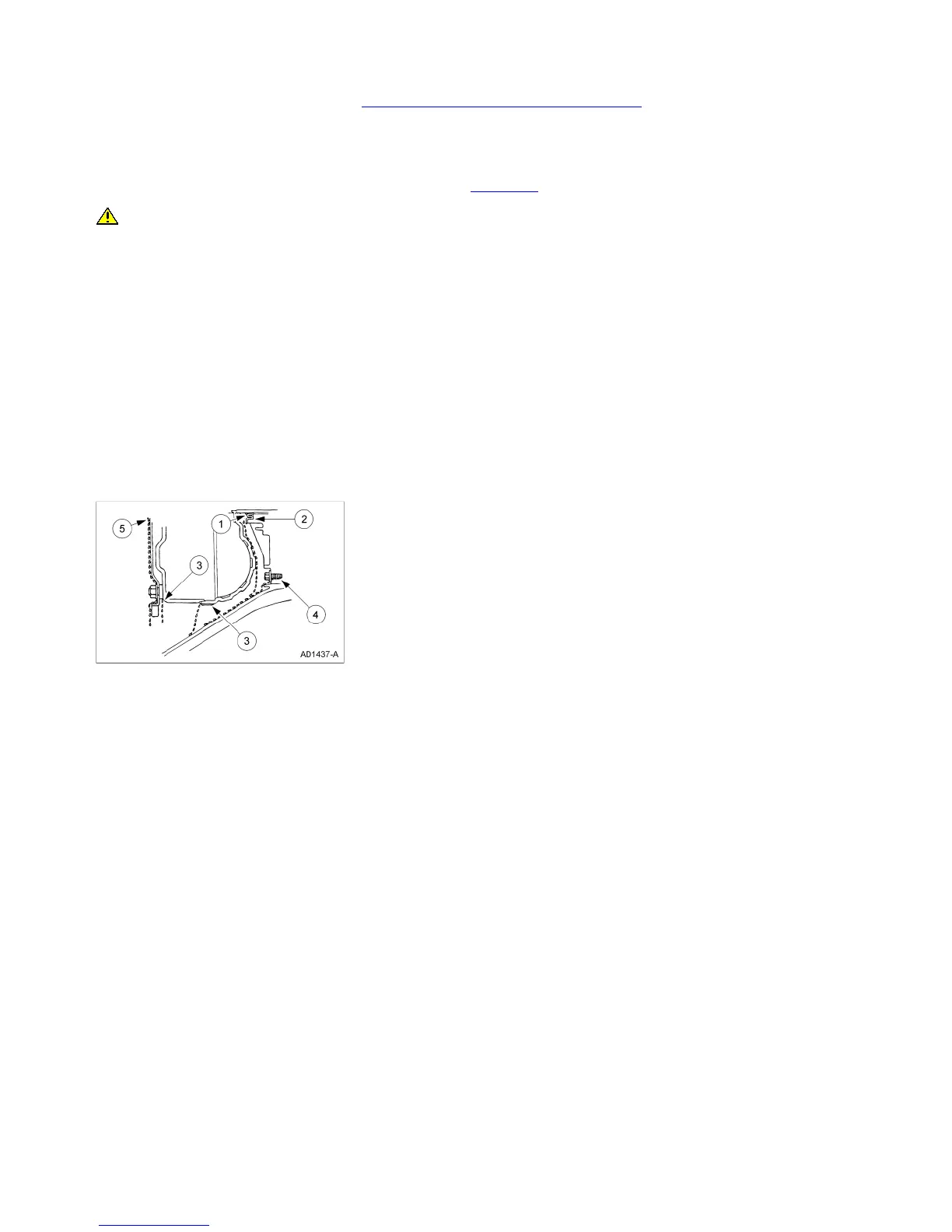
Leakage at the front of transmission, as evidenced by fluid around the torque converter housing, may have several sources. By careful observation it is possible, in
many instances, to pinpoint the source of leak before removing the transmission from the vehicle. The paths which the fluid takes to reach the bottom of the torque
converter housing are shown in the illustration. The five steps following correspond with the numbers in the illustration.
1. Fluid leaking by the front pump seal lip will tend to move along the impeller hub and onto the back of the impeller housing. Except in the case of a total seal
failure, fluid leakage by the lip of the seal will be deposited on the inside of the torque converter housing only, near the outside diameter of the housing.
2. Fluid leakage by the outside diameter of the front pump seal and front pump body will follow the same path that leaks by the inside diameter of the front pump
seal follow.
3. Fluid leakage from the converter seal weld or converter to flexplate stud weld will appear at the outside diameter of the torque converter, on the back face of the
flexplate and in the converter housing only near the flexplate. Fluid leaks from the torque converter will leave a ring of fluid around the inside of the torque
converter housing.
4. Fluid that leaks by a front pump to case bolt or pump gasket will be deposited on the inside of the torque converter housing only. Fluid will not be deposited on
the back of the torque converter.
5. NOTE: White facial tissue may aid in determining the color (transmission fluid is red) and source of the leaking fluid.
Engine oil leaks are sometimes incorrectly diagnosed as transmission pump gasket leaks. The following areas of possible leakage should also be checked to
determine if engine oil leakage is causing the concern.
Leakage at the valve cover gasket may allow oil to flow over the torque converter housing or seep down between the torque converter housing and
cylinder block, causing oil to be present in or at the bottom of the torque converter housing.
2. Oil galley plug leaks will allow oil to flow down the rear face of the cylinder block to the bottom of the torque converter housing.
3. Leakage at the crankshaft rear oil seal will work back to the flexplate, and then into the torque converter housing.
4. Leakage at oil pressure sensor.
Leak Check Test
Determine the cause of the leakage before repair.
1. Remove the fluid level indicator and note the color of the fluid. Original factory fill fluid is dyed red to aid in determining if leakage is from the engine or
transmission. The red color should assist in pinpointing the leak.
2. Remove the torque converter housing cover. Clean off any fluid from the top and bottom of the torque converter housing, front of the case, and rear face of the
engine and oil pan. Clean the torque converter area by washing with a suitable non-flammable solvent, and blow dry with compressed air.
3. Wash out the torque converter housing, the front of the flexplate and the converter drain plug. The torque converter housing may be washed out using clean
solvent and a squirt-type oil can. Blow-dry all washed areas with compressed air.
4. Start and run the engine until the transmission reaches its normal operating temperature. Observe the back of the cylinder block and top of the torque converter
http://www.fordtechservice.dealerconnection.com/pubs/content/~WS21/~MUS~LEN/19/S


 To Next Page
 Loading...