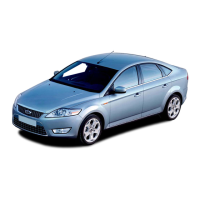
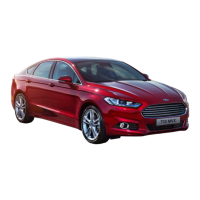
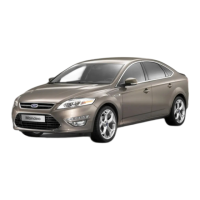
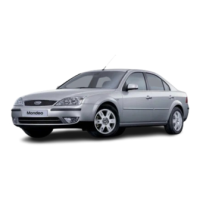
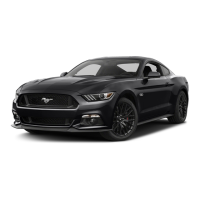
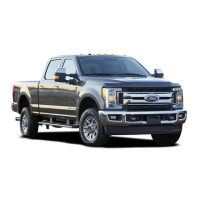
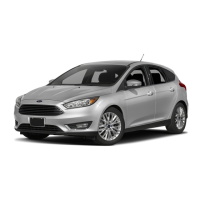
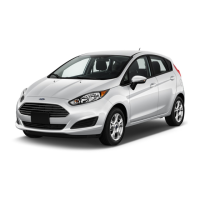
This document serves as an index and a series of Vehicle Instruction Cards (VICs) for various Ford vehicles, providing essential information for operation, maintenance, and emergency situations. The index lists different Ford models and their basic specifications, while the subsequent pages offer detailed instructions for each vehicle type.
Function Description
The primary function of these cards is to provide drivers with quick and accessible information regarding the safe and efficient operation of their rented Ford vehicles. They cover controls, fuel, breakdown procedures, child seat usage, driver's seat adjustments, and useful information about the vehicle's features. A dedicated supplement addresses the Electronic Parking Brake (EPB) system, explaining its function, activation, deactivation, and interaction with other vehicle systems like seatbelt warnings. The cards also include critical safety warnings, particularly concerning warning lights and driving restrictions.
Important Technical Specifications
While not exhaustive, the cards provide key technical specifications relevant to daily operation:
- Tyre Pressures (COLD): Each VIC specifies recommended tyre pressures for various wheel sizes (e.g., R15 195/60, R16 195/55, R17 205/45, R18 205/40 for Fiesta; R16 205/55, R16 215/55, R17 215/50, R18 235/40, R19 235/35 for Focus; R16 205/55, R17 215/50, R18 235/40 for C-Max; R17 235/55, R18 235/50, R19 235/45 for Kuga; R16 215/60, R17 235/50, R18 235/45, R19 235/40 for Mondeo; R17 235/55, R18 235/50, R19 245/45 for Galaxy; R15 215/65, R16 235/65, R16 195/75 for Transit Van Luton; R16 205/60 for Transit Connect Van; R15 215/65, R16 215/65, R17 215/60, R18 235/50 for Transit Custom Van, Transit Cab Tipper, and Transit Van).
- Legal Minimum Tread Depth: Consistently stated as 1.6 mm across all vehicles.
- Fuel Type: Always "unleaded petrol" for petrol vehicles, with a reminder to check the filler flap for confirmation. Diesel fuel is also mentioned for some models.
- Fuel Tank Capacity: Varies by model (e.g., Fiesta: 42.0 litres; Focus: 55.0 litres; Focus NEW: 52 or 47 litres; C-Max: 55.0 litres; Kuga: 60 litres; Mondeo: 51 litres (saloon) or 62 litres; Galaxy: 66.0 litres (68 litres for diesel); Ranger: 80 litres; Transit Van Luton: 80-95 litres; Transit Connect Van: 60.0 litres; Transit Custom Van, Transit Cab Tipper, Transit Van: 70.0 litres).
- Seating Capacity: Specified in the index (e.g., Fiesta: 5 seats; Focus: 5 seats; C-Max: 5 seats; Kuga: 5 seats; Mondeo: 5 seats; Galaxy: 6-7 seats; Ranger: 2-5 seats; Transit vans: 3 seats).
- Door Configuration: Also in the index (e.g., Fiesta: 3-5 door hatchback; Focus: 3-5 door hatchback / 5 door estate; C-Max: 5 door MPV; Kuga: 5 door SUV; Mondeo: 3-5 door hatchback / 4 door saloon / 5 door estate; Galaxy: 5 door MPV; Ranger: 2-4 door 4x4 truck; Transit vans: van / small panel van / panel van / tipper truck).
Usage Features
- Controls: Detailed diagrams and numbered lists identify common controls such as heating & ventilation, hazard lights, headlights, wipers, horn, bonnet release, and fog lamps.
- Electronic Parking Brake (EPB): The supplement explains that the EPB replaces the mechanical handbrake, activating automatically or manually (by pulling switch A). It deactivates automatically when driving away or manually by depressing the brake/accelerator pedal or pressing switch A. It also prevents rollback on gradients.
- Starting the Engine: Instructions cover both traditional key-in-switch and start/stop button systems. For start/stop buttons, the key must be in the pocket/bag. Manual transmission requires neutral gear and handbrake on, while automatics require N or P. Vehicles with engine start/stop technology automatically shut off when stationary (neutral gear, pedals not depressed) and restart when the brake/clutch is released.
- Automatic Transmission: Drivers are instructed to use the shift lever button to move between N (neutral), P (park), R (reverse), and D (drive). D provides automatic gear selection, with a "kickdown" facility for maximum acceleration. Some models offer manual gear selection via D+ or D- or steering wheel paddle shifters.
- Child Seats: A warning against using child seats in front passenger seats with active airbags (SRS) is consistently provided, along with a reminder to follow fitting instructions carefully.
- Driver's Seat Adjustment: Basic adjustments for tilt, lumbar, legroom, and height are indicated.
- Door Locking: Central locking (key/remote control) with high security double locking is standard. Doors auto-lock on vehicle motion. Some models feature a central door locking button on the console.
- Tailgate/Boot Opening: Centrally locked, opened via key/remote control. Some models have internal remote release or powered/hands-free operation (foot gesture activation).
- Window/Mirror Adjustment: Electric adjustment for mirrors via a control knob on the driver's door. Electric windows operated via control buttons. Some rear windows may be manually operated.
- Sunroof Operation: If fitted, electric panoramic sunroofs are operated by roof-mounted controls.
- Child Door Locks: Located on the edge of rear doors, activated by twisting a key slot. Some models feature power child locks.
- Fuel Filler Cap: Centrally locked, located on the rear offside or inside the front passenger door panel. Capless refuelling systems differentiate between petrol and diesel nozzles.
- Bonnet Release: Internal release lever located lower right of the dashboard, followed by a secondary lever under the front centre of the bonnet. For some Transit models, rotating the blue oval badge on the bonnet unlocks it.
- Folding Rear Seats: Rear seats are typically divided into 60:40 sections, folded by releasing a catch and pushing down. They are returned to normal use by raising and firmly engaging the seat lock. Some Galaxy models allow for sliding and reclining, and even removal.
Maintenance Features
- Tyre Puncture Assistance: A dedicated "TYRE HELPLINE" (0800 0280 999) is provided for assistance with punctured tyres, especially since vehicles are not usually supplied with a spare wheel or tyre repair kit.
- Changing a Tyre: Detailed instructions are provided for changing a tyre, including locating tools (jack, wheel brace), preparing the vehicle (firm/level ground, engine off, gear engaged, handbrake applied), loosening wheel nuts, using reinforced jack points, lifting the vehicle, changing the wheel, and tightening nuts.
- Tyre Pressure Check: Regular checks are recommended, with the tyre pressure table found on the driver's door B-pillar or fuel filler cap. Some models may have an electronic tyre pressure monitor.
- Breakdown Procedure: Use hazard lights, park in a safe position, and use an emergency phone (rather than a mobile) to ensure emergency services know the location.
- Anti-theft System: Vehicles are fitted with a remote anti-theft alarm and passive engine immobiliser. A visible VIN plate is also mentioned.
- Warning Lights: A "WARNING LIGHTS AND WHAT THEY MEAN" section clarifies the significance of red (serious problem/safety issue), yellow/orange (service/repair soon), and green/blue (system operating normally) lights. Flashing yellow/orange lights require contacting the rental agent.
The document emphasizes that vehicle specifications are subject to change and that the vehicle does not include any manufacturer handbooks or manuals. It also disclaims responsibility for inaccuracies or misunderstandings and advises drivers to ask staff for assistance if in doubt.

 Need help?
 General

 To Next Page